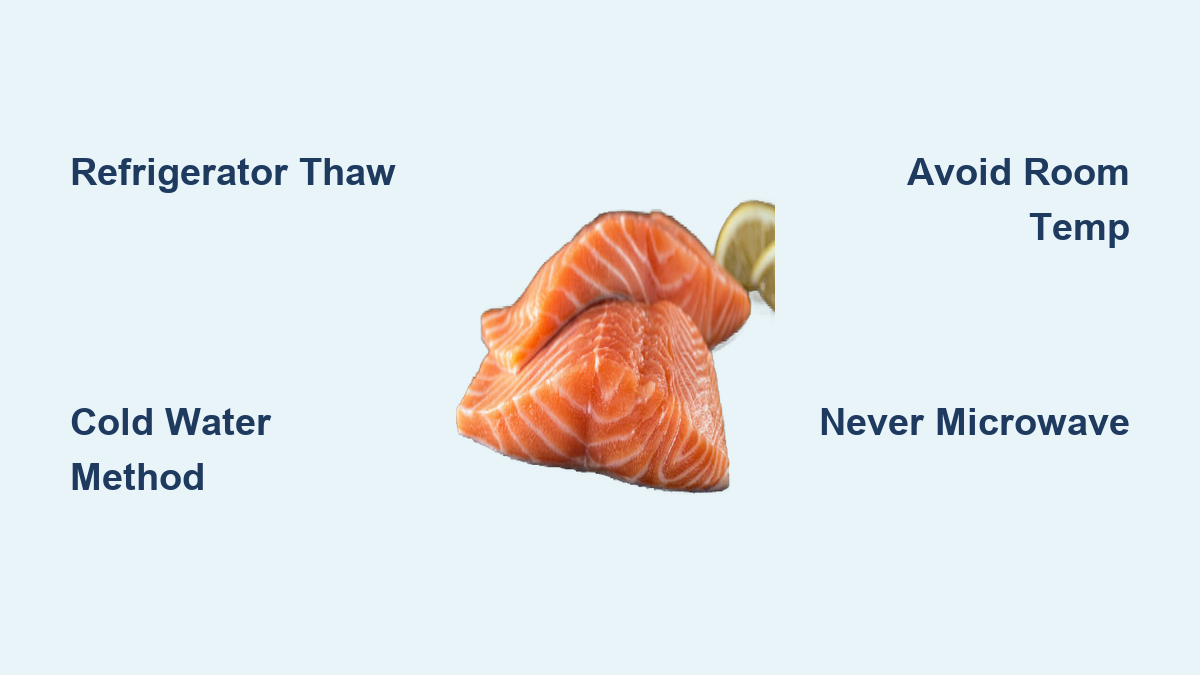
How to Thaw Salmon from Freezer Safely
Discovering your salmon is still rock-solid when you’re ready to cook can ruin dinner plans fast. Knowing how to thaw salmon from freezer properly ensures you maintain its delicate texture, rich flavor, and nutritional value while keeping your family safe from foodborne illness. Many home cooks make critical mistakes that lead to mushy, waterlogged fish or—worse—bacterial contamination. This guide reveals exactly what professional chefs and food safety experts recommend for thawing salmon, so you can consistently achieve restaurant-quality results from your frozen stash.
The problem with improper thawing lies in salmon’s delicate cellular structure. When frozen, water inside fish cells forms ice crystals that can rupture cell walls if thawed too quickly. This destroys texture and releases valuable juices. Even more concerning is the “danger zone” between 40°F and 140°F where bacteria multiply rapidly—exactly what happens when salmon thaws unevenly. Understanding these principles helps you choose the right method for your timeline while protecting your health and preserving quality.
Modern frozen salmon often surpasses “fresh” supermarket fish in quality because premium products are flash-frozen within hours of harvest. When you learn how to thaw salmon from freezer correctly, you unlock this peak freshness rather than wasting it through improper handling. Whether you have 24 hours to plan or need dinner ready in 30 minutes, these proven techniques guarantee perfect results.
Stop Bacterial Growth Before It Starts: Critical Safety Steps
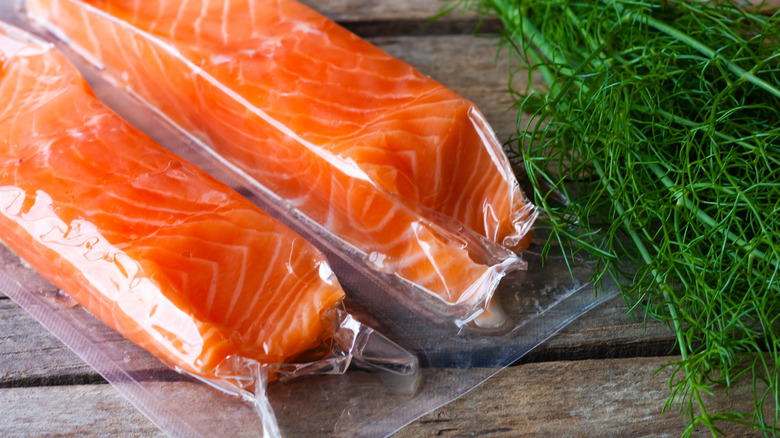
Skip these safety precautions and you risk food poisoning even with properly cooked salmon. The most dangerous mistake involves vacuum-sealed packaging—those convenient airtight bags create perfect conditions for botulism bacteria when warmed. Always transfer salmon to a new resealable bag immediately after removing it from vacuum packaging. This exposes the fish to oxygen, preventing deadly toxin production while allowing safe thawing.
Never let salmon sit at room temperature for more than 2 hours (or 1 hour in hot weather). Bacteria multiply exponentially in the danger zone, and the outer layer of your salmon reaches unsafe temperatures while the center remains frozen. If you’re using cold water thawing, change the water every 30 minutes to maintain a consistently cool temperature below 70°F—this keeps the entire fish out of the bacterial breeding range.
Refrigerator Thawing: The Foolproof Method for Perfect Texture
Why Your Fridge Delivers Restaurant-Quality Results
Thawing salmon in the refrigerator preserves texture better than any other method because it maintains a consistent temperature below 40°F throughout the process. This slow approach prevents cell wall damage from rapid temperature changes, keeping your salmon flaky rather than mushy. Plan ahead—this method requires 10-12 hours for standard fillets, 12-24 hours for thicker cuts.
Exact Steps for Flawless Refrigerator Thawing
- Remove salmon from vacuum-sealed packaging immediately (critical safety step)
- Place fillets on a plate lined with paper towels inside a resealable bag
- Position on the lowest refrigerator shelf (coldest, most consistent spot)
- Allow 10-12 hours for standard portions (check firmness after 8 hours for thin fillets)
- Rinse off any ice crystals and pat completely dry before cooking
Pro Tip: Place a second plate on top of the salmon to maintain even pressure during thawing—this prevents uneven texture caused by air pockets. Properly thawed salmon stays safe in the fridge for 1-2 days, but cook within 24 hours for best results.
Cold Water Thawing: Get Dinner Ready in Under an Hour
When You Forgot to Plan Ahead (Safely)
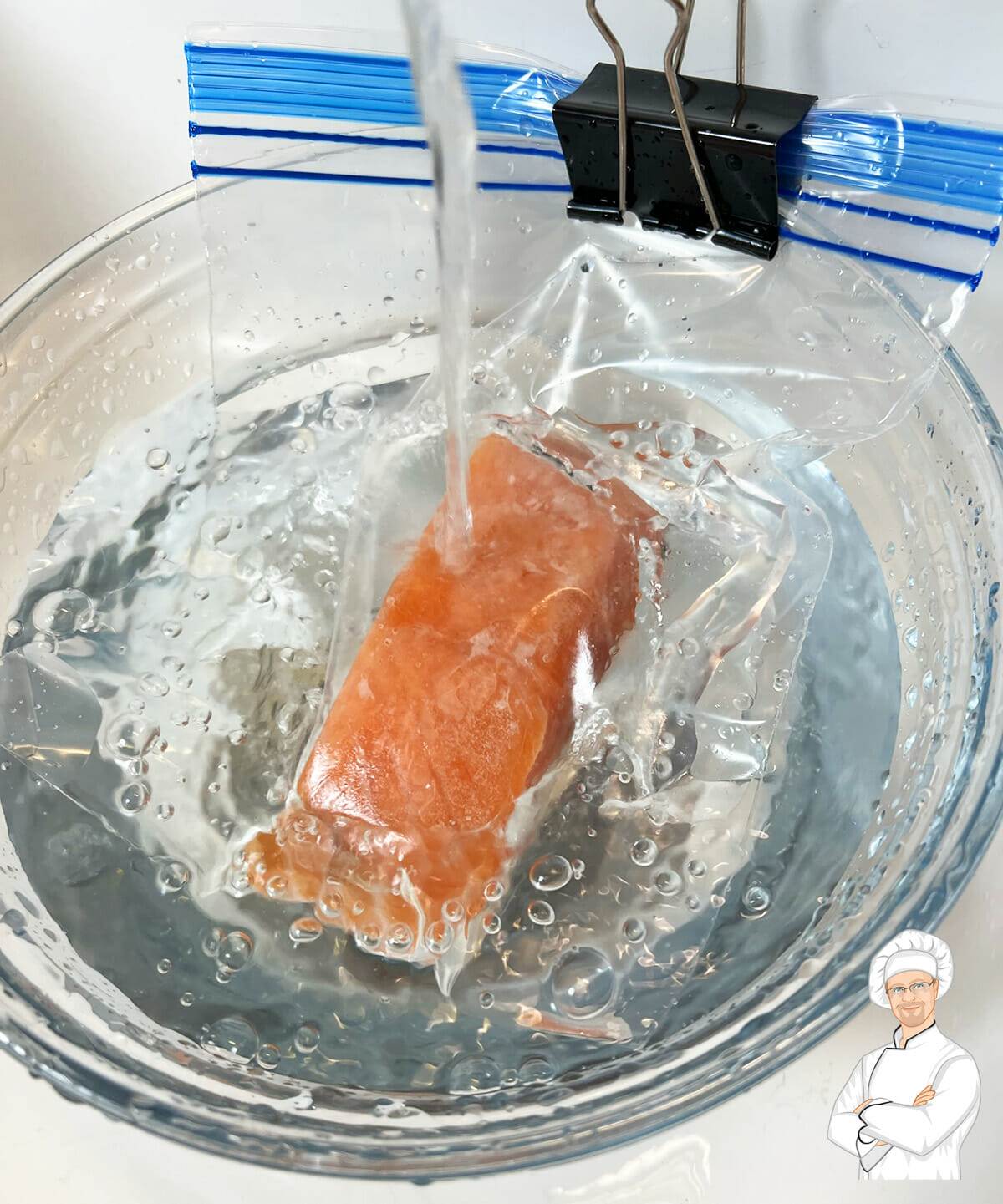
This emergency method works when you need salmon thawed in 30-60 minutes without compromising safety. The key is maintaining cool water temperatures throughout—never use warm or hot water, which risks partial cooking and bacterial growth. The moving water conducts heat more efficiently than air, speeding thawing while keeping temperatures safe.
Step-by-Step Cold Water Thawing Process
- Transfer salmon to a leak-proof resealable bag (double-bag for extra security)
- Fill a large bowl with cool tap water (60-70°F—not cold enough to shock fish)
- Submerge bag completely, weighting it down with a plate if needed
- Change water every 30 minutes to maintain cool temperature
- Check for flexibility after 30 minutes (thin fillets may thaw in 30 min)
- Cook immediately after thawing—do not refrigerate again
Warning: Never reuse thawing water—bacteria from the salmon’s surface can contaminate the water. Discard after each change. The salmon should feel completely flexible with no icy spots when done.
Three Thawing Mistakes That Ruin Salmon Every Time
Why Countertop Thawing Puts Your Family at Risk
Leaving salmon on the counter might seem convenient, but it creates dangerous conditions where bacteria multiply rapidly on the surface while the center remains frozen. This method also causes severe texture damage—the outer layer becomes waterlogged while the inside stays hard. If you’ve ever had “mushy” salmon, countertop thawing is likely the culprit.
Hot Water Bath: The Texture Killer You Should Avoid
Submerging frozen salmon in hot water seems logical when you’re in a hurry, but the extreme temperature shift literally cooks the exterior while the center stays frozen. You’ll end up with rubbery edges and icy centers—a textural disaster. The warm, moist environment also accelerates bacterial growth, making this method unsafe despite its speed.
Microwave Defrosting: The Inconsistent Thawing Trap
Microwave “defrost” settings create uneven results—thin edges begin cooking while the thickest part remains frozen solid. This partial cooking destroys texture and creates perfect conditions for bacteria in the warm spots. The result? Salmon that’s simultaneously overcooked and undercooked—a food safety hazard with terrible texture.
Verify Your Thawed Salmon’s Quality Before Cooking
The 3-Point Freshness Check You Must Perform
Smell Test: Fresh thawed salmon should have a clean, ocean-like scent—not strong or fishy. Discard immediately if you detect ammonia, sourness, or chemical odors.
Touch Test: The flesh should feel firm yet yielding, springing back when pressed. Avoid salmon that’s slimy, mushy, or leaves permanent indentations.
Visual Check: Look for vibrant pink-orange color without gray patches or brown spots. Ice crystals should be completely gone, replaced by moist but not watery flesh.
Cook Frozen Salmon When Time Is Critical
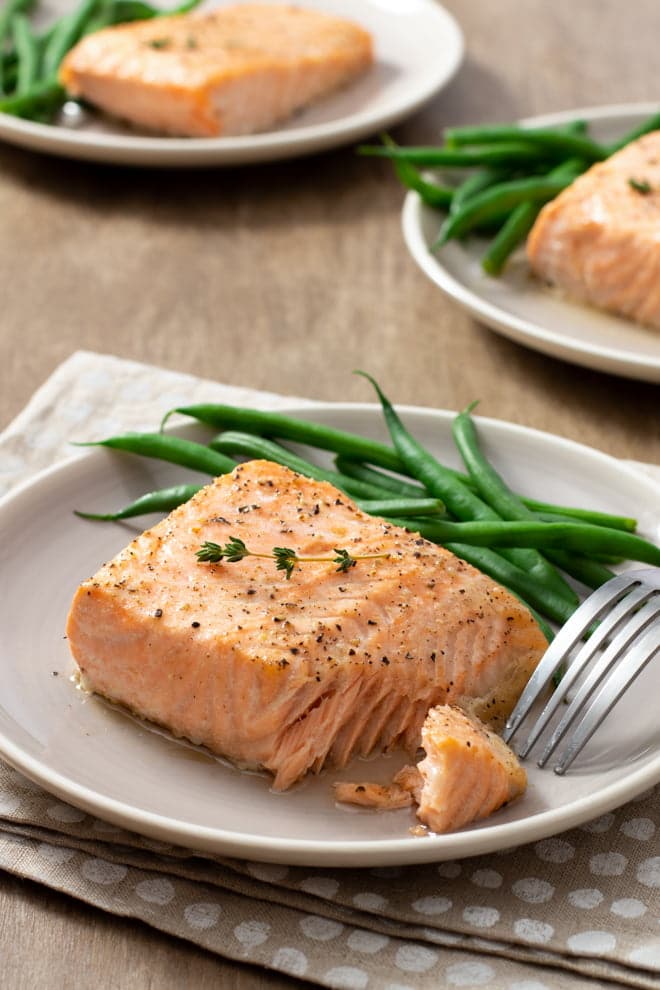
When you’ve truly run out of options, cooking salmon directly from frozen is safe and effective. Add 50% more cooking time to your recipe and check internal temperature with a food thermometer—salmon is safe at 145°F at the thickest point. Baking, air frying, and pressure cooking work best for frozen salmon. Season generously since spices don’t adhere well to icy surfaces.
Store Thawed Salmon Properly to Prevent Waste
Refrigerated thawed salmon stays safe for 1-2 days when stored in an airtight container on the bottom shelf (to prevent cross-contamination). Always date your container. Never refreeze raw thawed salmon—instead, cook excess portions and freeze the cooked fish for future meals. Unopened frozen salmon maintains best quality for 3-6 months in the freezer.
Your Quick-Thaw Salmon Cheat Sheet
| Method | Time Required | Safety Rating | Quality Result |
|---|---|---|---|
| Refrigerator | 10-24 hours | ★★★★★ | Best texture, maximum flavor |
| Cold Water | 30-60 minutes | ★★★★☆ | Very good texture when done properly |
| Cook From Frozen | Add 50% cooking time | ★★★★☆ | Slightly different texture but safe |
Critical Don’ts: Never thaw at room temperature, in hot water, or in the microwave. Always remove vacuum-sealed packaging immediately and transfer to a new bag before thawing.
Mastering how to thaw salmon from freezer properly transforms your weeknight dinners from disappointing to delicious. By following these precise methods based on food science and chef expertise, you’ll consistently serve salmon with perfect texture and flavor while keeping your family safe. The extra few minutes of planning or the simple steps of proper thawing make all the difference between soggy, unsafe fish and a restaurant-quality meal that impresses every time.