How to Prevent Freezer Burn on Ice Cream
That sinking feeling when you dig into your favorite ice cream flavor only to discover dry, grainy patches on top is all too familiar. Freezer burn transforms your creamy dessert into a disappointing experience, leaving you with ice crystals that lack flavor and texture. The good news is that preventing freezer burn is entirely within your control, and with the right storage techniques, you can keep your ice cream tasting fresh and smooth for months. This guide covers everything you need to know about protecting your frozen treats from the damaging effects of air exposure and temperature fluctuations.
When ice cream develops freezer burn, it loses moisture through a process called sublimation, where water molecules escape from the surface and form dry ice crystals. These crystals create that unappetizing gritty texture and bland taste that makes freezer-burned ice cream so disappointing. While freezer burn doesn’t make ice cream unsafe to eat, it significantly degrades quality and ruins what should be a delightful dessert experience. Understanding how freezer burn develops is the first step toward preventing it effectively.
Why Ice Cream Surface Develops Dry, Grainy Patches
Freezer burn occurs when ice cream is exposed to air inside your freezer, causing moisture to evaporate from the surface. Every time you open your freezer door, warm air enters and comes into contact with your ice cream. This warm air holds more moisture than cold air, and as it cools, the moisture condenses and eventually freezes on the surface, forming those familiar white ice crystals. Over time, repeated exposure leads to larger crystals that give freezer-burned ice cream its characteristic dry, crunchy texture.
Temperature fluctuations accelerate freezer burn development significantly. When your freezer temperature rises and falls repeatedly, it creates cycles of condensation and evaporation on the ice cream surface. Keeping your freezer at a consistent 0°F (-18°C) or below minimizes these fluctuations and slows the freezer burn process considerably. The age of your ice cream also plays a role, since ice cream stored for several months faces more opportunities for exposure than freshly purchased containers.
Air exposure remains the primary culprit behind freezer burn. If ice cream sits in a container that isn’t properly sealed, or if the container is damaged and allows air to penetrate, moisture escapes even without frequent freezer openings. This is why container selection and sealing technique matter just as much as how often you access your freezer.
How Ice Cream Composition Affects Freezer Burn Risk
The ingredients in your ice cream directly impact how quickly it develops freezer burn. Ice cream with higher fat content creates a more stable structure that resists moisture migration better than low-fat varieties. Premium ice creams with lower air content (less overrun) also maintain quality longer than budget brands with high air content that creates more surface area for evaporation.
Commercial ice creams often contain stabilizers like guar gum or carrageenan that help prevent large ice crystal formation during storage. Homemade ice cream typically lacks these additives and requires extra care to prevent freezer burn. If you make your own ice cream, adding a tablespoon of alcohol (like vodka) can improve freeze resistance by lowering the freezing point without affecting flavor.
Choose Airtight Storage Containers

Selecting the right container ranks among the most effective strategies for preventing freezer burn on ice cream. Glass containers with tight-fitting lids work exceptionally well because they create an excellent seal and can be reused indefinitely. Before placing any container in the freezer, verify that the lid fits securely and creates a true airtight seal. Test this by closing the lid on an empty container and trying to pull it open; if it comes off too easily, the seal may not be sufficient for ice cream storage.
Container size matters more than most people realize. When storing ice cream, choose a container that’s just large enough to hold your ice cream with minimal empty space at the top. The less air sitting above the ice cream, the less air contacts the surface and the slower freezer burn develops. If you have a large quantity of ice cream, divide it among several smaller containers rather than keeping everything in one large container with excess air space. This approach also limits how much ice cream gets exposed each time you open a container.
Proper Container Preparation Steps
Before transferring ice cream, ensure your container is completely dry since any moisture on the surfaces can freeze and contribute to ice crystal formation. For best results, follow these steps:
- Chill the empty container in the freezer for 15 minutes before adding ice cream
- Fill the container leaving only ½ inch of headspace at most
- Smooth the surface evenly with a spatula before sealing
- Double-check that the lid clicks or locks into place securely
Plastic containers designed specifically for freezer storage offer another excellent option. These containers are made from materials that maintain flexibility at low temperatures and create reliable seals that won’t become brittle in the cold.
Master Plastic Wrap Technique
Using plastic wrap as an additional protective layer provides highly effective defense against freezer burn. The key to success lies in ensuring the plastic wrap makes direct, complete contact with the ice cream surface. When wrap adheres directly to the ice cream, it eliminates air pockets that would otherwise allow moisture to escape and freezer burn to develop. To accomplish this, smooth the wrap over the top of the ice cream and press down gently to remove any air bubbles. The warmth of your hands helps the wrap conform to the surface and create a tight seal.
Select high-quality plastic wrap rated for freezer use, since some wraps become brittle and lose adhesion when exposed to extremely cold temperatures. Freezer paper serves as an excellent alternative and works particularly well when wrapped tightly around the container in multiple layers. The special coating on freezer paper resists moisture and maintains flexibility in cold temperatures, creating a protective barrier that seals in freshness.
Aluminum Foil as Backup Solution
If plastic wrap isn’t available, aluminum foil can substitute effectively when used properly. Follow these steps for maximum protection:
- Cut a generous piece of foil large enough to cover the entire surface
- Press the foil directly against the ice cream with your fingertips
- Smooth out all wrinkles to eliminate air pockets
- Fold the excess foil tightly around the container edges
- Secure with tape if needed for long-term storage
For the best results, use both foil and a container lid together, with the foil layer pressed directly against the ice cream and the lid providing external defense.
Use Specialized Ice Cream Containers
Squeeze containers designed specifically for ice cream storage offer unique advantages in preventing freezer burn. These containers typically feature a narrow opening and a dispensing mechanism that lets you access ice cream without exposing the entire contents to air. By minimizing the surface area exposed during each use, squeeze containers significantly reduce opportunities for air and moisture exchange that leads to freezer burn. Many designs also collapse as ice cream is used, further reducing air inside the container.
Specialized ice cream storage containers with tight-sealing lids and integrated plastic liners are available from kitchen goods retailers. These products often feature double-seal mechanisms that create an exceptionally airtight environment, and some include vacuum seal options that remove excess air from around the ice cream. While these containers cost more than standard storage options, they can substantially extend your ice cream’s shelf life while maintaining superior texture and flavor.
Zip-Top Bag Storage for Budget Solution
For a cost-effective approach, use freezer bags correctly:
- Fill the bag with ice cream leaving 1 inch of headspace
- Squeeze out as much air as possible before sealing
- Press the bag against a flat surface to flatten the ice cream
- Place the sealed bag inside a second freezer bag
- Store the double-bagged ice cream in a rigid container
This double-bagging technique creates multiple barriers against air exposure. However, zip-top bags puncture more easily than rigid containers, making them better suited for short-term storage.
Maintain Optimal Freezer Temperature

Proper freezer temperature management proves crucial for preventing freezer burn and preserving ice cream quality. Set your freezer to 0°F (-18°C) or below, which keeps ice cream firmly frozen while minimizing temperature fluctuations that accelerate moisture loss. Use a freezer thermometer to verify your temperature accuracy, since thermostat settings often prove unreliable and temperatures can vary throughout different freezer areas.
Repeatedly opening and closing your freezer door invites warm, moist air inside with each access. Plan ahead and remove everything you need in a single trip to minimize door-open time. Check your door seal regularly for damage or debris that might prevent a tight closure. A faulty gasket allows cold air to escape and warm air to enter, dramatically increasing freezer burn risk for all your frozen foods.
Avoid letting ice cream soften too much before refreezing, since melted and refrozen ice cream develops a grainy texture and becomes more susceptible to moisture loss. The ice crystals that form during refreezing are often larger and more irregular than original crystals, creating a structure vulnerable to air exposure. Serve ice cream in portions that can be consumed in one sitting to minimize refreezing needs.
Strategic Freezer Placement
Where you store ice cream within your freezer affects how quickly it develops freezer burn. Containers placed near the freezer door experience greater temperature fluctuations each time the door opens, making them more susceptible than ice cream stored in the back or bottom where temperatures stay most consistent. The back and bottom of your freezer maintain the most stable cold environment, making these areas ideal for long-term ice cream storage.
Organize your freezer contents strategically to protect your ice cream. Group ice cream containers together to create a thermal mass that helps maintain cold temperatures during door openings. Keep ice cream away from strongly scented foods as well, since ice cream can absorb odors from other foods and develop off-flavors. Use separate drawers or containers to isolate your desserts from foods like fish, onions, or garlic.
Frost-free freezer functions sometimes create temperature fluctuations that affect ice cream quality. The automatic defrost cycle uses heating elements that cause brief temperature rises, which may impact frozen foods over time. Manual-defrost freezers offer more temperature control, which can benefit ice cream preservation. Regardless of your freezer type, avoid overfilling to allow proper cold air circulation throughout.
Smart Serving Practices
Serving ice cream in ways that minimize repeated air exposure significantly extends its freezer burn-free lifespan. Instead of leaving a container out and repeatedly scooping from it, portion individual servings while the ice cream remains firm. Use an ice cream scoop warmed in hot water to create smooth, round scoops that plate easily. This approach means you only expose the main container to room temperature air once rather than repeatedly throughout a serving period.
When serving at gatherings, keep the main container in the freezer until just before serving, and consider using an insulated container with ice to maintain temperature during the event. Alternatively, transfer only the expected serving amount to a smaller bowl, keeping the remainder safely stored. This batch serving approach protects most of your ice cream from repeated exposure while allowing guests to enjoy their dessert.
The duration ice cream sits out affects freezer burn risk substantially. Ice cream that has softened significantly due to prolonged exposure develops larger ice crystals when refrozen, making it more vulnerable to future freezer burn. Serve ice cream in portions that can be consumed within 15 to 20 minutes of removal from the freezer. If ice cream has been left out too long and become very soft, enjoy it as-is rather than refreezing, since refreezing results in inferior texture.
Long-Term Storage Solutions
For ice cream requiring extended storage, extra precautions become essential. Wrap ice cream well in an airtight container with minimal headspace, and consider using a vacuum sealer to remove excess air. While vacuum sealing ice cream can challenge its delicate texture, some vacuum seal containers designed specifically for frozen foods provide excellent protection without crushing your dessert.
Label containers with the storage date to track how long ice cream has been in the freezer. While ice cream remains safe to eat for several months, quality begins declining after two to three months. After this point, even properly stored ice cream may develop off-flavors and texture changes, even without visible freezer burn. Using ice cream within this timeframe ensures the best eating experience.
Periodically check stored ice cream for freezer burn signs, even when properly wrapped. If you notice small patches on the surface, you may save the underlying ice cream by scraping off the affected portion. However, when freezer burn has penetrated deeply throughout the container, the ice cream has suffered significant quality degradation and is better discarded.
Quick Prevention Summary
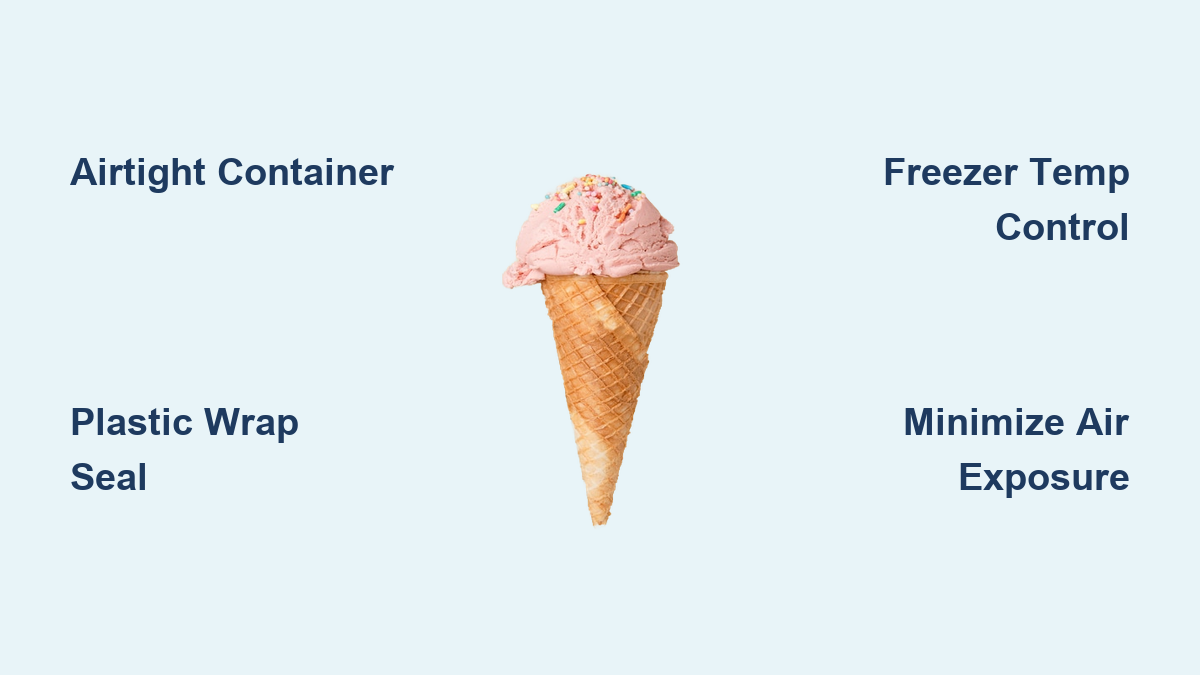
Preventing freezer burn on ice cream requires a layered approach addressing containers, wrapping, temperature, and serving methods. Use airtight containers that fit snugly, pressing plastic wrap directly against the ice cream surface before sealing with a lid. Store ice cream in your freezer’s coldest area away from the door, maintaining a consistent temperature of 0°F or below. Minimize air exposure through portioned servings, limited freezer door openings, and specialized storage solutions like squeeze containers. Understanding what causes freezer burn helps you make informed decisions about preserving frozen desserts for maximum enjoyment. With these techniques, your ice cream stays creamy, flavorful, and free from those disappointing dry patches.