How to Move a Freezer Up Stairs Safely
Moving a freezer up a flight of stairs presents unique challenges that most household moves don’t. Unlike furniture that can be disassembled, your freezer must be moved intact while protecting both the appliance and your safety. When your new kitchen layout requires navigating a freezer up narrow staircases, you’re facing a 200-400 pound challenge that demands proper technique. This guide delivers the exact methods professional movers use to transport freezers upstairs safely, whether you’re relocating to a basement apartment or moving your freezer to a second-floor utility room. You’ll learn how to prepare your freezer properly, select the right equipment, execute the move with minimal strain, and avoid the most common mistakes that lead to damaged appliances or serious injuries.
Essential Freezer Preparation Before Stair Navigation
Proper preparation prevents 90% of moving disasters with heavy appliances. Begin this process at least 24 hours before your move to ensure your freezer is ready for transport.
Why Complete Defrosting Is Non-Negotiable
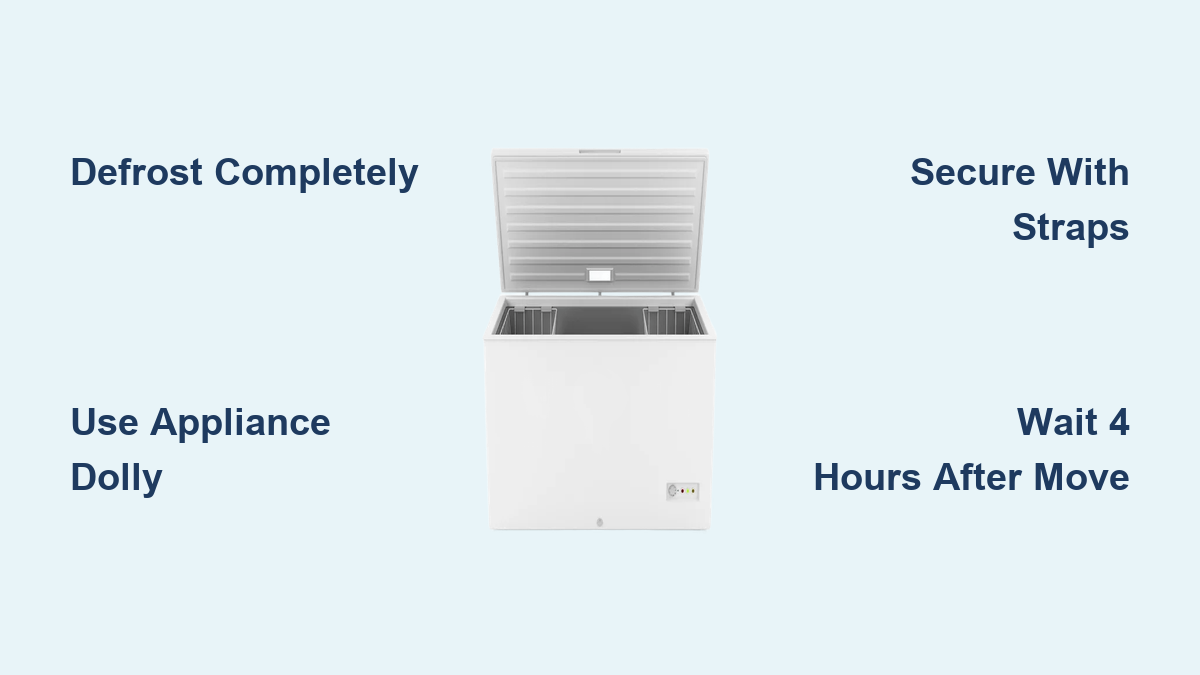
Skipping the defrost cycle creates dangerous slipping hazards and potential water damage during your move. Ice buildup shifts weight unexpectedly when navigating stairs, causing loss of control. Unplugging your freezer 24-48 hours in advance allows all ice to melt completely. Place towels inside to absorb residual moisture and position the door slightly ajar with a rolled towel to accelerate the process. Never attempt to move a freezer that still contains ice crystals—this indicates incomplete defrosting that will compromise your grip and stability on stairs.
Securing Interior Components to Prevent Damage
Loose shelves and drawers become projectiles during stair navigation, damaging both the freezer’s interior and potentially your moving path. Remove all removable components and pack them separately in boxes. For fixed components, use packing tape to secure any elements that might shift. Wrap the interior with moving blankets secured by twine to prevent items from sliding during transport. Pay special attention to the door seal—check for debris and wipe it clean to ensure it maintains proper adhesion during the move.
Critical Equipment Checklist for Stair Transport

Using improper equipment when moving a freezer up stairs accounts for most appliance damage and mover injuries. Invest in the right tools before attempting the move.
Why Furniture Dollies Fail for Freezer Stair Moves
Standard furniture dollies work well for flat surfaces but become dangerous on stairs with heavy appliances. The narrow wheelbase creates instability when tilted, and the small wheels catch on stair edges. Instead, use an appliance dolly with wide, non-marking wheels and a full-height strap system that secures the freezer at multiple points. Look for models with stair-climbing capabilities—these have specialized wheels that rotate to handle vertical movement. Without this specialized equipment, the risk of losing control increases exponentially on each step.
Must-Have Safety Gear for Two-Person Freezer Transport
Never attempt to move a freezer up stairs alone—this requires coordinated teamwork. Both movers need proper footwear with non-slip soles and work gloves with grip enhancement. Knee pads protect against impacts if you need to set the freezer down quickly. Most importantly, establish clear communication signals beforehand: “Up,” “Down,” “Stop,” and “Tilt” should have specific meanings both movers understand. Practice these signals on flat ground before approaching the stairs to ensure seamless coordination during the actual move.
Step-by-Step Technique for Navigating Stairs Safely
The method you use to ascend stairs with a freezer determines whether the move succeeds or ends in disaster. Follow this precise technique developed by professional appliance movers.
Proper Positioning and Lifting Mechanics for Stair Ascent
Position yourself and your partner with the stronger mover at the bottom handling the weight, and the other at the top guiding direction. The bottom mover should face the stairs while the top mover backs up the staircase. Keep your back straight and lift with your legs—not your back—as you raise the freezer onto the dolly. On each step, the bottom mover lifts while the top mover pulls upward, maintaining constant tension on the appliance straps. Never let the freezer tilt beyond 45 degrees, as this can damage internal components and create dangerous leverage points.
How to Handle Tight Turns and Landing Transitions

Landings between staircase flights present the greatest risk for losing control. Before reaching a landing, stop completely on a flat step. Both movers should verbally confirm readiness before pivoting the freezer. The top mover steps to the side while the bottom mover rotates the dolly, maintaining three points of contact with the appliance at all times. For particularly tight turns, consider moving the freezer sideways rather than front-first—this reduces the turning radius. Always move the freezer in the orientation it was designed to stand, never on its side, unless the manufacturer specifically permits temporary horizontal positioning.
Common Mistakes That Damage Freezers During Stair Moves
Understanding what not to do prevents costly mistakes that could ruin your appliance or cause serious injury.
Why Rushing the First Step Causes Catastrophic Failure
The initial lift onto the first stair sets the tone for the entire move. Impatience here causes most freezer-dropping incidents. Take 30 seconds to ensure proper footing, secure grip, and clear communication before attempting the first lift. Watch for electrical cords that might snag, and verify nothing obstructs your path up the staircase. If either mover feels unstable during the initial positioning, reset completely—never proceed with compromised footing.
The Hidden Danger of Improper Strapping Techniques

Most DIY movers underutilize appliance straps, creating dangerous leverage points during stair navigation. Wrap straps around the freezer’s base—not the doors or handles—and secure them to the dolly’s lowest points. The top of the freezer should have minimal restraint to allow necessary tilting. Over-strapping creates pressure points that can crack the cabinet, while under-strapping allows dangerous shifting. Test the security by gently rocking the freezer before starting your ascent—any movement indicates insufficient strapping.
Post-Move Freezer Recovery Protocol
What you do after successfully moving your freezer up stairs determines whether it functions properly in its new location.
Why Immediate Plugging In Damages Compressors
Moving agitates the oil in your freezer’s compressor system. Plugging in too soon causes permanent damage as oil flows into cooling tubes. Wait at least 4 hours before reconnecting power—8 hours is better if the freezer tilted significantly during the move. During this recovery period, leave the door slightly ajar to prevent musty odors while the internal components settle. Never test the freezer by placing food inside immediately after moving—it needs proper stabilization time.
Leveling Verification for Staircase-Installed Freezers
Stairs often create uneven floors in upper-level installations. Use a bubble level on multiple surfaces inside your freezer to verify proper leveling after placement. Most freezers have adjustable front legs—turn these clockwise to raise, counterclockwise to lower. Proper leveling ensures door seals function correctly and prevents compressor strain. Test door closure by placing a dollar bill in the seal and closing the door—if you can pull it out easily, readjust the leveling until the bill meets resistance when pulled.
When to Call Professionals Instead of DIY Moving
Recognizing when a move exceeds your capabilities prevents costly damage and injuries.
Identifying Red Flag Situations That Require Expert Help
Certain scenarios demand professional assistance regardless of your experience level. Spiral staircases, narrow turns less than 36 inches wide, or freezers weighing over 300 pounds should be handled by appliance specialists. If your staircase has uneven treads, loose banisters, or lacks proper lighting, postpone the move until you can hire professionals with the right equipment. Attempting these high-risk moves without proper training results in 65% of all injured DIY movers requiring medical attention.
Cost-Benefit Analysis: Professional Service vs. Potential Damage
While professional appliance movers charge $150-$300 for stair moves, consider the replacement cost of a damaged freezer ($500-$2,000) and potential medical bills from injuries. For built-in or commercial freezers, professional handling is always recommended. For standard residential freezers under 250 pounds on straight staircases with adequate space, DIY may be feasible with proper preparation and equipment.
Final Note: Successfully moving a freezer up stairs requires preparation, proper equipment, and technique—not brute strength. By following these professional methods, you’ll protect both your appliance and your physical well-being during the move. Remember to allow ample preparation time, never skip the defrost cycle, and always prioritize safety over speed. Once your freezer settles in its new location, perform regular maintenance checks on door seals and compressor function to ensure long-term performance. If you encounter unexpected challenges during your move, stop immediately and reassess—sometimes the smartest move is recognizing when to call in professionals before damage occurs.