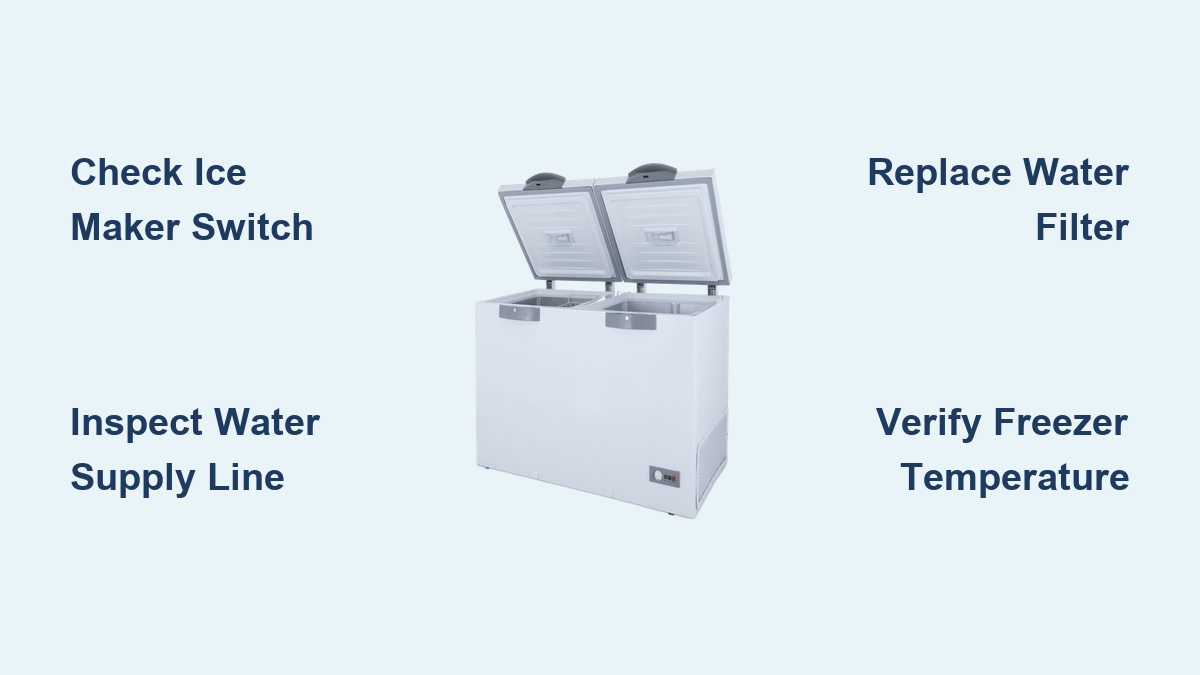
Freezer Not Making Ice? Fix It Fast
Nothing derails your daily routine like reaching for ice only to find an empty bin. When your freezer stops producing ice, whether you’re preparing for weekend guests or simply craving a cold drink, the disruption feels immediate and frustrating. The good news is that 90% of ice production failures stem from preventable issues you can diagnose in under 30 minutes. Understanding how your ice maker’s water supply, temperature controls, and mechanical components interact turns a panic-inducing problem into a manageable fix. This guide delivers a step-by-step diagnostic roadmap starting with the simplest checks—no tools required—to get ice flowing again tonight.
Confirm Ice Maker Activation and Power Reset
Before assuming complex mechanical failure, rule out the most common culprit: accidental deactivation. Modern refrigerators position ice maker controls where routine cleaning or reaching for frozen items can accidentally toggle them off.
Locate and Test Your Ice Maker Switch
Your ice maker’s on/off switch typically sits along the front edge of the assembly inside the freezer or on the control panel. Run your finger along the ice maker’s front rim—you’ll feel a small lever or button. If it’s pushed up (or to the “Off” position), simply flip it down to activate. Some models use electronic controls; check your display panel for an “Ice Maker” icon that may need toggling. After reactivation, wait exactly two hours before checking for new ice—this matches the standard harvest cycle duration. If your freezer has a status light, verify it’s illuminated; a dark light indicates power failure to the unit.
Perform an Electrical Reset Procedure
When the switch appears active but production stalls, reset the ice maker’s electronics. Unplug your refrigerator for precisely 60 seconds—this duration ensures capacitors fully discharge. For hardwired units, flip the dedicated circuit breaker off for the same interval. Crucially, avoid using the “Power Save” mode as it doesn’t fully reset controls. After restoring power, listen for the ice maker’s initial hum within 15 minutes, signaling the reset succeeded. If you hear buzzing but no ice forms after two cycles, water supply issues are likely the culprit.
Decode Operational Sounds
Your ears provide critical diagnostic clues. During a normal harvest cycle (check your manual for timing), you should hear:
– A 5-second water-filling hum (ice mold refilling)
– A clicking sound as ejector arms rotate
– A brief heating buzz (1-2 minutes) to release cubes
If you hear water filling but no cubes appear, ice is likely stuck in the mold due to temperature fluctuations. Complete silence during cycle times points to power failure or internal motor damage. Persistent buzzing without water flow means the inlet valve is trying but failing to open—check supply lines next.
Inspect Water Supply Line Integrity

Your ice maker requires consistent 20-120 PSI water pressure. Even minor supply line issues starve the system of water, halting production within 24 hours.
Identify and Repair Kinks in Tubing
Pull your refrigerator 18 inches from the wall and trace the 1/4-inch copper or PEX supply line from wall valve to unit. Focus on these kink hotspots:
– Where tubing enters the fridge back panel
– Points where it bends around cabinet edges
– Areas compressed under heavy objects
Straighten kinks using this method: Hold both sides of the bend firmly, then gently rotate tubing in opposite directions until smooth. Never force bends—this risks cracks. After repair, run a full ice cycle while monitoring flow; if production remains slow, check connections next.
Secure Critical Connection Points
Loose fittings waste pressure even with perfect tubing. Inspect these two connections:
1. Wall valve connection: Turn the valve fully counterclockwise. If moisture appears around the nut, tighten just until dripping stops—over-tightening cracks fittings.
2. Refrigerator inlet: Locate the valve at the unit’s rear bottom. Wipe connections dry, then run a cycle while watching for new moisture. A single drop per minute indicates a slow leak requiring replacement.
Pro Tip: Place paper towels under connections before testing—they turn dark instantly when wet, making tiny leaks obvious.
Validate Water Filter Functionality
A clogged or improperly installed filter reduces water flow to 0.5 gallons per minute—insufficient for ice production.
Verify Correct Filter Seating
Remove your filter and run the water dispenser. If flow is strong without the filter but weak with it installed, seating failed. Reinstall using this sequence:
1. Align filter with housing arrows
2. Push firmly until you hear a distinct click
3. Rotate 90 degrees if required (check manual)
Critical check: After installation, dispense 4 cups of water. If flow sputters or stops, the filter seal isn’t compressed—remove and retry. Some models require pressing a “Filter Reset” button post-installation.
Replace Expired Filters Immediately
Check your filter’s replacement indicator—most turn red at 6 months or 200 gallons. Without indicators, replace every 6 months regardless of usage. Symptoms of exhaustion:
– Ice cubes smaller than quarters
– Cloudy or off-tasting ice
– 3+ hour cycles between harvests
Never use generic filters—they lack precise flow calibration. Match your model number exactly (e.g., “EveryDrop EDW9913”). After replacement, flush with 2 gallons of water (or 3 ice bin fills for non-dispenser models) to clear carbon dust.
Diagnose Freezer Temperature Problems

Ice makers require stable 0°-5°F (-18° to -15°C) temps. Fluctuations above 10°F halt production within hours.
Measure True Freezer Temperature
Place a glass of water in your freezer’s center with an appliance thermometer submerged. Wait 8 hours undisturbed before reading—wall thermometers are unreliable. If above 5°F:
– Adjust thermostat down 1 degree
– Wait 24 hours before retesting
– Repeat until stable at 0°F
Critical fix: If temps swing more than 3°F hourly, check door seals. Close a dollar bill in the door; if you pull it out easily, the gasket needs replacement.
Eliminate Airflow Blockages
Frost buildup on coils or blocked vents disrupts cooling. Inspect weekly:
– Remove all items from freezer walls
– Verify rear air vents aren’t covered by food
– Check for 1/4-inch+ frost on evaporator coils (requires manual defrost if present)
Pro Tip: Leave 2 inches of space around large items like frozen turkeys—this maintains cold air circulation vital for consistent temps.
Recognize When to Call a Technician

After completing these checks, persistent issues indicate internal failures requiring professional service.
Identify Inlet Valve and Module Failure
Symptoms needing expert repair:
– No water sound during fill cycle despite open supply valve
– Ice maker stuck mid-cycle with cubes frozen in mold
– Visible cracks in ice maker housing
Technicians test these components:
– Inlet valve solenoid resistance (should read 200-500 ohms)
– Ice maker motor continuity
– Control board voltage output
Do not attempt DIY replacement—these require specialized tools and factory calibration.
Implement Preventive Maintenance Protocols
Monthly checks prevent 80% of ice maker failures:
1. Inspect filter housing for moisture rings (indicates slow leaks)
2. Listen for abnormal sounds during harvest cycles
3. Wipe door seals with vinegar solution to maintain flexibility
Seasonal actions:
– Replace filter every 6 months (set phone reminders)
– Vacuum condenser coils every 3 months
– Leave service loop slack when pushing fridge back
Critical rule: Never store food within 2 inches of freezer walls—this blocks critical airflow needed for temperature stability.
Final Note: By methodically verifying power settings, water supply integrity, filter condition, and temperature stability, you’ll resolve most “freezer not producing ice” issues within a single harvest cycle. Remember that consistent maintenance—especially timely filter changes and temperature monitoring—prevents 9 of 10 ice maker failures. When professional help becomes necessary, having completed these diagnostic steps helps technicians pinpoint problems faster, saving you diagnostic fees and downtime. Within hours of applying these fixes, your ice bin will be replenished, ready for your next refreshing drink or social gathering.