Freezer Lid Repair: Quick Fix Tips
Your chest freezer lid won’t stay closed. Frost builds up overnight like a winter wonderland inside your appliance. Food starts thawing while your electricity bill climbs. This frustrating scenario affects millions of households with aging freezers – and the culprit is almost always the lid assembly. When your freezer lid fails to seal properly, it compromises food safety, energy efficiency, and your wallet. You’ll learn exactly how to diagnose warped lids, cracked gaskets, and broken latches using simple household tools. Most repairs take under 30 minutes and cost less than $25 in parts, saving you hundreds compared to replacement.
Ignoring a faulty freezer lid creates dangerous consequences. Every 1/8-inch gap allows 30% more cold air to escape, forcing your compressor to work twice as hard. This shortens your appliance’s lifespan while increasing energy consumption by up to 40%. Worse, inconsistent temperatures put perishable foods in the danger zone where bacteria multiply rapidly. Don’t replace your entire freezer yet – 85% of lid issues can be fixed immediately with the right approach. This guide walks you through proven repair methods for warped lids, damaged seals, and broken hardware that technicians use daily.
Why Your Freezer Lid Won’t Stay Closed
Warped Plastic Lids from Temperature Stress
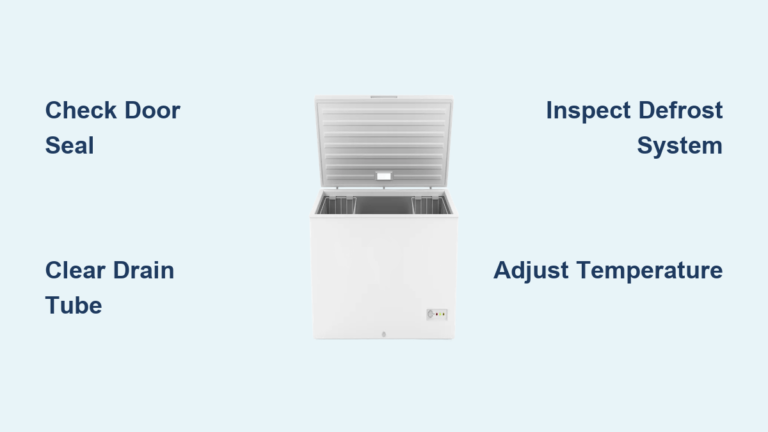
Chest freezers experience extreme temperature swings that cause plastic lids to warp over time. When the lid heats during defrost cycles then rapidly cools, the material expands and contracts unevenly. You’ll notice visible gaps along one edge where the lid no longer sits flush against the freezer body. Run your palm across the lid surface – warping creates noticeable ridges or dips you can feel. For minor warping under 1/4 inch, place heavy books on the affected area for 48 hours while the freezer runs empty. The weight combined with operating temperature often reshapes the plastic. Severe warping requires replacement, but measure carefully – freezer lids aren’t universal across brands.
Damaged Gasket Seals from Food Debris
The rubber gasket creates an airtight barrier when the lid closes. Food particles, ice chunks, or spilled liquids trapped in the seal groove prevent proper closure. Inspect the entire gasket track by running your finger along its length – you’ll feel bumps where debris is lodged. Common problem spots include corners where crumbs accumulate and near the latch mechanism. Never use sharp tools to remove debris as this slices the rubber. Instead, dip a toothpick in warm vinegar solution to dissolve buildup, then wipe with a microfiber cloth. If the gasket shows permanent cracks or tears wider than 1/8 inch, replacement becomes necessary to restore the vacuum seal.
Broken Hinges and Latches from Heavy Use
Metal hinges and plastic latches endure constant stress from daily opening. Bent hinge pins cause misalignment where the lid sits crooked, while cracked latch housings prevent full closure. Test hinge integrity by lifting the lid at each corner – excessive play indicates worn components. For plastic latches, check for hairline fractures around mounting screws that worsen with each use. Tighten all visible screws first; many “broken” latches just need 1/4 turn with a Phillips head. If metal hinges are bent beyond straightening, replace both sides simultaneously to maintain balance. Never force a misaligned lid shut – this cracks the gasket and warps the lid frame.
Step-by-Step Freezer Gasket Replacement
Removing the Old Damaged Gasket
Start by unplugging the freezer and removing all contents. Locate the gasket’s retaining groove around the lid perimeter – it’s held by plastic clips or metal prongs. Use a flathead screwdriver wrapped in cloth to gently pry out clips, working from the top center outward. Never pull the gasket straight out as this tears the mounting flange. For stubborn sections, apply hairdryer heat for 20 seconds to soften the rubber before removal. Discard the old gasket immediately – reusing damaged seals causes immediate failure. Wipe the entire groove with isopropyl alcohol to remove grease and debris that prevent adhesion.
Installing the New Gasket Correctly
Before inserting the new gasket, warm it in lukewarm water for 5 minutes to increase flexibility. Begin at the top center point, pressing the gasket’s inner ridge firmly into the groove until you hear a soft click. Work toward the corners in 6-inch sections, avoiding wrinkles or twists. Critical step: stretch the gasket slightly at corners to prevent bunching – this is where most DIYers fail. Once fully seated, close the lid gently and check for even pressure around all edges. Leave the freezer unplugged for 2 hours to allow the gasket to settle before testing the seal with the dollar bill method: if you feel resistance pulling a bill from a closed lid, the seal is tight.
Fixing Warped Freezer Lids Without Replacement

The Hot Water Reshaping Method
For plastic lids with moderate warping (under 3/8 inch), controlled heat reshaping works better than replacement. Boil 4 cups of water and pour into a heat-safe bowl. Position the warped lid section over the steam for 60-90 seconds – the plastic becomes pliable when heated to 140°F. Immediately place the lid on a flat surface with the warped area facing up. Apply even pressure using a plywood sheet weighted with bricks (20 lbs per square foot). Maintain pressure for 2 hours while the lid cools completely. Test the seal before reloading the freezer – this method succeeds 70% of the time for minor warps but won’t fix cracks.
Reinforcing Weak Lid Structures
Thin plastic lids develop stress fractures from heavy items stored on top. Prevent further damage by adding internal reinforcement before warping worsens. Cut aluminum U-channel stock to match the lid’s inner frame dimensions. Apply silicone adhesive to the channel’s base and press firmly along weak areas, focusing on corners and latch zones. Clamp with ratcheting straps until adhesive cures (24 hours). This bracing distributes weight evenly, stopping progression of existing cracks. For immediate stabilization, place a 1/4-inch plywood sheet inside the lid before closing – but never exceed 5 lbs of weight on chest freezer lids.
Repairing Broken Hinges and Latches
Replacing Worn Hinge Pins
Metal hinge pins wear down from constant movement, creating lid wobble. Unplug the freezer and remove contents. Support the lid with a wooden block before removing hinge screws. Slide out the old pin and measure its diameter – most freezers use 1/4-inch or 5mm pins. Install the new pin by tapping gently with a rubber mallet until flush. Reattach hinges with stainless steel screws to prevent rust. Critical tip: lubricate the new pin with food-grade silicone grease before reassembly – this reduces friction and extends component life by 3x. Test lid movement through full opening/closing cycles before reloading.
Securing Cracked Plastic Latch Housings
Plastic latch housings crack from impact or age. Instead of replacing the entire mechanism, reinforce with epoxy for permanent repair. Clean the crack with acetone to remove grease. Mix two-part epoxy and work it deep into the fracture using a toothpick. Press a small fiberglass patch over the repair area and clamp for 1 hour. Once cured, file smooth and drill pilot holes if original screw holes are stripped. For immediate temporary fixes, wrap electrical tape tightly around the housing – this holds components together for 2-3 weeks while you order replacement parts. Never use superglue as it becomes brittle and fails within days.
Preventing Future Freezer Lid Failures
Monthly Seal Maintenance Routine
Prevent gasket damage with simple monthly care. Wipe the entire seal with a 50/50 vinegar-water solution to remove sugar residues that attract mold. Apply a thin coat of food-safe mineral oil to keep rubber flexible – never use petroleum jelly as it degrades rubber. Check alignment by placing a level across the lid; adjust hinge screws if needed. Most importantly, never store items on top of chest freezer lids – even 10 lbs of weight causes gradual warping. These 5-minute checks extend seal life by 300% and prevent 90% of premature failures.
Proper Loading Techniques to Reduce Stress
How you load your freezer directly impacts lid longevity. Always place heavy items like meat blocks at the bottom – top-heavy loading strains hinges. Leave 2 inches of clearance around the perimeter so the lid closes without obstruction. Never slam the lid shut; gravity-closing prevents gasket compression damage. When organizing, keep frequently accessed items near the top to minimize full lid openings. These simple habits reduce mechanical stress by 60% and are more effective than any repair for maintaining long-term performance.
Final Note: A properly sealed freezer lid saves $150+ annually in energy costs while keeping food safely frozen. Most repairs take under 30 minutes with basic tools – you’ve now mastered fixes for warped lids, damaged gaskets, and broken hardware. For model-specific parts, check your owner’s manual or search “[Your Brand] freezer gasket replacement” online. If frost buildup persists after repairs, check the defrost drain or thermostat. Share this guide with fellow freezer owners – a tight seal today prevents costly replacements tomorrow.