Fix Bosch Freezer Door Not Closing Issue
When your Bosch freezer door won’t close properly, you’re facing more than just an annoying alarm—you’re risking food spoilage, increased energy bills, and potential compressor damage. That persistent beeping sound, frost accumulating along the door edges, or your icemaker refusing to operate are all red flags signaling a serious problem. The good news is that most Bosch freezer door closing issues stem from just a few common causes that you can diagnose and fix yourself in under an hour. Whether you own a Bosch 800 Series, 300 Series, or Thermador freezer column, understanding why your door won’t seal properly is the first step to restoring proper function and preventing costly repairs down the line.
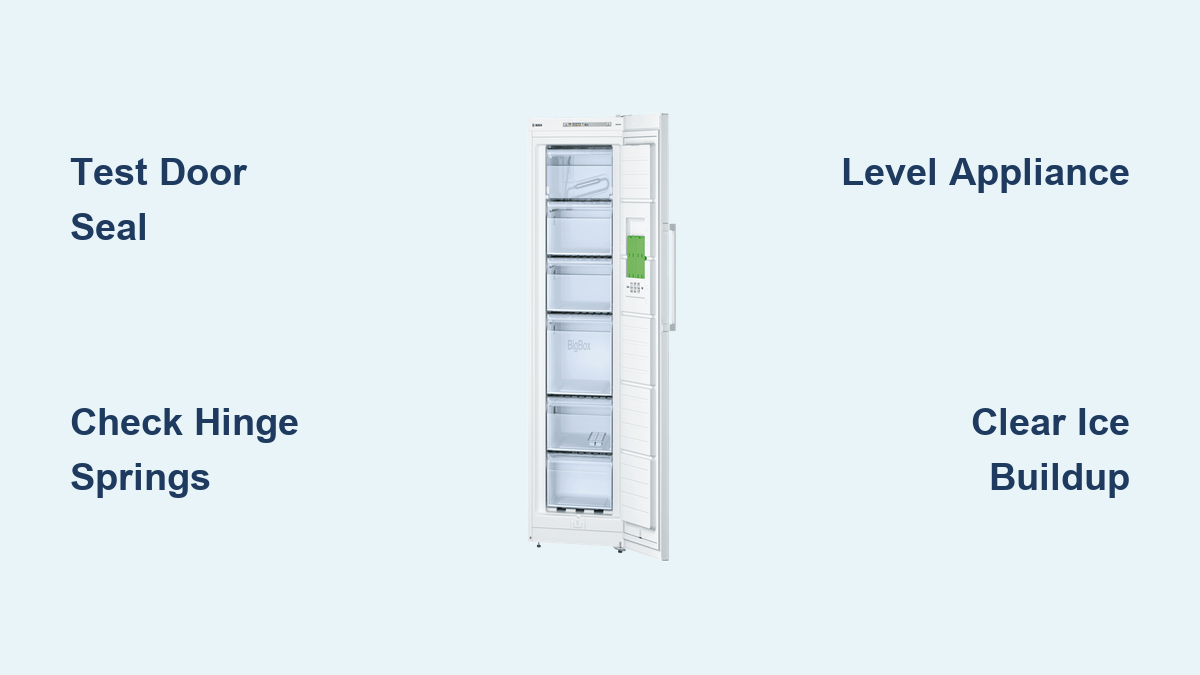
A properly sealing freezer door maintains the critical cold environment needed to preserve food safely. When your Bosch freezer door not closing properly allows warm air to enter, it forces the compressor to work harder, increasing energy consumption by up to 25% while creating temperature fluctuations that can spoil frozen goods. Most closing problems originate from four key areas: worn door seals, failed hinge springs, appliance misalignment, or physical obstructions. This guide provides a systematic approach to identifying and resolving your specific issue, saving you the time and expense of unnecessary service calls.
Why Your Bosch Freezer Door Won’t Close Properly
Before grabbing tools, observe your door’s behavior to narrow down the cause. Open the freezer door normally and release it—does it close on its own, bounce back open, or remain stuck partially open? Push the door closed firmly and release it at different angles to identify specific failure points. These observations immediately tell you whether you’re dealing with obstruction issues, seal failure, or hinge problems.
The three most frequent culprits behind Bosch freezer door not closing problems are: physical obstructions preventing full closure, door seal failures allowing air leakage, and hinge spring degradation causing inadequate closing force. Obstruction problems typically present with the door appearing to close but not sealing completely. Seal failures result in detectable gaps around the perimeter. Hinge failures cause doors that bounce open when released or swing too freely during closing. Physical inspection often reveals the problem immediately—check for visible seal damage, cracks, or permanent deformation, examine hinges for bent components, and look for items blocking the drawer from closing fully.
Test Your Door Seal With the Paper Method

The door seal (gasket) creates the airtight closure between your freezer door and cabinet. When compromised, it prevents proper sealing regardless of other components functioning correctly. Perform the paper test by taking a small piece of paper or currency note and attempting to slip it through the door seal at various points around the entire perimeter:
- Close the door on the paper
- Try to pull the paper out at multiple locations
- If it slides through easily at any spot, your seal has failed
Pro Tip: Pay extra attention to corners and areas where the seal bends during regular operation, as these sections commonly develop gaps first. Weak or inconsistent magnetic attraction confirms magnetization degradation—test this by checking if a small refrigerator magnet adheres firmly along the entire seal surface.
Replace Worn or Demagnetized Door Seals
When your Bosch freezer door not closing stems from seal failure, replacement is the practical solution. Re-magnetizing requires specialized equipment, so replacing the entire seal assembly is recommended. This is an easy DIY task that most homeowners complete without professional help.
Before installation:
– Leave the new seal in sunlight for 2-3 hours to soften the material
– Work systematically around the door perimeter starting at one corner
– Ensure no twists, folds, or gaps at corners
– Verify the magnetic strip faces the cabinet interior
After installation, immediately test using the paper method at multiple points. Allow the seal to set for several hours before evaluating long-term performance, as some initial settling is normal.
Fix Failed Hinge Springs Causing Door Bounce
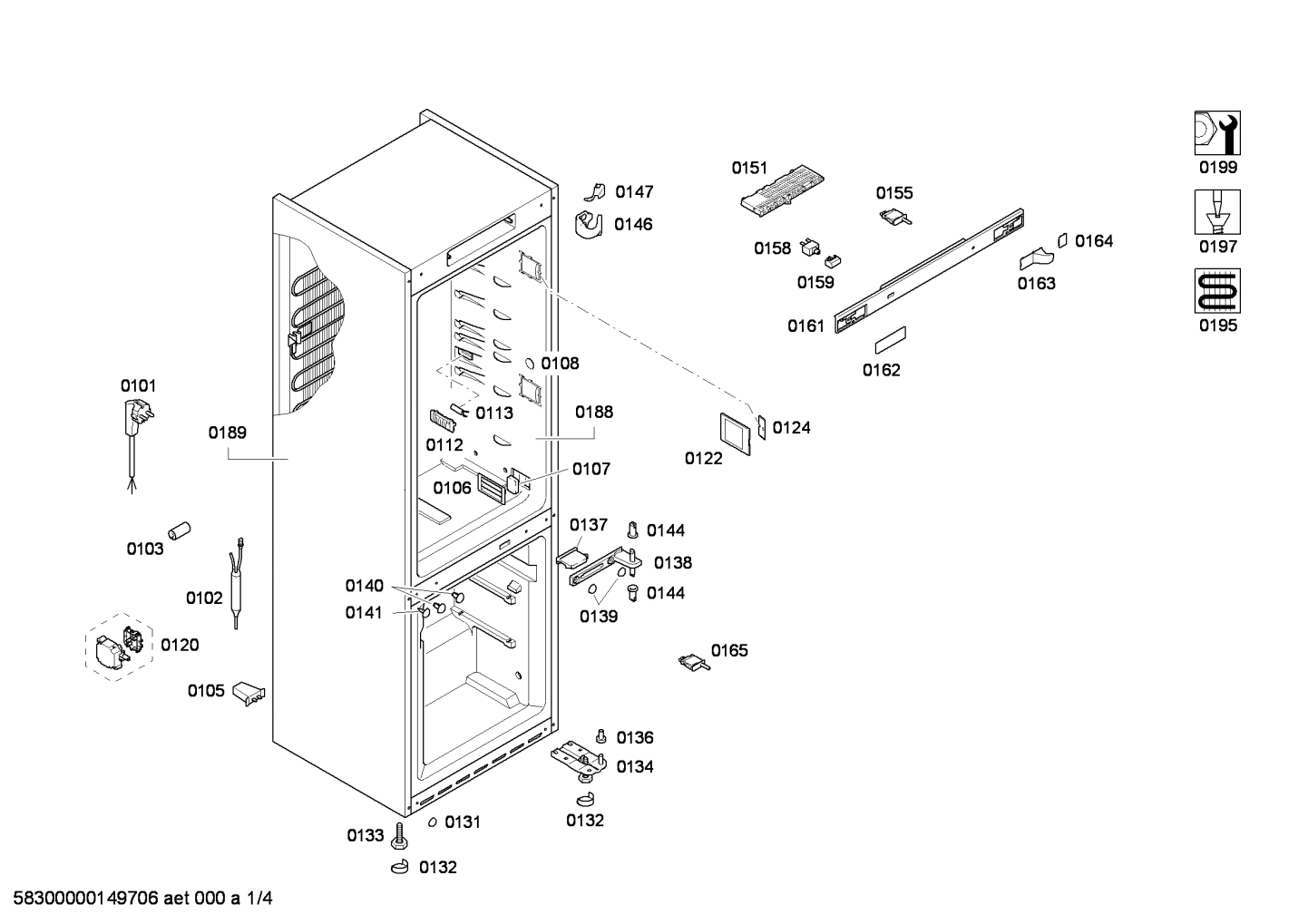
Bosch freezer doors rely on precisely engineered hinge systems with spring mechanisms that provide the initial closing force. When these springs fail, your door may swing open too easily or bounce back when closing. For Bosch and Thermador freezer columns, specific part numbers identify correct replacements:
- Bottom hinge: part number 00644385
- Top hinge: part number 00644386
These apply to models including Thermador t24if70nsp/42 and comparable Bosch configurations. Hinge replacement requires more technical skill than seal replacement but remains achievable for experienced DIYers. Support the door during hinge removal, mark hinge positions for accurate reinstallation, and handle spring mechanisms carefully. Consider replacing the entire hinge kit rather than individual components to ensure compatibility and even operation.
Level Your Bosch Freezer for Proper Door Closure

Even a perfectly functioning door seal and hinge system cannot compensate for an improperly leveled appliance. Use a spirit level on top of your freezer to verify levelness in both front-to-back and side-to-side directions:
- Access leveling bolts beneath the front of the appliance
- Rotate bolts clockwise to raise or counterclockwise to lower
- Make small adjustments and recheck level after each change
- Test door closure multiple times after achieving proper level
The door should close easily and remain closed without drifting open. If problems persist after leveling, additional components require investigation.
Clear Obstructions Blocking Drawer Closure
Physical obstructions are among the most frequent causes of Bosch freezer door not closing issues. Fully extend the drawer and examine the cavity behind and beneath it—small items often fall behind storage bins and prevent complete closure. Overfilled bins and storage containers can also cause closing problems when items protrude upward and contact the door frame.
Common obstruction locations:
- Behind the main drawer
- Beneath storage bins
- Along drawer tracks
- Ice container overflow areas
Rearrange contents to within recommended fill levels to resolve this issue. Items placed loosely in the freezer can shift during operation and create unexpected blockages.
Remove Ice Buildup Preventing Door Sealing
Frost and ice accumulation along the door opening or drawer tracks physically blocks the drawer from reaching its closed position. This ice forms from moisture entering the freezer cavity due to frequent door opening or high humidity environments.
Inspect the bottom of the freezer opening and along drawer tracks for frost deposits. Run your finger along these surfaces to detect ice that may not be visually obvious. Carefully remove any ice accumulation using a plastic scraper or by allowing the freezer to defrost naturally. Avoid metal tools that could damage seals or interior surfaces.
Understand Alarm and Icemaker Connections
Bosch freezers incorporate alarm systems that activate when the door remains open. The alarm includes audible alerts and a red warning light on the display panel. When your Bosch freezer door not closing properly, the appliance’s computer detects this through integrated door switch sensors.
The icemaker system directly links to the door status detection circuit. When the door is detected as open, the main computer overrides icemaker control to prevent ice production. The icemaker status shows as a small green light near the ice container that blinks slowly (once every two seconds) when ON and ready to operate.
To turn the icemaker OFF, press and hold the adjacent button for approximately three seconds until the light goes out. Restoring normal operation requires resolving the door closing problem first—once the door seals properly, verify the icemaker is turned ON by checking for the slow green blink pattern.
Follow This Step-by-Step Diagnostic Checklist
- Observe door behavior: Open normally and release—does it close, bounce, or stay open?
- Test seal integrity: Use paper insertion method at multiple perimeter points
- Examine hinges: Look for visible damage, bent components, or loose mounting
- Check levelness: Verify appliance sits perfectly level in both directions
- Inspect for obstructions: Look behind, beneath, and around drawer components
- Clear ice buildup: Remove frost along door opening and drawer tracks
Address the most likely causes first: obstructions and ice buildup are most common, followed by seal failure, then hinge problems. Most Bosch freezer door not closing problems resolve without professional service when following this systematic approach.
Prevent Future Door Closing Issues
Regular maintenance prevents unexpected failures and extends appliance service life:
- Quarterly: Visually inspect seals, test integrity with paper method, observe closing behavior
- Annually: Inspect hinges and verify levelness
- Keep seals clean: Use mild detergent and water, avoiding harsh chemicals
- Apply silicone conditioner: Maintain seal flexibility, especially in dry climates
- Minimize door open time: Plan freezer access efficiently
- Avoid overfilling: Maintain proper storage organization
Most Bosch freezer door not closing problems can be resolved through these systematic troubleshooting steps. When issues persist after addressing common causes, professional diagnosis may identify sensor failures or control board problems. However, the vast majority of closing issues fall into the categories covered here and can be resolved with basic tools and careful attention to these proven solutions.