How to Freeze Rosemary for Long-Lasting Freshness
Fresh rosemary is a culinary treasure that transforms simple dishes into restaurant-quality meals. But when your garden overflows or the farmer’s market offers a great deal, you face the challenge of preserving this fragrant herb before it wilts. Unlike delicate herbs that turn to mush when frozen, rosemary’s sturdy, woody nature makes it uniquely suited for freezing—preserving its bright, pine-like flavor far better than drying ever could. When properly frozen, rosemary maintains its vibrant color and aromatic oils for up to a year, giving you “fresh” flavor whenever you need it.
This guide reveals four proven methods for freezing rosemary, each with specific advantages depending on how you cook. You’ll learn exactly how to prepare rosemary for optimal freezer storage, which techniques prevent freezer burn, and how to use frozen rosemary directly in your favorite recipes. Whether you’re a home gardener with a bumper crop or simply tired of wasting store-bought herbs, these techniques will ensure you never run out of fresh-tasting rosemary again.
Why Rosemary Freezes Better Than Other Herbs
Rosemary belongs to the “hard herb” category alongside thyme, sage, and savory—herbs with woody stems and resinous leaves that withstand freezing remarkably well. Unlike soft herbs like basil or cilantro that turn slimy and lose flavor when frozen, rosemary’s thick, leathery leaves contain specialized oil glands that protect its cellular structure during the freezing process. These glands lock in the essential oils responsible for rosemary’s distinctive aroma and taste, preventing significant flavor degradation.
When you freeze rosemary, you’re essentially pausing the natural degradation process that begins immediately after harvest. The volatile compounds that give rosemary its piney, citrusy notes remain intact within the frozen leaves, ready to release their full flavor when added to hot dishes. This preservation method captures the bright freshness that dried rosemary only hints at, making frozen rosemary the superior choice for serious cooks who value authentic flavor.
Freezing also offers practical advantages beyond flavor preservation. A well-organized freezer stash eliminates last-minute grocery runs for wilted supermarket herbs, reduces food waste from unused garden harvests, and lets you take advantage of seasonal abundance when prices are lowest. For gardeners in cold climates, freezing your fall harvest is essential for maintaining a year-round supply since rosemary often can’t survive winter outdoors.
Prepare Rosemary Properly Before Freezing
Wash Rosemary Thoroughly to Extend Shelf Life
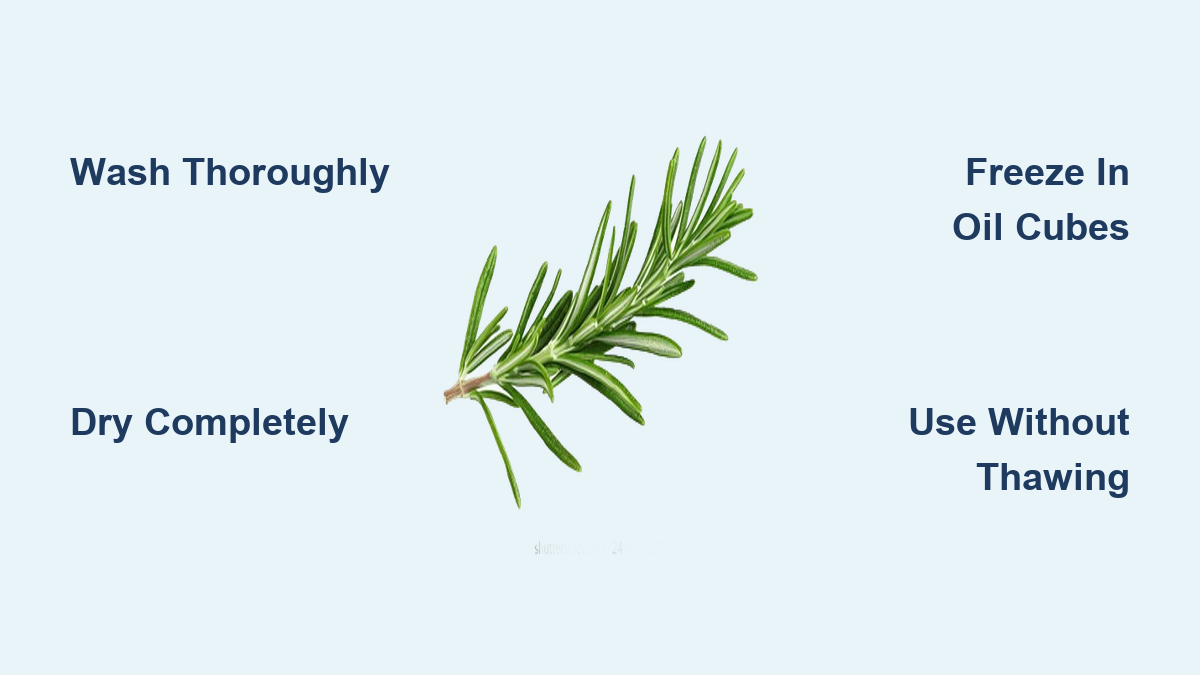
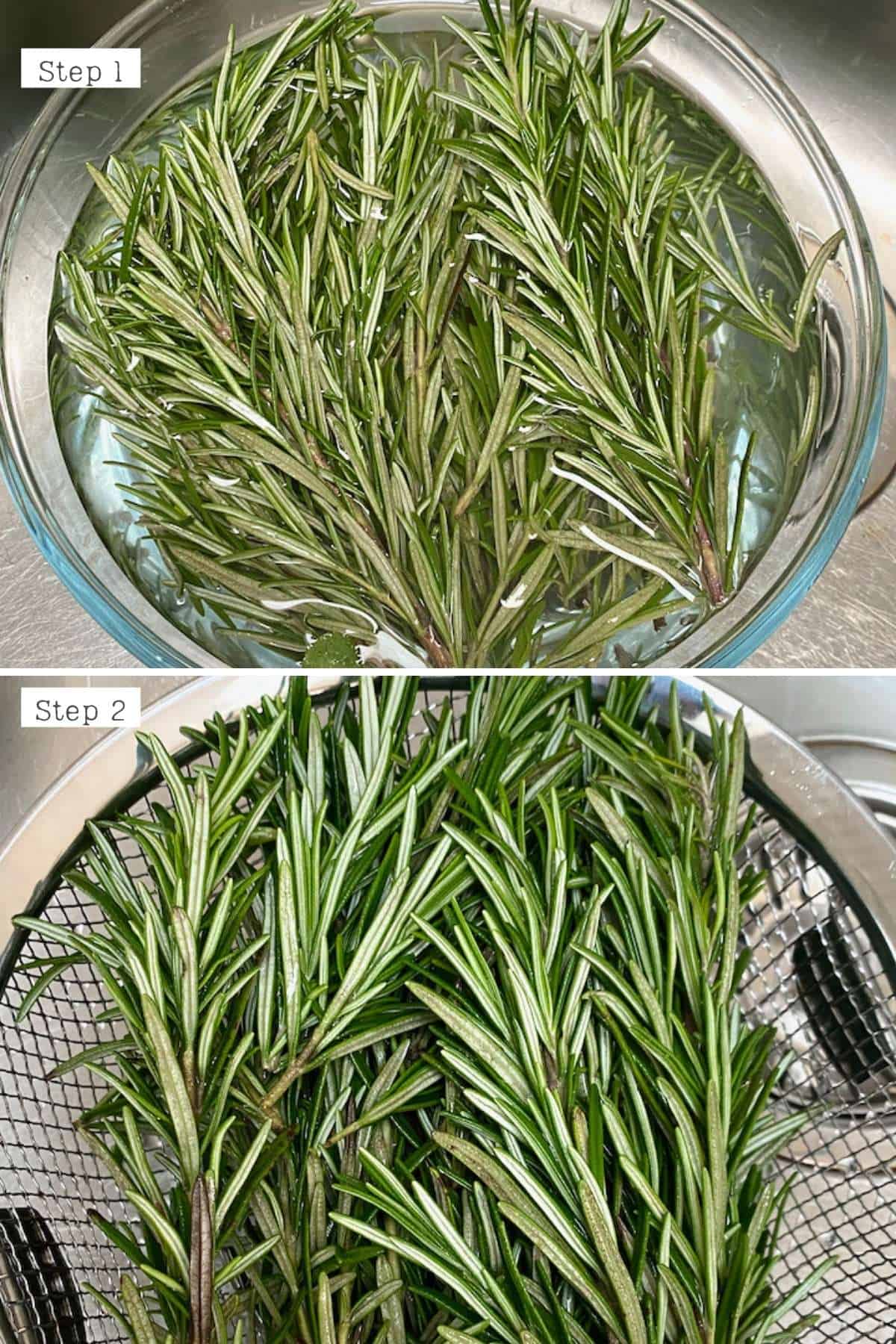
Skipping the wash step is the most common mistake people make when freezing herbs. Even if your rosemary looks pristine, rinse it under cold running water to remove invisible dirt, dust, insects, and bacteria that accelerate spoilage. Gently swish the sprigs in a bowl of water or hold them under a soft stream, being careful not to bruise the leaves. This simple step takes under a minute but significantly extends how long your frozen rosemary maintains quality.
Dry Rosemary Completely to Prevent Ice Crystals
Excess moisture is the enemy of frozen herbs—it creates ice crystals that damage cellular structure and lead to freezer burn. After washing, use a salad spinner for efficient drying, giving the rosemary two or three spins until no water remains. If you don’t have a spinner, lay the sprigs flat on clean kitchen towels and gently pat dry. For stubborn moisture between leaves, roll the sprigs in the towel and apply light pressure. Your rosemary is ready for freezing only when you can rub a leaf between your fingers without feeling any dampness.
Harvest at the Optimal Time for Maximum Flavor
Timing matters when preparing rosemary for freezing. The best time to harvest is midmorning, after dew has evaporated but before the sun’s heat begins evaporating the essential oils that provide flavor. Look for sprigs that snap crisply when bent, indicating peak freshness. Avoid any stems that show yellowing, wilting, or signs of insect damage, as these will compromise your entire batch. For store-bought rosemary, select packages with vibrant green needles that release a strong fragrance when gently squeezed.
Freeze Whole Rosemary Sprigs for Maximum Flexibility
Prepare and Package Sprigs to Prevent Clumping
Place your washed and completely dried rosemary sprigs in a freezer bag, arranging them in a single layer before sealing. Press out as much air as possible—use the straw method by inserting a straw into the bag opening, sealing around it, and sucking out air before quickly removing the straw and finishing the seal. Lay the bag flat on a baking sheet and freeze it this way for several hours. This prevents the sprigs from freezing together in an unusable clump and makes portioning easy later.
Use Whole Frozen Sprigs Like Fresh in Cooking
Whole frozen sprigs work perfectly for recipes that call for rosemary stems, such as soups, stews, and braising liquids. Simply drop a frozen sprig directly into your hot pot—the cold temperature won’t significantly lower the cooking temperature, and the herb will release flavor as it thaws. When your dish is finished, remove the woody stem just as you would with fresh rosemary. For chopped applications, pull out frozen sprigs and strip the leaves (they come off more easily when frozen), then chop as needed without waiting for thawing.
Freeze Individual Rosemary Leaves for Quick Measuring
Strip and Chop Leaves Before Freezing
After washing and drying your rosemary, remove the leaves from the woody stems using your fingers or a fork. For recipes requiring chopped rosemary, now is the time to mince the leaves finely. Transfer the prepared leaves to a freezer bag, press out all air, and freeze flat on a baking sheet before stacking. This single-layer freezing creates a “rosemary sheet” that you can break off pieces from as needed.
Measure Portions for Recipe Accuracy
One sprig of fresh rosemary equals approximately one tablespoon of leaves. When converting recipes, remember that one sprig of fresh rosemary equals one teaspoon of dried rosemary, with dried herbs generally being three times more potent than fresh. Freeze your leaves in standard measurements—like teaspoon or tablespoon portions—to simplify cooking later. Label your bag with the date and measurement system so you always know exactly how much you’re adding to dishes.
Freeze Rosemary in Oil Cubes for Long-Term Flavor
Create Flavor-Preserving Herb Cubes
Fill each compartment of an ice cube tray halfway with finely chopped rosemary leaves, then top with olive oil until full. Cover the tray with plastic wrap or place it inside a freezer bag to prevent odor absorption. Once frozen solid (usually 4-6 hours), pop the cubes out and transfer them to a labeled freezer bag. Each cube typically contains one tablespoon of rosemary—perfect for adding to pan sauces, soups, or roasted vegetables.
Why Oil Cubes Outperform Other Methods
Oil creates a protective barrier that locks in rosemary’s volatile oils while preventing freezer burn. Unlike water, oil doesn’t freeze solid, so these cubes melt faster when added to hot pans—releasing flavor more quickly and evenly throughout your dish. The oil also absorbs rosemary’s essence, creating a dual-purpose ingredient that flavors both the herb and the cooking medium. This method preserves flavor better than any other technique, keeping rosemary tasting fresh for up to a year.
Avoid Freezing Rosemary in Water Cubes
Why Water Freezing Delivers Inferior Results
While some guides recommend freezing rosemary in water, this method creates significant cooking challenges. Water freezes harder than oil, so cubes take longer to melt in hot pans. As the outer layer thaws, the outer herbs begin cooking while the center remains frozen—resulting in uneven flavor distribution and potential loss of volatile compounds. Water also doesn’t protect against freezer burn as effectively as oil, leading to faster quality degradation.
Better Alternatives for Oil-Free Diets
If you avoid oil for dietary reasons, freezing whole sprigs or loose leaves is more effective than water cubes. Simply freeze your prepared rosemary in an airtight bag with all air removed. When cooking, add the frozen rosemary directly to hot liquids where it will thaw quickly. The minimal water content in the rosemary itself provides enough moisture for proper integration into dishes without needing additional water freezing.
Comparison: Which Freezing Method Should You Use?
Choose the Right Method for Your Cooking Style
The whole sprig method works best if you occasionally use rosemary and want maximum flexibility—keeping options open for whole sprigs or chopped leaves depending on the recipe. This approach requires the least prep time and takes minimal freezer space. If your recipes consistently call for measured amounts of chopped rosemary, freezing the leaves separately saves significant time during cooking. For batch cooks who regularly make soups and sauces, oil cubes provide unmatched convenience with portion-controlled flavor ready to drop into any dish.
Storage Duration by Method
Whole sprigs maintain quality for 6-9 months when properly frozen, while loose leaves last 4-6 months due to increased surface area exposure. Oil cubes preserve flavor for up to 12 months—the longest of any method—thanks to oil’s protective properties. Water cubes last only 3-4 months before noticeable flavor degradation occurs. For most home cooks, oil cubes provide the best balance of convenience and longevity if you use oil regularly, while whole sprigs offer the most versatile option with minimal effort.
Use Frozen Rosemary Directly in Cooking
Add Frozen Rosemary Without Thawing
Never thaw frozen rosemary before cooking—this wastes time and can cause flavor loss. For whole sprigs, drop them directly into soups or stews where they’ll release flavor as they thaw. For chopped leaves or oil cubes, sprinkle or drop them into hot pans—the intense heat will instantly begin releasing aromatic compounds. Frozen rosemary works particularly well in long-cooking dishes like braises and slow-simmered sauces where its flavor has time to fully develop and meld with other ingredients.
Conversion Tips for Recipe Success
When substituting frozen rosemary for dried in recipes, use twice as much frozen as dried since dried herbs are more concentrated. For recipes developed for fresh rosemary, use frozen in the same proportion—no conversion needed. When making herb rubs for meats, mix frozen chopped rosemary with other seasonings; the brief time at room temperature while prepping meat allows sufficient thawing. For roasted vegetables, toss them with frozen rosemary oil cubes before cooking—the oil helps the herbs adhere while enhancing browning.
Maximize Freezer Storage Life and Quality
Prevent Freezer Burn with Proper Packaging
Remove every bit of air from freezer bags before sealing—air exposure causes oxidation that degrades flavor and texture. For storage beyond six months, transfer frozen rosemary to glass jars with airtight lids, which provide superior protection against both air and odor absorption. Always leave a small headspace in jars to accommodate any minor expansion, and label containers with both the contents and freezing date to track freshness.
Maintain Consistent Freezer Conditions
Set your freezer to 0°F (-18°C) or below and avoid frequent door openings that cause temperature fluctuations. Fluctuating temperatures cause ice crystals to form and melt repeatedly, damaging the herb’s cellular structure. Store rosemary away from strongly scented foods like fish or onions, as herbs readily absorb surrounding odors. For best flavor, use frozen rosemary within 6-9 months, though properly stored oil cubes remain excellent for up to a year.
Troubleshoot Common Freezing Problems
Fix Ice Crystals and Freezer Burn
If you notice frost or ice crystals on your frozen rosemary, this indicates air exposure during storage. Trim away any visibly damaged areas before use, and for remaining portions, transfer to better-sealed containers—double-bagging in freezer bags or using glass jars. Going forward, ensure you remove all air from packaging and consider adding a moisture-absorbing packet to your freezer storage containers.
Restore Flavor to Old Frozen Rosemary
Rosemary frozen beyond a year may have diminished potency. Boost its impact by adding it earlier in the cooking process to allow more time for flavor extraction, or increase the amount by 25-50% compared to fresh. Pair it with a small amount of fresh rosemary when possible—the combination creates a more vibrant flavor profile than old frozen rosemary alone. For critical dishes where optimal flavor matters, it’s worth starting with a fresh batch rather than compromising quality.
By following these precise techniques, you’ll transform seasonal rosemary abundance into year-round culinary excellence. Whether you choose the simplicity of whole sprigs or the convenience of oil cubes, properly frozen rosemary delivers fresh-like flavor that far surpasses dried alternatives. The next time your rosemary threatens to go to waste, simply wash, dry, and freeze—it’s the smartest way to ensure this versatile herb is always ready to elevate your cooking.