How Long Does Sea Moss Last in the Freezer
You’ve carefully prepared your sea moss gel, stored it properly in the refrigerator, but now you’re facing a surplus that won’t get used before it potentially spoils. The logical question arises: “How long does sea moss last in the freezer?” This simple query has become a significant pain point for health-conscious consumers who’ve invested time and money into this nutrient-dense superfood. Despite sea moss’s growing popularity for its purported health benefits, clear guidance on freezer storage remains frustratingly scarce across manufacturer instructions and consumer resources.
The absence of standardized information creates real consequences—wasted product, potential digestive discomfort from consuming degraded sea moss, and unnecessary financial loss. Many users report discarding frozen sea moss after arbitrary timeframes simply because they lack authoritative guidance. What’s particularly concerning is how this information gap contradicts the general understanding that freezing significantly extends food shelf life. Without concrete data, consumers are left guessing whether their frozen sea moss remains nutritionally valuable or has developed harmful properties.
This article addresses the sea moss freezer storage dilemma head-on by examining what we do know, establishing reasonable parameters based on similar food products, and providing practical strategies to maximize your sea moss investment while staying within safe consumption boundaries.
Why Sea Moss Freezer Storage Information Is Missing
The Unregulated Nature of Sea Moss Products
Sea moss exists in a regulatory gray area that explains the lack of standardized storage information. Unlike conventional foods with established FDA guidelines, sea moss occupies a space between dietary supplement and whole food, leaving manufacturers without clear requirements for shelf life labeling. Most sea moss sellers operate as small-batch producers who rely on general food preservation knowledge rather than conducting specific stability testing for their products. This creates a situation where packaging often includes vague instructions like “store in a cool, dry place” without addressing freezer-specific concerns.
Variability in Sea Moss Preparation Methods
The preparation process significantly impacts potential freezer longevity, yet no universal standard exists. Artisanal producers use different:
– Soaking durations (affecting initial water content)
– Blending techniques (altering structural integrity)
– Additive formulas (some include citrus or other preservatives)
– Filtration methods (changing microbial load)
This variability means a definitive “X months” answer simply doesn’t exist across all sea moss products. A gel prepared with lemon juice might behave differently in freezing conditions than a pure sea moss preparation. Without knowing your specific product’s composition, generalized freezer storage recommendations become unreliable.
Freezer Storage Principles for Sea Moss Gel

Optimal Freezing Temperature Requirements
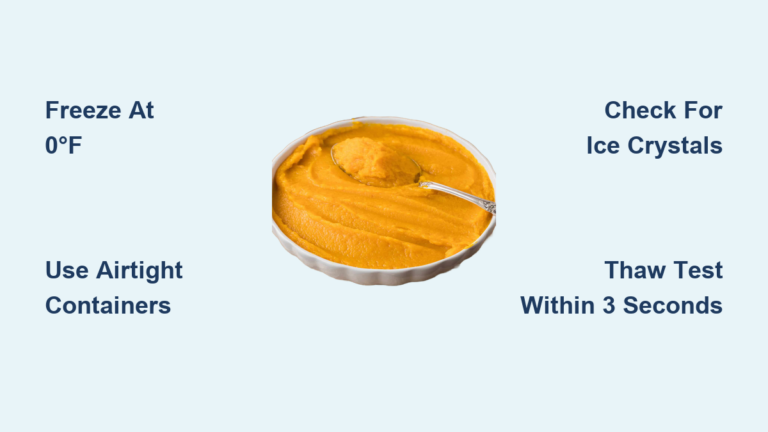
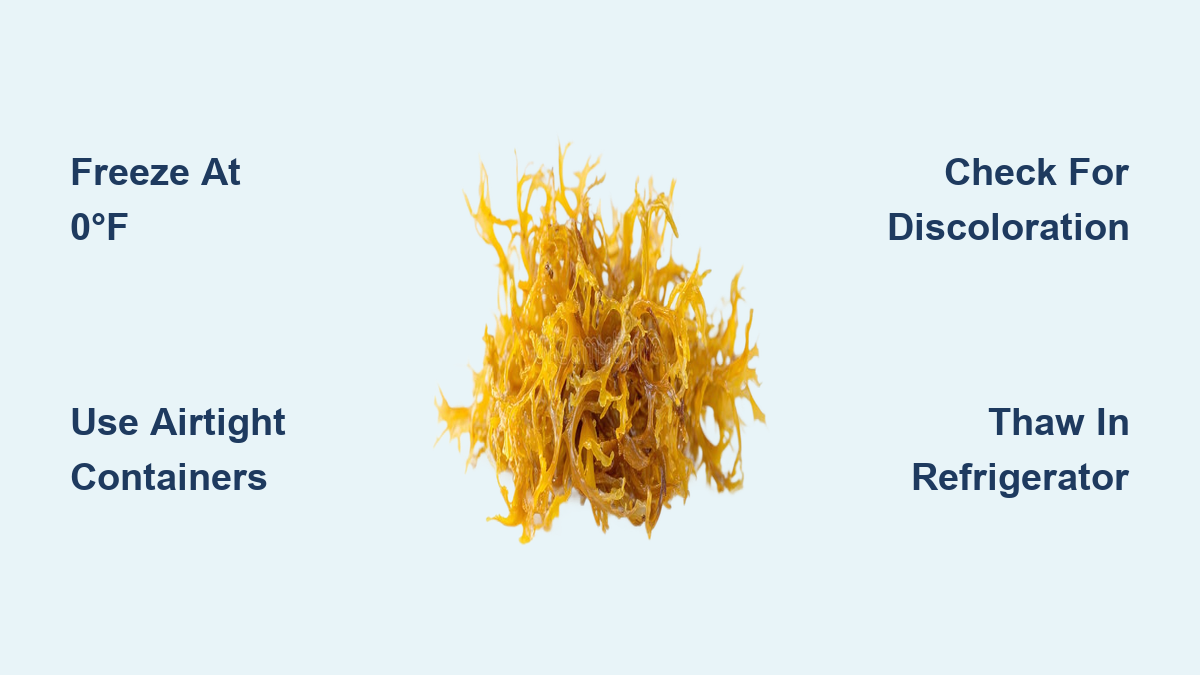
While specific sea moss data is unavailable, food science provides clear temperature guidelines for preserving gel-based substances. Your freezer should maintain 0°F (-18°C) or below to effectively halt microbial growth and enzymatic activity that causes degradation. Fluctuating temperatures—common in older freezers or those frequently opened—can create ice crystal formation that damages sea moss’s cellular structure. Consider investing in a freezer thermometer to verify consistent temperatures, especially if storing sea moss long-term. The critical factor isn’t just reaching freezing temperatures, but maintaining them consistently to prevent partial thawing cycles that accelerate quality deterioration.
Proper Container Selection for Sea Moss
The container you choose directly impacts how well your sea moss withstands freezer conditions. Glass jars risk cracking from expansion, while thin plastic containers may impart freezer odors. Your best options include:
– Silicone freezer trays for portioning individual servings
– BPA-free plastic containers with tight-sealing lids
– Vacuum-sealed bags to prevent freezer burn
– Ice cube trays covered with plastic wrap before freezing
Always leave at least ½ inch of headspace in rigid containers to accommodate expansion during freezing. For maximum protection, wrap containers in additional plastic wrap or place them inside resealable freezer bags to create a moisture barrier against freezer air.
Recognizing When Frozen Sea Moss Has Degraded
Visual Indicators of Quality Loss
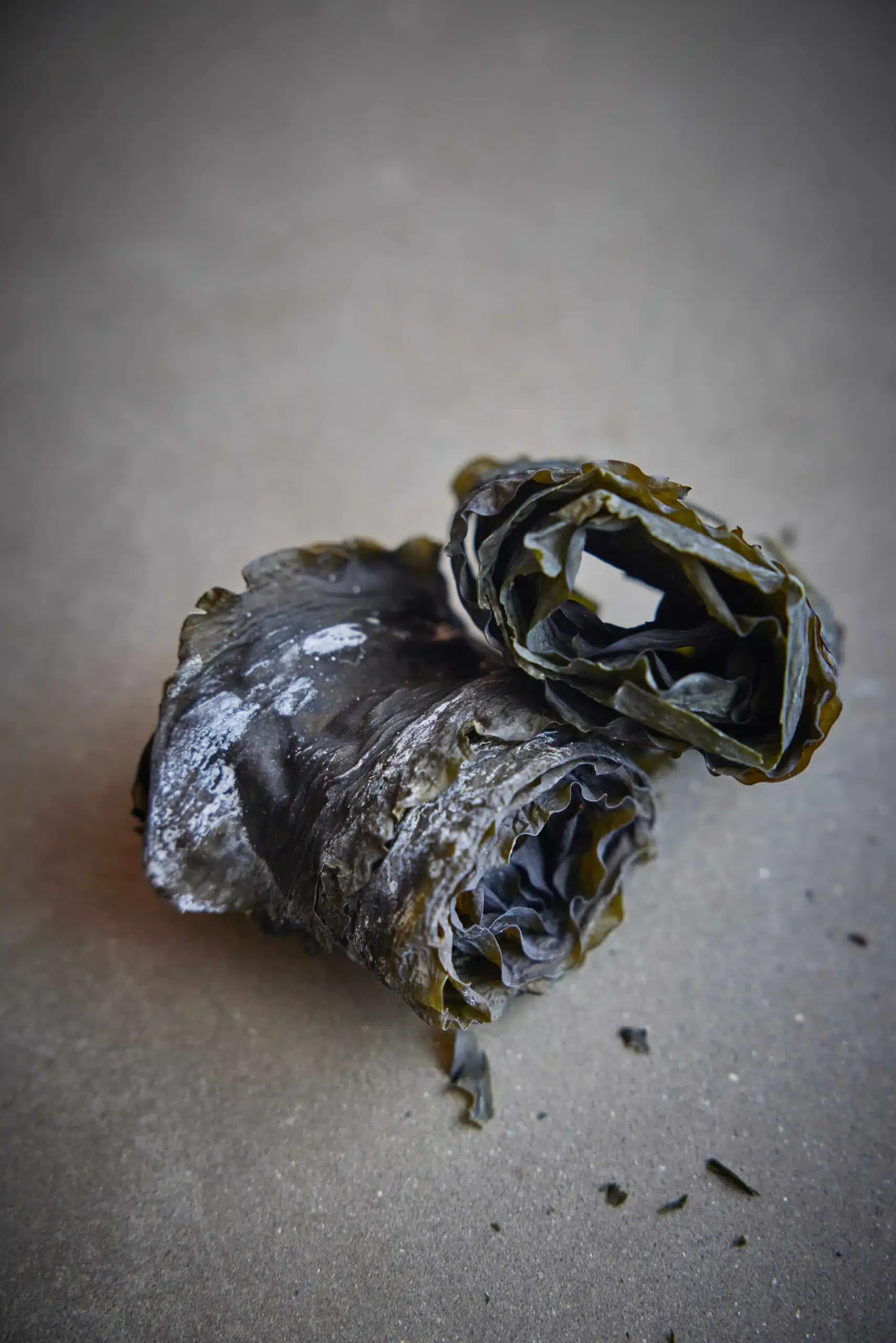
Frozen sea moss that has exceeded its viable storage period shows distinctive visual changes. Check for:
– Excessive ice crystals coating the surface (beyond initial freezing moisture)
– Discoloration from natural golden hue to grayish or brownish tones
– Separation of liquid from gel structure upon thawing
– White spots that don’t dissolve when stirred (potential mold)
These visual cues become more pronounced the longer sea moss remains frozen beyond its optimal window. Note that some minor separation is normal and can be remedied by stirring after thawing—true degradation appears as irreversible textural breakdown.
Texture and Aroma Warning Signs
The most reliable indicators of compromised sea moss appear during and after thawing. Properly preserved frozen sea moss should return to its original gel consistency within 24 hours of refrigerated thawing. Warning signs include:
– Grainy or slimy texture that doesn’t improve with stirring
– Unpleasant sour or ammonia-like odors (distinct from natural ocean scent)
– Excessive watery separation that can’t be reincorporated
– Visible mold growth in any color
If your thawed sea moss exhibits these characteristics, discard it immediately regardless of how long it was frozen. Consuming degraded sea moss may cause digestive upset despite freezing’s preservation capabilities.
Maximizing Sea Moss Freezer Viability
Pre-Freezing Preparation Techniques
How you prepare sea moss before freezing determines its longevity. Follow these steps for optimal results:
1. Strain thoroughly to remove excess moisture that creates damaging ice crystals
2. Portion into single-use amounts to avoid repeated thawing/refreezing
3. Press plastic wrap directly onto surface before sealing containers to prevent oxidation
4. Label containers with preparation date and contents
For best results, freeze sea moss gel within 24 hours of preparation while it’s at peak freshness. Older refrigerated sea moss won’t freeze as effectively, as initial degradation processes have already begun.
Thawing Best Practices for Quality Retention
Improper thawing can ruin even well-preserved frozen sea moss. Always:
– Thaw in refrigerator (never at room temperature)
– Allow 24-48 hours for complete thawing depending on portion size
– Stir thoroughly after thawing to restore gel consistency
– Use within 3-5 days of complete thawing
Never refreeze previously thawed sea moss, as this creates multiple degradation cycles that compromise both texture and nutritional value. If you’ve thawed more than needed, consider incorporating the excess into smoothies or sauces immediately rather than attempting to refreeze.
Establishing Reasonable Timeframes Without Official Guidance
Short-Term vs. Long-Term Freezer Storage
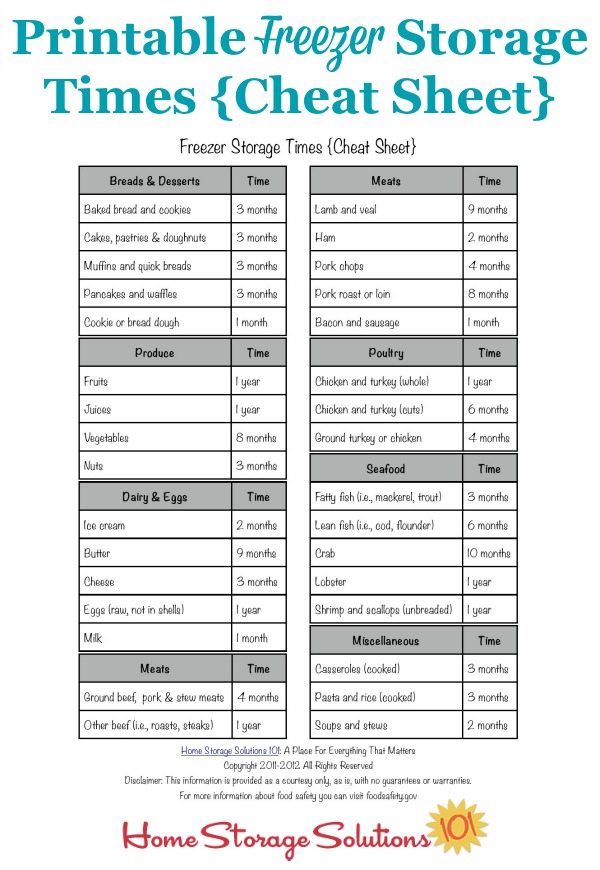
Based on comparable gel-based foods and general food preservation principles, we can establish reasonable parameters:
– Optimal quality window: 1-2 months for best texture and nutrient retention
– Safe consumption limit: Up to 3 months with potential quality degradation
– Maximum recommended storage: 4 months (with significant quality compromise)
These estimates assume proper freezing techniques and consistent freezer temperatures. Sea moss stored beyond 4 months may remain microbiologically safe but will likely suffer irreversible textural changes that affect usability in recipes.
Factors That Shorten Sea Moss Freezer Viability
Certain conditions dramatically reduce even these conservative estimates:
– Temperature fluctuations (opening freezer frequently)
– Improper containers allowing air exposure
– Initial microbial load from preparation environment
– Additives or mix-ins that alter freezing properties
If your freezer experiences power interruptions or you notice frost buildup around containers, significantly reduce your expected storage duration. Sea moss frozen during summer months when freezers work harder may have shorter viability than winter-stored batches.
Finding Reliable Sea Moss Storage Information
Contacting Your Specific Supplier
The most accurate guidance comes from the source. When purchasing sea moss:
– Ask detailed storage questions before buying
– Request batch-specific recommendations from producers
– Inquire about their testing protocols for frozen storage
– Document their advice for future reference
Reputable suppliers should provide specific guidance for their particular preparation method. If they cannot offer freezer storage timelines, consider this a red flag about their product knowledge and quality control.
Community Knowledge Sharing
While not scientifically validated, user experiences provide valuable pattern recognition. When researching community advice:
– Look for consistent patterns across multiple users
– Note preparation variables that affect outcomes
– Consider climate factors mentioned in testimonials
– Prioritize recent information as practices evolve
Online forums and social media groups dedicated to sea moss consumption often contain practical insights from long-term users who’ve experimented with different storage methods. Treat these as supplementary guidance rather than definitive answers.
Key Takeaways: Without manufacturer-specific data, freeze sea moss for no longer than 3 months using airtight containers at 0°F or below. Always inspect thawed sea moss for texture changes, unusual odors, or discoloration before consumption. When in doubt about frozen sea moss quality, discard it—your health isn’t worth the risk of consuming potentially degraded product. For the most reliable information, contact your sea moss supplier directly and request their specific freezer storage recommendations based on their preparation methods. Consider maintaining your own usage log to track how different storage approaches affect your particular sea moss batches.