How to Defrost Frigidaire Bottom Freezer
Is your Frigidaire bottom freezer overflowing with ice buildup, making it difficult to store food or causing temperature issues? You’re not alone—many Frigidaire owners face excessive frost accumulation that reduces storage space and efficiency. When ice grows thicker than a quarter inch, it’s time for a proper defrost. This guide provides the exact steps to safely defrost your Frigidaire bottom freezer without damaging the appliance, whether you’re dealing with manual or automatic defrost models. By following these procedures, you’ll restore optimal performance and prevent future ice buildup that wastes energy and compromises food safety.
Why Your Frigidaire Bottom Freezer Needs Regular Defrosting
Frost buildup in your Frigidaire bottom freezer isn’t just inconvenient—it directly impacts performance and energy consumption. When ice accumulates beyond ¼ inch thickness, your freezer must work significantly harder to maintain proper temperatures, increasing energy usage by up to 30%. Excessive frost also reduces available storage space and creates uneven cooling that can compromise food safety. Unlike frost-free models that automatically manage this process, many Frigidaire bottom freezer models require manual intervention when ice buildup reaches problematic levels.
How Often Should You Defrost?
Most Frigidaire bottom freezer models require defrosting every 3-6 months under normal usage conditions. However, several factors can accelerate ice buildup:
- Frequent door openings (especially in humid environments)
- Improperly sealed door gaskets allowing moist air entry
- Overfilling or underfilling the freezer compartment
- Temperature settings below recommended levels
- Recent power outages causing temperature fluctuations
Signs Your Freezer Needs Immediate Defrosting
Don’t wait for your next scheduled maintenance if you notice these critical warning signs:
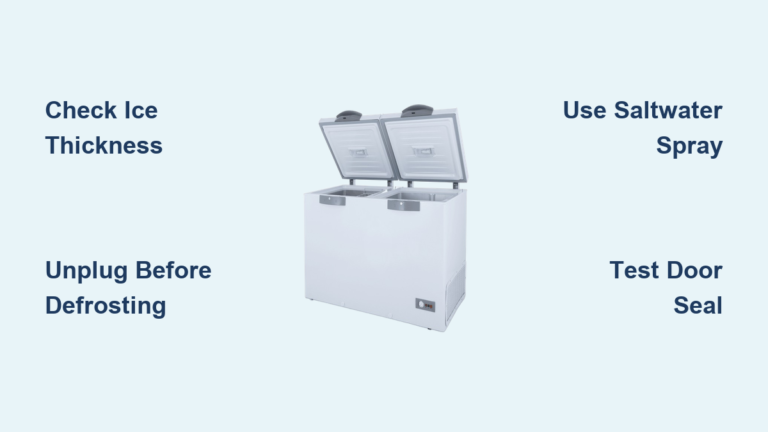
- Ice buildup thicker than ¼ inch on walls or shelves
- Difficulty closing the freezer door properly
- Noticeable decrease in available storage space
- Frost-covered evaporator coils visible through interior panels
- Increased condensation on exterior surfaces
- Unusual operational sounds like humming or clicking
Essential Preparation Before Defrosting Your Frigidaire Freezer
Gather Required Supplies
Before starting the defrost process, assemble these critical items to ensure a smooth procedure:
- Absorbent towels (at least 6-8 for continuous moisture management)
- Shallow containers to collect melting ice (avoid deep pans that might overflow)
- Soft plastic scraper (never use metal objects that can puncture freezer lining)
- Mild cleaning solution (1 tablespoon baking soda per quart of warm water)
- Small sponge or soft cloth for interior cleaning
- Thermometer to monitor food temperatures during the process
- Coolers with ice packs for temporary food storage
Safely Remove and Store Your Frozen Foods
Proper food handling during defrosting prevents spoilage and maintains food safety:
- Plan ahead: Complete this step when you have time to properly manage your frozen inventory
- Check expiration dates: Discard any items past their safe storage period
- Organize by priority: Place items with shortest remaining shelf life in coolers first
- Use proper insulation: Pack coolers tightly with ice packs to maintain temperatures below 40°F
- Limit exposure time: Keep foods out of the freezer no longer than 2 hours (1 hour if room temperature exceeds 90°F)
- Monitor temperatures: Use a thermometer to verify cooler contents remain at safe temperatures
Step-by-Step Defrosting Process for Frigidaire Bottom Freezers
Complete Power Down Procedure
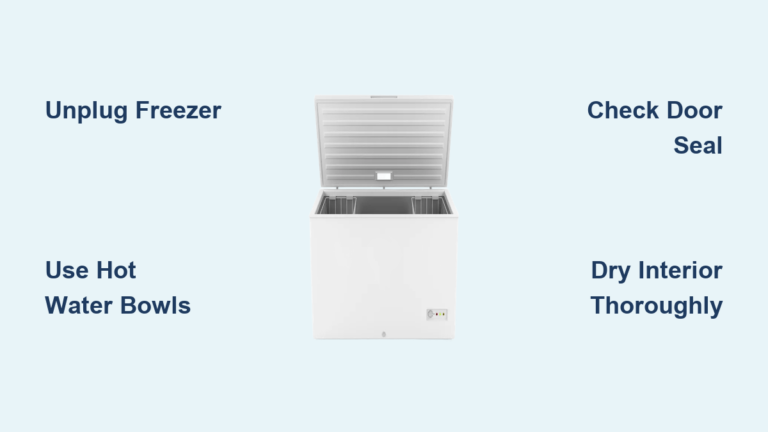
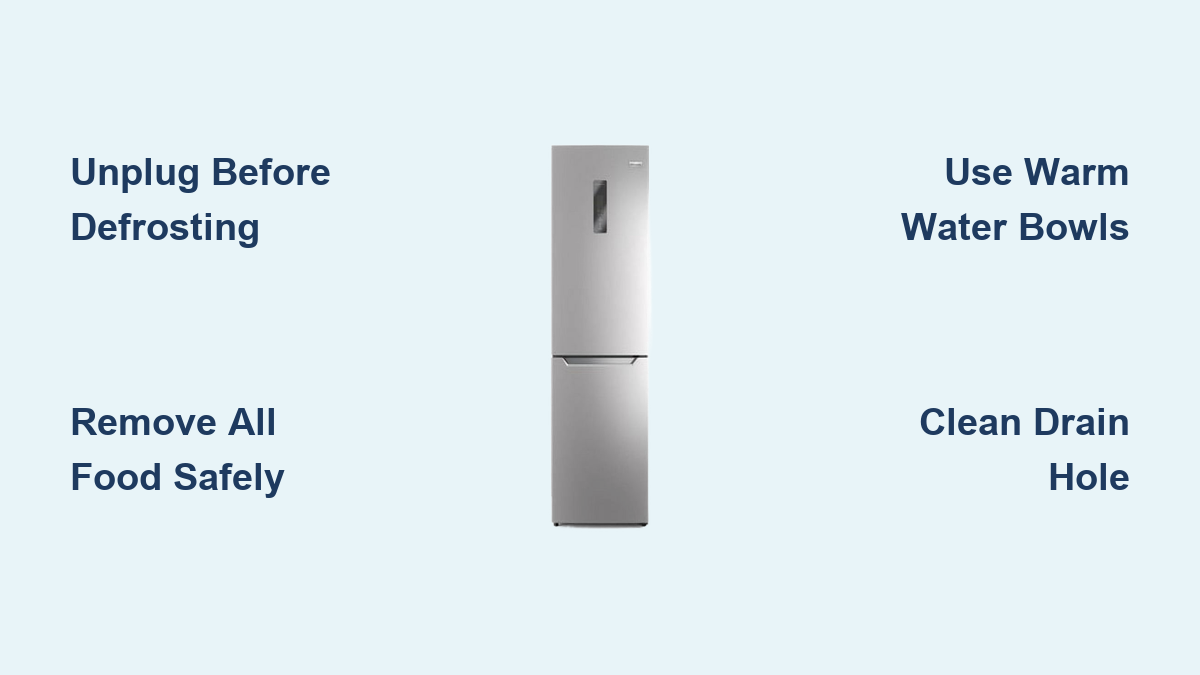
Never attempt defrosting while your Frigidaire freezer remains connected to power:
- Turn temperature control to OFF position (don’t just unplug—use proper shutdown sequence)
- Unplug the appliance from the wall outlet to ensure complete power disconnection
- Remove all food items following the safe storage procedures outlined previously
- Take out all drawers and shelves for separate cleaning and to accelerate defrosting
- Place towels along front edge to catch initial runoff before drainage system activates
Accelerating the Defrosting Process
Speed up melting while protecting your appliance with these professional techniques:
- Strategic towel placement: Position dry towels along the floor to absorb runoff, changing them frequently
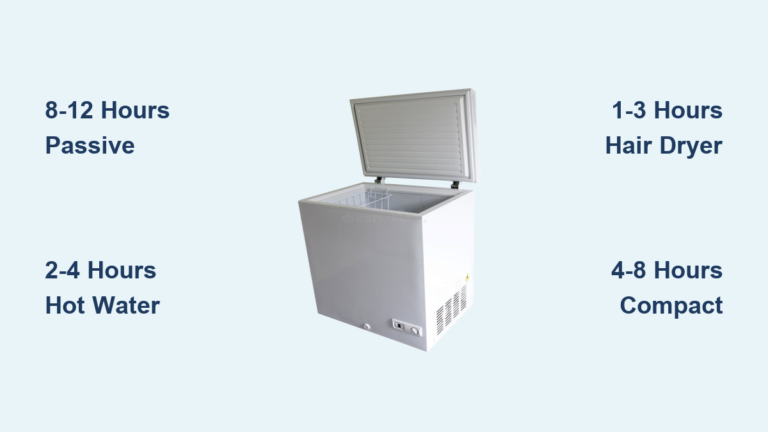
- Warm water bowls: Place shallow bowls of hot (not boiling) water inside to create steam that loosens ice
- Fan assistance: Position a fan to circulate warm room air inside the freezer compartment
- Targeted heat application: Hold a hair dryer on LOW setting 12+ inches from ice buildup (never touch surfaces)
Removing Thick Ice Buildup Safely

Never use sharp tools or excessive force that can damage your Frigidaire freezer:
- Wait for natural separation: Allow ice to melt until it naturally pulls away from walls
- Gentle prying technique: Use plastic scraper at 30-degree angle with minimal pressure
- Work top to bottom: Remove ice from upper surfaces first to prevent chunks from falling
- Continuous moisture management: Have multiple dry towels ready to absorb runoff immediately
- Check drainage channel: Ensure melted water flows freely to the drain pan at the back
Cleaning and Maintenance After Defrosting
Proper Interior Sanitization
Thorough cleaning prevents rapid frost re-accumulation and maintains food safety:
- Wipe all surfaces with baking soda solution using soft cloth
- Focus on door gaskets—clean rubber seals thoroughly to ensure proper closure
- Scrub shelves and drawers separately before drying completely
- Clean drain hole (if accessible) with cotton swab to prevent future clogs
- Dry all components completely with clean towels before reassembly
Critical Post-Defrost Checks
Complete these verification steps before restoring power:
- Inspect door seals for proper adhesion by closing on dollar bill (should offer resistance when pulled)
- Verify all components are dry to prevent immediate re-icing
- Confirm drainage path is clear by pouring small amount of water in tray
- Check for damage caused during defrost process, especially to interior lining
Preventing Future Ice Buildup in Your Frigidaire Freezer
Optimal Temperature Settings
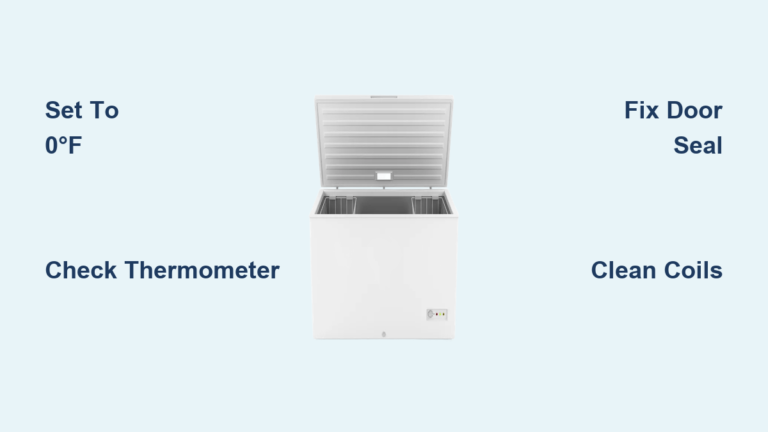
Maintain your Frigidaire bottom freezer at precisely 0°F (-18°C) for ideal performance. Use an independent thermometer to verify actual temperature, as built-in controls may be inaccurate. Avoid setting temperatures lower than necessary, as this increases moisture condensation and frost formation.
Door Seal Maintenance Routine
Prevent the #1 cause of excessive frost—compromised door seals—with this monthly maintenance:
- Clean gaskets with mild soapy water and dry thoroughly
- Apply small amount of petroleum jelly to maintain flexibility
- Check for tears or permanent compression that requires replacement
- Test seal integrity by closing door on dollar bill at multiple points
Smart Storage Practices That Reduce Frost
Implement these professional storage techniques:
- Wrap all foods tightly in moisture-proof materials before freezing
- Cool foods completely before placing in freezer (never add warm items)
- Organize for airflow—avoid blocking vents with food containers
- Leave space between items for proper cold air circulation
- Use airtight containers for liquids and high-moisture foods
Troubleshooting Common Defrosting Issues
When Ice Won’t Release from Walls
If ice stubbornly adheres despite proper melting:
- Create steam barrier: Place hot water bowl inside and close door for 15 minutes
- Apply warm cloth: Hold damp warm cloth against problem area for 2-3 minutes
- Never force removal: Wait additional time rather than risking liner damage
Addressing Drainage Problems During Defrosting
If water pools instead of draining:
- Locate the drain hole (typically at back bottom of freezer compartment)
- Clear obstruction with flexible wire or pipe cleaner
- Flush with warm water to ensure proper flow
- Check external drain pan for blockages
When to Seek Professional Service
Contact Frigidaire support or an authorized technician if you encounter:
- Persistent ice buildup despite proper defrosting and maintenance
- Water leakage that continues after defrosting
- Unusual noises during operation after defrost cycle
- Inability to maintain proper temperature after reassembly
- Visible damage to interior liner or components
Final Note: Regular defrosting of your Frigidaire bottom freezer every 3-6 months maintains optimal performance and prevents energy waste. Always follow manufacturer guidelines specific to your model number, which can be found on the interior rating plate. After completing this process, your freezer will operate more efficiently, provide maximum storage space, and keep your frozen foods at proper temperatures. For model-specific instructions, consult your Frigidaire owner’s manual or visit the official Frigidaire support website with your complete model number. Proper maintenance now prevents costly repairs and extends your appliance’s lifespan significantly.