Samsung Fridge Freezer Door Not Closing? Fix It Fast
That annoying gap where your Samsung fridge door won’t seal properly isn’t just a minor inconvenience—it’s an energy-wasting, frost-generating problem that demands immediate attention. When your Samsung fridge freezer door not closing correctly, warm air infiltrates the chilled interior every time you open or close it, causing cooling performance to degrade rapidly while energy consumption spikes. Left unaddressed, this seemingly small issue can trigger cascading failures throughout your appliance, from excessive frost buildup to compressor strain. The good news is that most Samsung refrigerator door closing problems stem from a handful of common causes you can diagnose and resolve in under 30 minutes without professional help.
Why Your Samsung Fridge Door Won’t Seal Completely
Before grabbing tools or ordering parts, perform a rapid visual assessment to pinpoint the exact cause of your Samsung fridge freezer door not closing properly. Open the door fully and release it from various positions—on a properly functioning unit, the door should close completely on its own due to gravity and the magnetic gasket seal. If it drifts open, stops halfway, or requires manual assistance to close, you’re dealing with an alignment or sealing issue that needs targeted troubleshooting.
Examine the door’s perimeter while closed, looking for visible gaps between the gasket and cabinet frame, particularly at the corners where misalignment often first appears. Check if food containers or shelves are protruding into the door’s closing path—a common culprit in Samsung models with adjustable shelving. Run your hand around the closed door to feel for escaping cold air, which indicates a seal failure even when gaps aren’t visible. This initial diagnostic process takes less than five minutes but prevents wasted effort on unnecessary repairs.
Fix Damaged Door Gaskets on Samsung Refrigerators
The rubber door gasket serves as your refrigerator’s first line of defense against warm air infiltration, creating the critical airtight seal when the door closes. Samsung’s magnetic gaskets typically last 5-7 years before showing significant wear, but improper cleaning, food residue, and physical damage can shorten their lifespan considerably.
Identify Gasket Damage on Your Samsung Fridge
Carefully inspect the entire gasket length for tears that penetrate through the rubber material—these create direct pathways for warm air entry. Pay special attention to corners and hinge points where stress concentrates during normal operation. Warping often occurs when the gasket has been compressed in one position for extended periods (like when an oversized container prevents full closure), causing sections to pull away from the door frame even when the material appears intact. Any visible physical damage usually necessitates complete gasket replacement rather than temporary patching.
Test Gasket Compression on Samsung Models
The dollar bill test provides a reliable method for checking seal effectiveness across your Samsung refrigerator door. Insert a dollar bill along the gasket line at multiple points (top center, bottom center, both sides near hinges and handles), then attempt to pull it out while the door remains closed. If the bill slides out easily with minimal resistance, that section lacks sufficient compression. A properly sealing door will grip the bill firmly, requiring consistent resistance throughout extraction. Test all four quadrants of the door since seal failure often occurs unevenly.
Clean Samsung Refrigerator Gaskets Properly
Food spills, sticky residues, and mineral deposits accumulating on gasket surfaces prevent proper compression and cause apparent seal failure. Mix one tablespoon of mild dish soap with one cup of warm water, then use a soft cloth to thoroughly clean all gasket grooves and crevices. Avoid harsh chemicals like bleach or ammonia-based cleaners that accelerate rubber deterioration. Dry completely with a microfiber cloth before testing seal performance—this simple maintenance task takes just 10 minutes but significantly extends gasket lifespan.
Repair Samsung Refrigerator Roller Bar Issues
Samsung’s bottom-mounted roller bars provide the mechanical interface between the door and cabinet, supporting the door’s weight while enabling smooth operation. When these components malfunction, your Samsung fridge freezer door not closing properly becomes an immediate concern.
Inspect Roller Bars for Damage
Open the door fully to expose the bottom mounting area and examine each roller for visible damage including cracks, chips, or deformation. Check that rollers remain securely attached to their mounting points—loose rollers shift position and prevent proper alignment. Look for bends in the roller arms, which commonly occur when the door closes forcefully against an obstruction. Damaged rollers require replacement with Samsung-specific parts to ensure proper fit and function.
Clear Tracks on Samsung Refrigerators
The tracks guiding roller bars accumulate debris, ice, or spilled food that impedes smooth door operation. Use a soft brush followed by a damp microfiber cloth to remove all visible debris from track surfaces. In freezer compartments, ice buildup around rollers may indicate a more serious defrost system issue if frost appears beyond normal ice formation areas. Ensure tracks are completely dry before testing door operation, as residual moisture can quickly refreeze and recreate obstructions.
Realign Samsung Refrigerator Doors
For minor misalignment issues, apply gentle forward pressure on the door bottom while closing to help reposition the rollers within their tracks. This works well for doors that have shifted slightly during normal use or after moving the appliance. For persistent misalignment, professional adjustment may be necessary—Samsung doors require precise alignment to maintain proper sealing without creating excessive hinge stress.
Level Your Samsung Refrigerator for Proper Door Closure
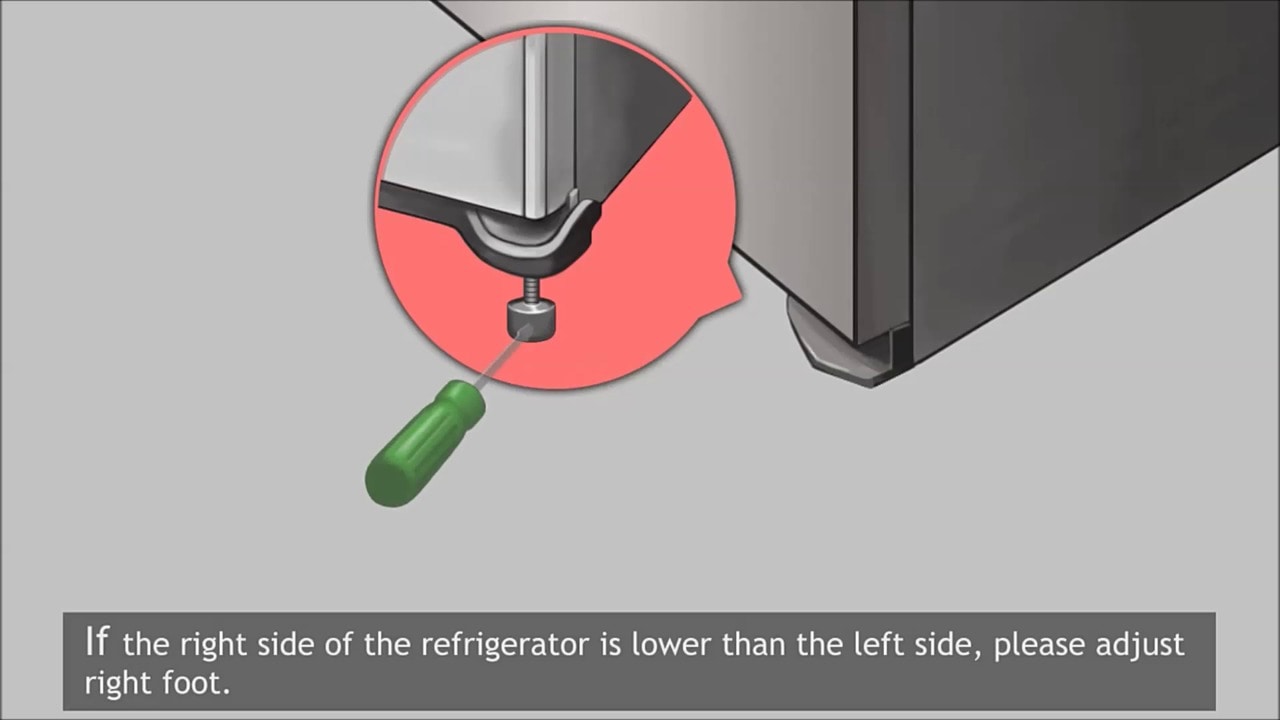
Proper leveling ensures your Samsung fridge door closes under its own weight rather than fighting against gravity. An unlevel refrigerator creates subtle but persistent door closing problems that no amount of gasket replacement will resolve.
Verify Samsung Refrigerator Leveling
Place a 24-inch bubble level across the top interior of your refrigerator to check front-to-back and side-to-side alignment. Samsung recommends a slight backward tilt (¼ inch higher at the back than front) to encourage natural door closure. Many homeowners discover their appliance has gradually shifted on uneven flooring over time, creating the perfect conditions for Samsung fridge freezer door not closing problems.
Adjust Leveling Legs Correctly
Rotate the front leveling legs clockwise to raise that corner and counterclockwise to lower it. Make quarter-turn adjustments followed by rechecking the level until you achieve the recommended slight backward tilt. After adjustments, test door operation thoroughly by opening and closing the door multiple times from various positions to confirm it now closes completely under its own weight.
Optimize Food Storage to Prevent Door Closure Issues

How you organize your Samsung refrigerator directly impacts door sealing performance. Improper storage creates physical obstructions and pressure points that prevent complete closure even with perfect mechanical components.
Prevent Internal Obstructions in Samsung Models
Avoid overfilling door bins with tall bottles or containers that extend beyond shelf boundaries. Samsung’s adjustable shelving systems can inadvertently create obstructions when rearranged—always ensure 1-2 inches of clearance between stored items and the door interior. Check door compartments specifically, as these narrow spaces often accumulate items that gradually shift position over time to block proper closure.
Maintain Proper Weight Distribution
Store heavy items like gallon containers on bottom shelves to maintain proper center of gravity. Samsung refrigerators with French doors are particularly sensitive to uneven weight distribution, which can cause subtle tilting that prevents complete door sealing. When reorganizing, redistribute heavy items to maintain balanced weight throughout compartments.
Implement Proactive Samsung Door Seal Maintenance
Preventative care extends your Samsung refrigerator’s lifespan and avoids the frustration of discovering your Samsung fridge freezer door not closing when you need it most.
Monthly Seal Inspection Routine
Inspect gaskets monthly for early signs of deterioration using the dollar bill test at multiple points. Catching minor compression loss early allows for timely intervention before secondary problems like frost accumulation develop. Document problem areas to track deterioration progression and predict replacement timing.
Immediate Response to Seal Issues
Address any door alignment issues immediately—each time your Samsung fridge door fails to close properly, warm humid air enters the compartment, immediately contributing to frost formation. The cost of prompt attention to minor issues is negligible compared to repairing secondary damage from prolonged exposure to improper sealing.
When to Call Samsung Service for Door Repair
While most Samsung fridge freezer door not closing issues resolve through the procedures outlined above, certain situations require professional intervention.
Component Replacement Needs
Gasket replacement, hinge repair, and roller bar replacement typically require specialized tools and genuine Samsung parts. Attempting these repairs without proper expertise can void your warranty and cause additional damage. Professional technicians have access to manufacturer-specific parts and training that ensures correct installation.
Underlying System Issues
Persistent frost accumulation despite proper door operation may indicate defrost system malfunction requiring technical diagnosis. If basic troubleshooting fails to resolve door closing problems within a reasonable timeframe, contact Samsung customer support for comprehensive assessment.
A Samsung fridge freezer door not closing properly won’t fix itself—and each hour of improper sealing compounds the problem. By addressing these issues promptly using the diagnostic procedures outlined here, you restore proper appliance function while preventing costly secondary damage. Regular maintenance and attention to door operation ensure your Samsung refrigerator continues protecting your food and operating efficiently for years to come. When in doubt about your ability to safely complete a repair, contact Samsung’s authorized service network—your appliance’s longevity depends on proper care.