How to Defrost LG Freezer Fan – Quick Fix Guide
Is your LG freezer struggling to maintain cold temperatures while the refrigerator section runs warmer than normal? You’re likely dealing with a frozen evaporator fan—a common issue that disrupts proper air circulation between compartments. When ice builds up around your LG freezer fan, it prevents cold air from circulating effectively, causing your freezer to work harder while your refrigerator loses cooling capacity. This guide provides specific, actionable steps to safely defrost your LG freezer fan without damaging internal components or voiding your warranty. You’ll learn how to identify fan-related freezing issues, properly thaw the buildup, and prevent recurrence—all without requiring advanced technical skills.
Why Your LG Freezer Fan Freezes Over and Stops Working
LG freezer fan freezing typically occurs due to moisture entering the evaporator compartment during the defrost cycle. When the defrost heater fails to completely melt ice buildup from the evaporator coils, residual moisture accumulates around the fan assembly. This is especially common in models with the fan located directly beneath the evaporator coils where dripping water can refreeze. Over time, this ice accumulation restricts the fan blades’ movement until they stop rotating completely, disrupting the entire cooling system’s airflow.
How to Confirm Your LG Freezer Fan Is Frozen
Before beginning the defrosting process, verify that a frozen fan is actually causing your cooling problems:
- Listen for unusual sounds: A clicking noise or complete silence from the freezer compartment when the compressor runs indicates fan failure
- Check temperature distribution: If your freezer maintains cold temperatures but your refrigerator section warms up, this points to airflow disruption
- Inspect visible ice buildup: Open the freezer and look through the rear panel (remove shelves if necessary) for visible ice encasing fan blades
- Test fan operation: With the unit running, use a flashlight to observe if the fan blades are moving (safely—never insert objects while powered)
Common LG Models Prone to Freezer Fan Freezing

Certain LG refrigerator series experience this issue more frequently due to fan placement and defrost system design:
- LFX Series (LFX28978ST, LFX25974ST): Fan located directly under evaporator coils
- LSXS Series (LSXS26366S, LSXS26426S): Compact fan housing traps moisture
- LTCS Series (LTCS24223S): Defrost drain positioning issues
- InstaView Models (LFXS28978S): Complex airflow systems vulnerable to ice buildup
Essential Safety Preparations Before Defrosting Your LG Freezer
Power Down and Remove Food Safely
Unplug your refrigerator completely before starting any defrosting procedure—never work on electrical components while powered. Move all frozen food to coolers with ice packs, aiming to complete the process within 2-3 hours to prevent thawing. For best results, perform this maintenance early in the day when ambient temperatures are cooler, reducing food spoilage risk. Keep perishables in the coolest part of your house during the process.
Gather Required Tools and Supplies
You’ll need these specific items before beginning:
– Soft microfiber cloths (avoid paper towels that can leave fibers)
– Plastic putty knife or ice scraper (never metal tools)
– Shallow containers to catch melting ice
– Small funnel and turkey baster for drain access
– Replacement drip pan if yours shows cracks or damage
– Work gloves to protect hands from sharp ice edges
Step-by-Step Process to Defrost Your LG Freezer Fan
Accessing the Evaporator Fan Assembly
- Remove all freezer shelves and drawers to gain clear access to the rear panel
- Locate and unscrew the panel covering the evaporator coils (typically 6-8 Phillips head screws)
- Gently pull the panel away while supporting any connected wiring harnesses
- Set the panel aside carefully—you’ll need to reinstall it after defrosting
Pro Tip: Take photos during disassembly to ensure correct reinstallation. Many LG models have specific wiring harness orientations that must be matched precisely.
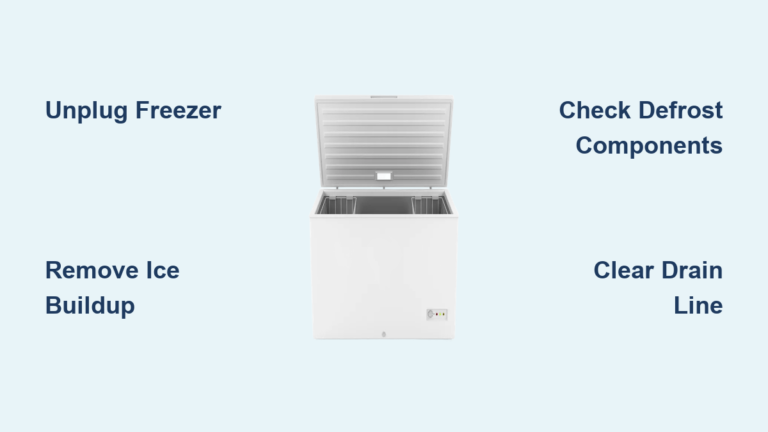
Manual Defrosting Without Heat Application
Avoid using hair dryers or heat guns on LG freezers—excessive heat can damage plastic components and insulation. Instead:
- Place towels and containers beneath the fan assembly to catch melting ice
- Use the plastic scraper to carefully break up large ice chunks around the fan housing
- Apply warm (not hot) water to stubborn areas using the turkey baster
- Work systematically from top to bottom, allowing melted ice to drain naturally
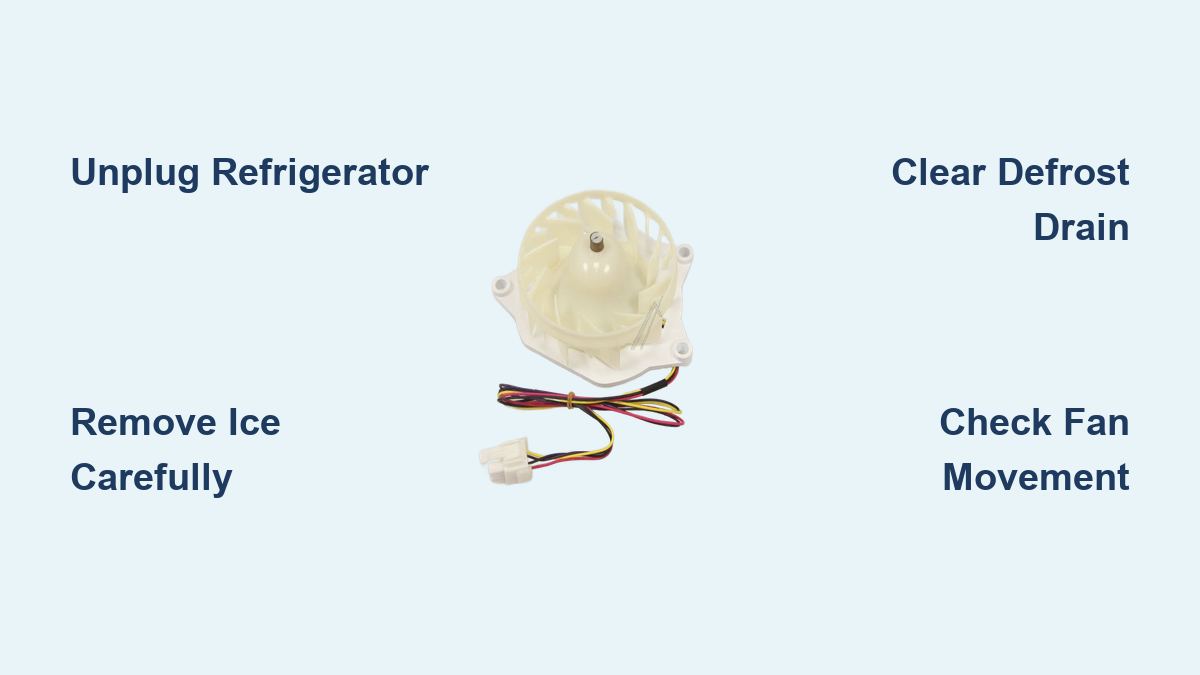
- Continue until you can visibly confirm the fan blades move freely
Critical Warning: Never force the fan blades if ice remains—this can damage the motor. Complete thawing is essential before testing operation.
Clearing the Defrost Drain to Prevent Recurrence

Most LG freezer fan freezing issues stem from clogged defrost drains. To properly clear yours:
- Locate the drain hole behind the evaporator coils (usually a 1/4″ opening)
- Insert the turkey baster tip and flush with warm water
- If clogged, use a 1/4″ flexible bottle brush to gently clear the tube
- Pour 1 cup of distilled vinegar down the drain to eliminate mold buildup
- Verify proper drainage by pouring small amounts of water into the drain
Expert Note: LG recommends monthly drain maintenance for models in humid environments to prevent recurring freezing issues.
Testing Your LG Freezer After Defrosting

Reassembly and Initial Power-Up
- Reinstall the rear panel, ensuring all wiring harnesses connect properly
- Return shelves and drawers to their original positions
- Plug in the refrigerator and allow 24 hours for temperature stabilization
- Monitor both compartments with separate thermometers
Verifying Proper Fan Operation
After power restoration:
– Listen for consistent fan operation from the freezer compartment
– Check that cold air flows from freezer vents into the refrigerator
– Confirm the fan continues running when the freezer door opens (some models temporarily stop)
– Use a thermometer to verify freezer reaches 0°F (-18°C) within 24 hours
Preventing Future LG Freezer Fan Freezing Issues
Regular Maintenance Schedule
Implement these practices to avoid recurring fan freezing:
– Monthly: Clean the defrost drain with vinegar solution
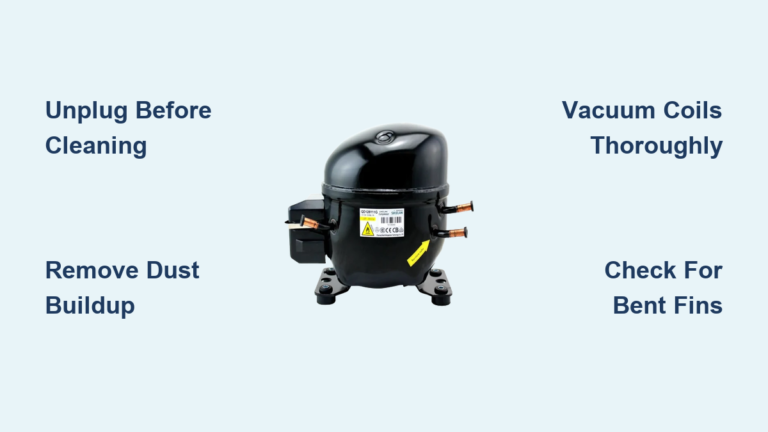
– Quarterly: Vacuum dust from condenser coils at the back or bottom
– Biannually: Check door seals for proper closure with the dollar bill test
– Annually: Inspect evaporator fan housing for early ice formation
Environmental Adjustments for Optimal Performance
Your LG freezer performs best under specific conditions:
– Maintain ambient kitchen temperatures between 60-80°F (15-27°C)
– Allow 2-3 inches of clearance around the unit for proper ventilation
– Avoid placing near heat sources like ovens or direct sunlight
– Keep freezer organized to maintain consistent air circulation
When to Call an LG Service Technician
While most fan freezing issues can be resolved with proper defrosting, contact LG support if you encounter:
– Persistent ice buildup after multiple defrosting attempts
– Visible damage to the defrost heater or thermostat
– Water pooling under the refrigerator after defrosting
– Error codes appearing on the control panel (especially DE, ER DH, or PF)
– Unusual burning smells during operation
Important: LG refrigerators under warranty require manufacturer-approved service to maintain coverage. Attempting certain repairs yourself may void your warranty.
Final Steps for Long-Term LG Freezer Health
After successfully defrosting your freezer fan, implement these final measures to ensure lasting results. Reset your refrigerator’s internal systems by unplugging for 30 seconds then reconnecting power—this clears any temporary error states. Monitor temperature fluctuations for 48 hours using separate thermometers in both compartments to confirm proper cooling restoration. For models with smart features, check the LG ThinQ app for any remaining system alerts that might indicate deeper issues.
To prevent future freezing problems, establish a simple monthly maintenance routine: vacuum condenser coils, check door seals, and pour a cup of vinegar down the defrost drain. Keep a log of these activities to identify patterns if issues recur. Understanding your specific LG model’s vulnerabilities—whether it’s a known defrost timer issue or drain placement quirk—helps you address problems before they escalate. Remember that occasional frost buildup is normal, but complete fan immobilization indicates a system requiring attention. With these proactive measures, you’ll maintain optimal airflow and extend your LG refrigerator’s service life significantly.