How Long Does Homemade Juice Last in the Freezer
Nothing beats the vibrant taste of freshly made juice, but when you’ve juiced more than you can drink immediately, freezing becomes your best ally against waste. Understanding exactly how long homemade juice maintains quality in your freezer prevents both premature disposal of perfectly good batches and the disappointment of thawing juice that’s lost its fresh appeal. The answer isn’t one-size-fits-all—it depends on your juice’s ingredients, packaging method, and whether you prioritize peak flavor or basic safety. This guide reveals precise timelines for different juice types, professional storage techniques that maximize freshness, and clear indicators that tell you when frozen juice has passed its prime. By the end, you’ll confidently freeze larger batches knowing exactly what to expect months later when you’re ready to enjoy that taste of summer in the middle of winter.
Citrus Juice Freezer Lifespan Revealed
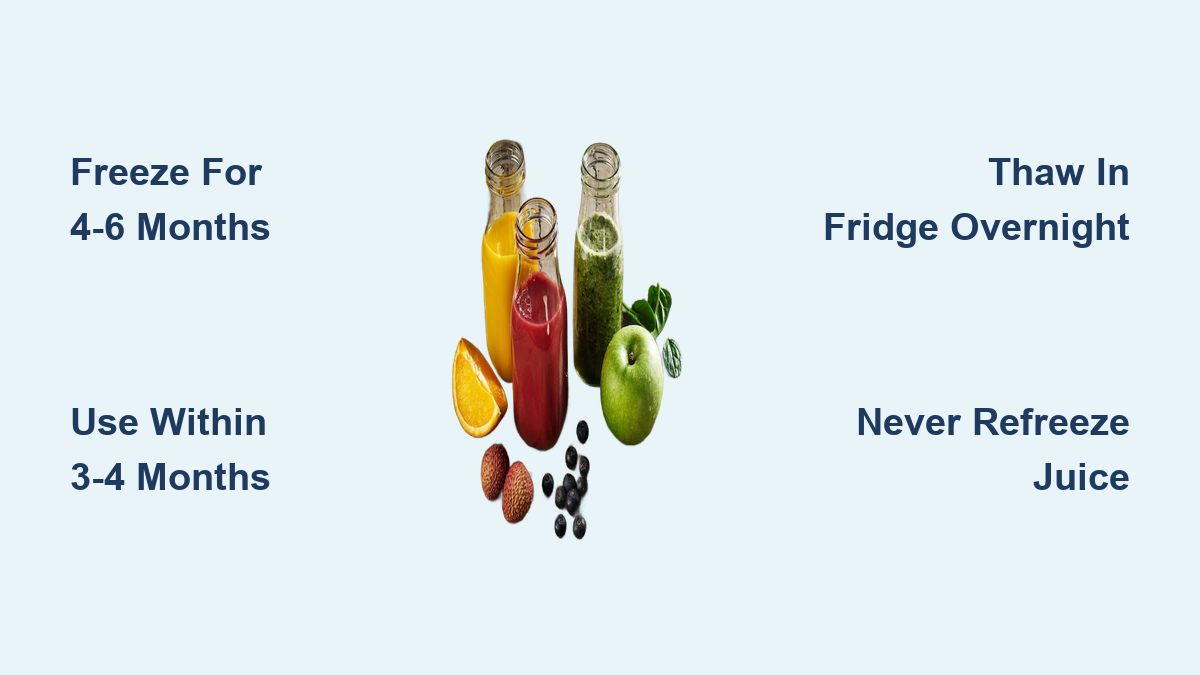
Orange, lemon, and grapefruit juices outperform other varieties in the freezer thanks to their natural acidity acting as a built-in preservative. When packaged correctly in airtight containers, these bright beverages maintain exceptional quality for four to six months. Beyond this window, subtle flavor degradation occurs as volatile compounds break down, though the juice remains safe for consumption up to twelve months. The vitamin C content gradually diminishes over time, particularly when exposed to light and air pockets in the container. To maximize both taste and nutritional value, fill containers only three-quarters full to accommodate expansion during freezing. For superior results, press a layer of plastic wrap directly onto the juice surface before sealing the container—this simple step dramatically reduces oxidation that causes flavor loss and color changes.
Why Citrus Juices Freeze Better Than Other Varieties
The high acid content in citrus creates an environment where enzymatic browning and microbial growth slow significantly even at freezer temperatures. This natural preservation mechanism explains why orange juice often tastes remarkably fresh after six months while apple juice might develop off-flavors in half that time. The molecular structure of citric acid helps stabilize other compounds in the juice, essentially putting flavor molecules in suspended animation. When freezing citrus juice specifically for culinary uses rather than drinking, consider adding a small amount of zest to the container—it captures additional volatile oils that enhance flavor upon thawing.
Fruit Juice Freezing Timelines That Prevent Waste
Berry, apple, peach, and tropical fruit juices have a narrower quality window than citrus varieties due to their lower acidity and more complex sugar profiles. These juices deliver their best flavor when consumed within three to four months of freezing. After this period, expect gradual texture changes as natural pectins break down, with berry juices developing noticeable graininess and apple juice experiencing significant separation. The vibrant colors of grape and pomegranate juices will gradually fade, while tropical blends may lose their characteristic aromatic notes. For mixed fruit juices, treat them according to their most perishable component—any berry content reduces the optimal window to three months regardless of other ingredients.
Best Practices for Freezing Pulp-Containing Juices
Juices with pulp present unique challenges in frozen storage as the solid particles continue breaking down even at subzero temperatures. Pulp-enriched juice maintains acceptable texture for only one to two months before becoming watery and grainy upon thawing. Rather than freezing pulp with liquid, try this professional technique: freeze the strained juice in containers, then separately freeze the pulp in ice cube trays. When ready to drink, add a pulp cube to your thawed juice—this preserves texture far better than refreezing the entire mixture. If you prefer pulp throughout your juice, shake or stir vigorously after thawing to temporarily redistribute the solids before serving.
Vegetable Juice Freezer Performance Breakdown

Tomato, carrot, and green vegetable juices have the shortest optimal freezer lifespan among common homemade varieties, typically maintaining quality for just two to three months. The higher starch content in vegetable juices makes them particularly vulnerable to texture changes during frozen storage. Tomato-based juices often separate dramatically upon thawing as ice crystals disrupt the natural emulsion. Carrot juice develops a characteristic “cardboard” off-flavor after the three-month mark due to oxidation of its carotenoid compounds. Green juices containing leafy vegetables like kale or spinach are the most fragile—chlorophyll breaks down quickly even when frozen, causing both color fading and flavor deterioration. For these delicate vegetable blends, aim to consume within two months for results that still resemble fresh-pressed juice.
Recognizing Vegetable Juice Degradation
When thawing vegetable juice, pay close attention to texture changes that indicate excessive freezer time. Properly stored juice should regain a relatively smooth consistency after shaking, while over-frozen juice develops a persistent graininess or slimy texture that no amount of stirring can fix. Color changes provide another clear indicator—bright green juices turning olive or brownish have exceeded their quality window. Vegetable juices also develop more noticeable off-flavors than fruit varieties when frozen too long, often described as “stale” or “metallic.” If your thawed vegetable juice requires significant flavor masking with additional ingredients, it’s likely past its prime.
Critical Signs Your Frozen Juice Has Degraded
Freezing dramatically slows but doesn’t stop all chemical processes, meaning your frozen juice gradually loses quality even when stored perfectly. Recognizing these degradation indicators prevents unpleasant surprises when you finally thaw your batches.
Visual Warning Signs Beyond Normal Separation
While some separation is normal and harmless upon thawing, certain visual changes signal significant degradation. Discoloration beyond the juice’s natural spectrum—such as orange juice turning brownish or apple juice developing a grayish tint—indicates oxidation has progressed too far. Surface ice crystals suggest freezer burn has occurred, making affected portions dry and flavorless. More seriously, any pink discoloration, fuzzy growths, or unusual sheen on the liquid surface means microbial growth has happened, likely due to improper sealing or contamination before freezing. In these cases, discard the entire container immediately—don’t attempt to salvage portions that look unaffected.
Trusting Your Senses for Safety Decisions
Your nose and taste buds provide the most reliable indicators of juice quality after thawing. Freshly thawed juice should smell vibrant and true to its source ingredients. Any sour, fermented, or “off” odor—not characteristic of the original produce—signals bacterial activity and means the juice should be discarded. A small taste test reveals whether flavor has degraded beyond acceptable limits; over-frozen juice often tastes flat, bitter, or simply “wrong” compared to fresh. If your thawed juice has developed alcoholic or yeasty notes, active fermentation has occurred, making it unsafe for consumption regardless of how recently it was frozen. When in doubt about safety, always choose disposal over risk.
Professional Freezing Techniques for Maximum Quality
The difference between juice that tastes freshly made after months in the freezer and juice that’s clearly degraded comes down to your packaging technique and storage practices. Implement these professional methods to dramatically extend your juice’s quality window.
Optimal Container Selection and Filling Methods
Airtight containers are non-negotiable for quality preservation—any air exposure accelerates oxidation and flavor loss. Glass jars with tight-fitting lids work well but require at least one inch of headspace to prevent cracking from expansion. BPA-free plastic containers specifically designed for freezer use offer durability and space efficiency. For maximum air removal, consider using resealable freezer bags that you can press flat after expelling air—these stack efficiently and thaw faster than rigid containers. Regardless of container type, always add a thin layer of plastic wrap directly against the juice surface before sealing the main lid; this creates an additional barrier against oxidation that significantly preserves freshness.
Strategic Freezer Placement Matters More Than You Think
Your juice’s location within the freezer affects its stability more than most home juicers realize. Store containers in the coldest, most stable zone—typically the back corner or bottom shelf—away from the door where temperature fluctuations occur with each opening. Maintain your freezer at exactly 0°F (-18°C) or colder, verified with a dedicated freezer thermometer rather than relying on the appliance’s dial. Avoid placing juice near strongly scented foods like fish or onions, as odors can penetrate through microscopic container imperfections over time. If your freezer experiences frequent power interruptions, consume frozen juice within the shorter end of recommended timeframes to avoid quality loss during temperature spikes.
Thawing Methods That Preserve Maximum Freshness
.png)
How you thaw frozen juice dramatically impacts the final product’s texture and flavor—rushing the process often destroys the quality you worked so hard to preserve during freezing.
Safe Thawing Sequence for Optimal Results
Transfer juice from freezer to refrigerator the night before planned use, allowing twelve to twenty-four hours for gradual thawing. This slow process minimizes texture damage by allowing ice crystals to melt evenly without disrupting the juice’s cellular structure. For faster thawing without quality sacrifice, submerge the sealed container in cold water, changing the water every thirty minutes until fully thawed—this takes one to three hours depending on container size. Never thaw juice at room temperature for more than two hours as the outer layers enter the bacterial danger zone (40-140°F) while the center remains frozen. Avoid microwave or hot water thawing methods entirely, as they create uneven temperatures that partially cook the juice and degrade both flavor compounds and heat-sensitive nutrients.
Post-Thaw Handling That Restores Fresh Characteristics
Once completely thawed, shake juice vigorously to redistribute any separated solids and restore a uniform texture. Consume within three to five days for best quality, keeping it refrigerated at all times. Never refreeze thawed juice—each freeze-thaw cycle exponentially accelerates quality loss and creates opportunities for bacterial growth. If significant separation occurs after thawing, strain through a fine mesh sieve to remove any degraded pulp particles while preserving the flavorful liquid. For vegetable juices that develop off-flavors after freezing, a small splash of fresh lemon juice often helps revive the original taste profile without altering the fundamental character.
Quick Reference Freezer Timeline Summary
Remember these critical timelines for optimal juice quality: citrus varieties last four to six months, fruit juices maintain quality for three to four months, vegetable juices should be used within two to three months, and pulp-containing juices deliver best results when consumed within one to two months. Always thaw juice gradually in the refrigerator, consume within three to five days after thawing, and never attempt to refreeze previously frozen juice. By following these precise guidelines, you’ll transform seasonal abundance into year-round enjoyment while minimizing waste and maximizing the nutritional benefits of your homemade creations.