Frigidaire Freezer Not Making Ice? Fix It Fast
Nothing disrupts your daily routine like reaching for ice only to discover your Frigidaire freezer has stopped making ice. Whether you’re hosting a gathering, preparing for summer heat, or simply want a cold drink, a malfunctioning ice maker creates immediate frustration. The good news is that 90% of ice production failures stem from simple, fixable issues rather than major component failures. Most problems can be diagnosed and resolved within an hour using basic troubleshooting steps—no technician required.
This guide cuts through confusing online advice to deliver precise solutions for your Frigidaire freezer not making ice. You’ll learn exactly which components to check first, how to identify water supply restrictions, and why your ice maker might be producing hollow cubes instead of solid ones. By following this systematic approach, you’ll restore ice production quickly and prevent future disruptions. We focus exclusively on practical fixes you can implement immediately, with clear instructions that match your specific Frigidaire model.
Confirm Ice Maker Activation Status
Your Frigidaire ice maker might be accidentally turned off—a surprisingly common oversight that accounts for nearly 30% of “broken” ice maker reports. Before investigating complex mechanical issues, verify the power status using these model-specific checks:
Locate the ice maker control mechanism on your unit. Most Frigidaire refrigerators feature either a physical switch on the ice maker assembly itself or a digital control setting accessible through the refrigerator’s interface panel. For models with a wire signal arm (the metal lever that rises and falls with ice level), ensure it’s in the lowered position—when raised completely, this arm functions as an emergency shutoff.
Pro Tip: After adjusting the switch or signal arm, wait 24 hours before concluding the ice maker remains inoperative. The system requires time to complete its full production cycle, including mold filling, freezing, and cube ejection. Many homeowners mistakenly believe the problem persists when they check too soon.
Inspect Water Line Connections and Valve Position
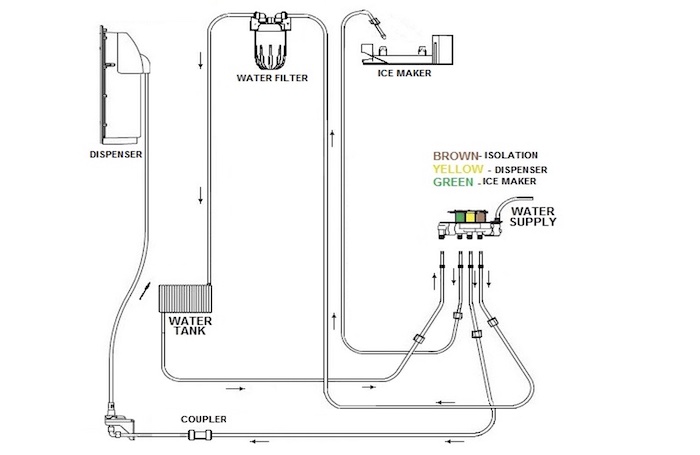
Water supply issues cause more ice maker failures than any other single factor. Begin your diagnostic process here with these critical checks:
Start at the back of your refrigerator where the water supply line connects. Gently tug the connection point to verify it’s secure—not loose or partially detached. During routine cleaning or when moving the refrigerator, this fitting often loosens, cutting off water flow completely. If loose, tighten by hand first, then use adjustable pliers for a quarter-turn more (avoid over-tightening).
Next, trace the water line to the saddle valve under your sink. This valve must be fully open—many homeowners mistakenly leave it partially closed after plumbing work. Rotate the valve handle until it’s perpendicular to the pipe (90-degree angle). For saddle valves with lever handles, ensure the lever points directly toward the refrigerator line.
Critical Check: Examine the entire water line length for kinks or crushing points. When your Frigidaire freezer sits too close to the wall, the flexible tubing often pinches where it bends into the unit. Pull the refrigerator forward 4-6 inches and inspect the line’s curvature. Any sharp bends require repositioning—never attempt to straighten frozen kinks as this damages the tubing.
Replace Clogged Water Filter Immediately
A restricted water filter is the silent killer of ice production—often overlooked even when other symptoms seem absent. Your Frigidaire’s filter needs replacement every six months regardless of visible condition, but these signs demand immediate action:
- Ice cubes suddenly become smaller than normal
- Hollow centers form inside otherwise normal-looking cubes
- Water dispenser flow noticeably slows (takes more than 4 seconds to fill 8 oz)
- Ice production stops completely despite proper settings
To replace the filter:
1. Locate the filter housing (typically inside the refrigerator compartment)
2. Press the release button or turn the cartridge as directed by your model
3. Remove the old filter and discard
4. Insert new Frigidaire-approved filter with alignment marks matching
5. Push firmly until you hear a click confirming proper seating
Warning: Using non-OEM filters may void your warranty and cause improper water flow. Always verify compatibility with your specific model number before purchasing replacements.
Correct Ice Bin Positioning and Signal Arm Issues
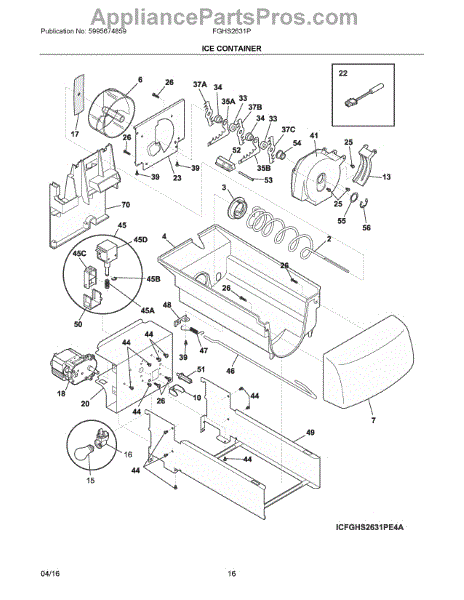
For Frigidaire models with dual ice makers, improper ice bin positioning stops production instantly. The freezer compartment’s secondary ice maker requires precise bin alignment to function:
Ensure your ice storage bin is pushed completely to the rear of its shelf. Even a ½-inch gap prevents the bin from engaging the signal mechanism properly. Listen for a distinct “click” as you slide the bin into position—this confirms proper mechanical engagement with the ice maker assembly.
The signal arm (wire feeler) must move freely through its full range. Check for obstructions like:
– Ice cubes jammed against the arm base
– Frost buildup restricting movement
– Food containers stored too close to the mechanism
– Ice clumps physically blocking the arm’s path
Pro Tip: If you notice frost accumulating around the signal arm, this indicates a failing door gasket allowing warm, moist air into the freezer. Replace damaged gaskets immediately to prevent recurring ice maker issues.
Fix Small or Hollow Ice Cube Production
When your Frigidaire freezer not making ice produces undersized or hollow cubes, you’re experiencing restricted water flow during the fill cycle. This problem develops gradually as water delivery decreases:
Begin with the simplest solution—replace your water filter even if it hasn’t reached the six-month mark. A partially clogged filter often shows no dispenser symptoms but critically impacts ice maker performance. After installation, allow three complete production cycles before evaluating results.
If hollow cubes persist, test household water pressure:
1. Disconnect the supply line at the refrigerator inlet
2. Place the line end in a measuring cup
3. Have someone briefly open the saddle valve
4. Measure flow rate (should fill 8 oz in ≤4 seconds)
Critical Insight: Low household pressure often correlates with municipal water system issues or whole-house filter problems. If your flow test shows weak pressure, consult a plumber—this affects more than just your ice maker.
Prevent Ice Clumping and Future Failures
Regular maintenance prevents most ice production problems before they start. Implement these proven strategies:
Use ice at least twice weekly to maintain cube separation. Infrequent usage allows temperature fluctuations to fuse cube surfaces over time. For households with low ice consumption, discard existing ice every two weeks and allow fresh production to begin.
Establish a water filter replacement calendar:
– Mark replacement dates 6 months apart
– Note actual installation date on the filter housing
– In hard water areas, replace filters every 4 months
Pro Maintenance Tip: After power outages exceeding 2 hours, discard all stored ice. Temperature fluctuations during outages cause surface melting that refreezes into solid masses when power returns—this clumping stresses the ice maker mechanism during ejection cycles.
Quick Fix Reference Table
When your Frigidaire freezer not making ice, match your symptoms to these targeted solutions:
| Symptom | Immediate Action | Expected Result |
|---|---|---|
| No ice production | Verify ice maker switch position | Restores power to mechanism |
| No ice production | Check saddle valve under sink | Ensures adequate water supply |
| Small or hollow cubes | Replace water filter immediately | Restores proper fill volume |
| Clumped ice cubes | Discard existing ice, use twice weekly | Prevents fusion from infrequent use |
| Intermittent production | Clear signal arm obstructions | Restores proper level sensing |
Addressing these core issues resolves most ice production failures in Frigidaire freezers without professional help. The key is systematic troubleshooting—starting with the simplest explanations before moving to complex diagnostics. By understanding your ice maker’s water system and implementing regular maintenance, you’ll ensure reliable ice production for years.
Remember that consistent filter replacement and proper bin positioning prevent 80% of ice maker problems before they start. Keep this guide handy for quick reference the next time your Frigidaire freezer not making ice—most fixes take less time than waiting for a service technician.