Freezer Smells Like Dead Animal? Fix It Fast
Opening that freezer door only to be hit with an odor resembling a dead animal is one of the most unpleasant experiences a homeowner can have. This stubborn smell can persist even after you’ve scrubbed every surface and removed every scrap of food, leaving you wondering whether your appliance can ever be saved. The frustration builds as the odor seems to seep from everywhere and nowhere specific, permeating your kitchen and making you hesitant to use the freezer at all.
The good news is that most cases of this dreaded freezer smells like dead animal issue can be traced to identifiable causes, and many can be resolved with thorough cleaning and proper maintenance. However, understanding what you’re dealing with is crucial—some odor sources are easily accessible while others may be hidden in compartments that standard cleaning cannot reach. The duration and persistence of the smell offer important clues about how deeply the problem has penetrated your appliance’s components.
This guide walks you through every potential source of a dead animal smell in your freezer, from deceased rodents hiding in the compressor compartment to clogged drain lines accumulating decomposing matter. You’ll learn diagnostic steps to identify the cause, cleaning methods that actually work, and prevention strategies to keep your freezer smelling fresh for years to come.
Locate the True Source of Your Freezer’s Dead Animal Odor
Before you can eliminate the smell, you need to understand where it’s coming from. The duration of the odor provides critical diagnostic information—odors present for six weeks or longer often indicate that the source has penetrated areas that regular cleaning cannot reach, such as insulation or sealed compartments. Shorter-term odors are more likely to stem from accessible spills, forgotten food, or drainage problems that can be resolved with thorough cleaning.
Start by emptying your freezer completely and conducting a systematic visual inspection. Check every shelf, corner, and crevice for signs of spoiled food, mold growth, or unusual residue. Remove all shelves and drawers to examine the walls and floor beneath them. If you find nothing obvious inside the main compartment, the problem likely lies in hidden areas like the drain system, drip pan, or compressor compartment.
Consider these diagnostic factors as you investigate: Is your freezer still cooling properly? Unusual noises or water pooling near the appliance? Visible mold or discoloration anywhere inside? Each observation helps narrow down whether you’re dealing with a simple cleaning issue or something requiring professional intervention. The absence of obvious signs doesn’t mean the problem is unsolvable—it just means you need to look deeper into the appliance’s structure.
Inspect for Actual Dead Rodents in Your Freezer Compartment

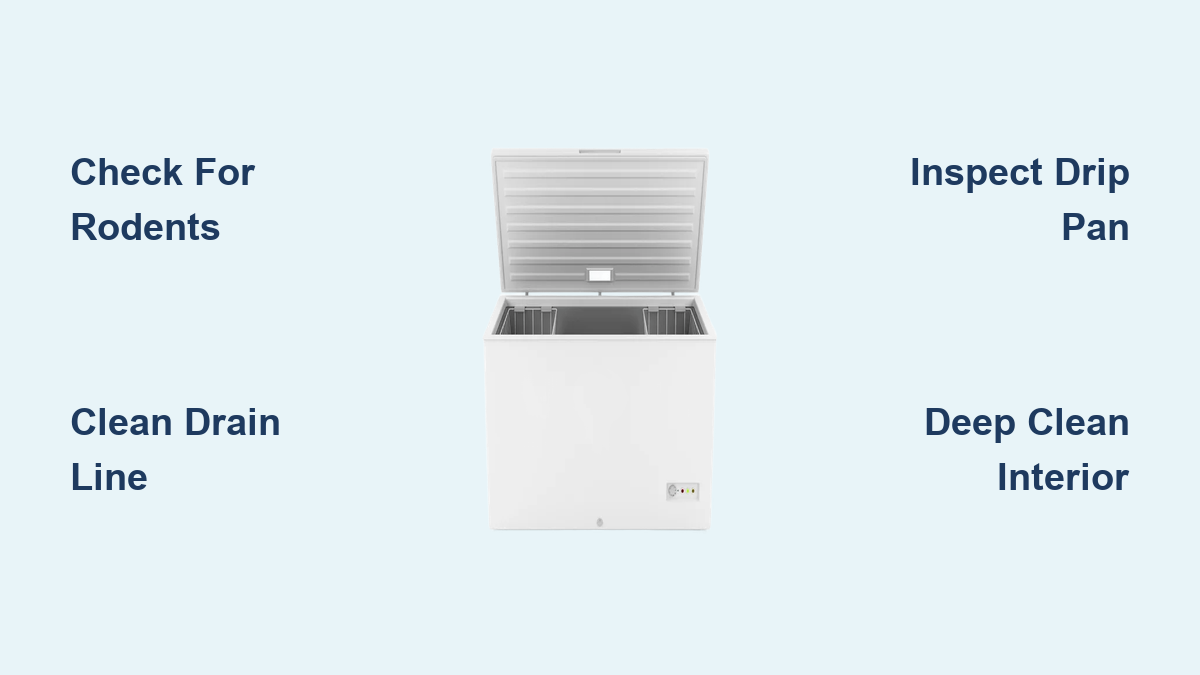
One of the most literal explanations for this awful smell is the presence of an actual deceased rodent inside your appliance. Mice and other small animals can enter freezers through gaps around utility lines, drainage openings, or worn seals. They’re attracted to the warmth generated by the compressor and may become trapped in the machinery, particularly in the compressor compartment at the back of the unit.
The compressor area provides an ideal environment for deceased animals to go unnoticed for extended periods. Rodents can access this space through small openings where utility lines enter the appliance or through gaps in exterior panels. Once inside, they may die near the motor, wiring, or within the insulation material. The heat generated by the compressor accelerates decomposition, releasing strong odors that permeate throughout the freezer.
To investigate this possibility, pull the appliance away from the wall and examine the rear panel carefully. Look for any signs of animal remains, nesting materials, or entry points that might have allowed pests inside. If you discover evidence of rodents, consider calling a professional appliance technician who can safely remove any remains and assess whether the appliance can be safely used afterward. Never attempt to power on a freezer with suspected rodent remains inside, as this can spread contaminants throughout your kitchen.
Unclog and Clean Your Freezer’s Drain Line System
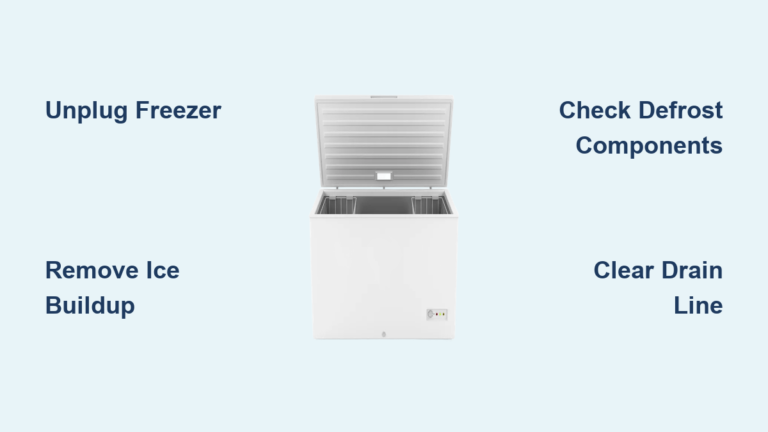
The defrost drain system in freezers is a surprisingly common source of persistent odors that many people mistake for dead animals. During the automatic defrost cycle, meltwater flows through a drain tube into a drip pan located beneath the appliance. Over time, this system can accumulate debris, food particles, mold, and organic matter that decomposes and produces foul odors.
The drip pan, also called the drain pan or evaporation pan, collects water that should evaporate during normal operation. However, if the drain line becomes clogged, water backs up and pools in areas where it stagnates and becomes a breeding ground for bacteria and mold. In severe cases, accumulated organic matter produces smells so strong that homeowners immediately assume the worst—deceased pests—when the actual cause is decomposing gunk in the drainage system.
Accessing the drain line and drip pan varies by appliance model. Some freezers have a drain plug or access point inside the main compartment, while others require removing the kick plate at the bottom of the unit. In many models, the drip tray is located above the compressor at the back and secured with screws that must be removed for inspection and cleaning. Once accessed, these components should be removed and cleaned with warm soapy water followed by a bleach solution (approximately one tablespoon per gallon of water) to disinfect and neutralize odors.
Remove Hidden Organic Debris from Hard-to-Reach Areas

Food and liquid spills that go unnoticed can penetrate deeper into your freezer’s structure than standard cleaning can address. In some cases, spills infiltrate the insulation behind the interior liner or settle into seams and crevices where organic matter decomposes over time. This is particularly common in older freezers where seals have degraded, allowing liquids to escape the main compartment.
Once organic material has entered the insulation or sealed sections of the freezer, it becomes nearly impossible to remove through conventional cleaning methods. The enclosed environment allows decomposition to continue unchecked, releasing odors that permeate the appliance’s internal surfaces. The smell may seem to emanate from everywhere and nowhere specific, leading many homeowners to suspect a dead animal when the actual cause is hidden, decomposed food matter.
To address this, start with the most thorough basic cleaning you’ve ever performed. Remove all food and discard anything questionable. Wipe down every surface with a mixture of one tablespoon of baking soda per quart of warm water, followed by white vinegar to neutralize lingering smells. Pay extreme attention to corners, crevices, and areas where spills might have accumulated unnoticed. After cleaning, dry all surfaces thoroughly before returning the appliance to service.
Implement a Professional-Grade Cleaning Protocol
When basic cleaning isn’t enough, you need a systematic approach to deep cleaning that addresses every possible odor source. Begin by removing all shelves, drawers, and any other removable components. These should be taken out of the freezer and cleaned separately in your sink using warm water and mild dish soap. For stubborn residue, allow components to soak before scrubbing with a soft brush.
For the freezer interior, prepare a cleaning solution of baking soda and warm water—one tablespoon of baking soda per quart of water works effectively for odor neutralization. Use this solution to wipe down all interior surfaces, including walls, ceiling, floor, and the freezer door. A toothbrush or small scrub brush helps remove stubborn residue from corners and seams where decomposition may have settled. After wiping with the baking soda solution, go over surfaces again with plain white vinegar to further neutralize odors.
After cleaning, leave the freezer door open for at least 24 hours to allow complete drying and maximum ventilation. This step is crucial because any remaining moisture can continue to support microbial growth and odor production. Place open boxes of baking soda inside the freezer to help absorb residual odors during the period immediately following cleaning. Replace the baking soda every few days for the first couple of weeks, as it becomes saturated and less effective over time.
Determine When Professional Repair Is Necessary
Some odor sources are embedded in components that cannot be effectively cleaned or repaired by homeowners. If the smell has penetrated the plastic interior surfaces or the foam insulation, deodorizing agents alone will not resolve the issue. The structure of these materials allows odors to become trapped within the material itself, where they continue to be released over time.
In such cases, many appliance technicians will decline service calls because the solution requires replacing panels or insulation, which is often cost-prohibitive compared to purchasing a new appliance. The presence of a dead animal within the insulation or compressor area may necessitate these same conclusions, as properly removing and decontaminating these materials typically exceeds the value of older freezers.
For persistent odors that resist all cleaning attempts, professional assessment can determine whether repair is feasible or replacement is the better option. Licensed appliance technicians have access to specialized tools and cleaning solutions, as well as experience identifying hidden odor sources that might not be apparent to homeowners. When calling a professional, obtain quotes from multiple technicians, particularly if the initial assessment suggests expensive repairs. As a general guideline, if repair costs exceed 50% of the price of a new appliance of similar quality and capacity, replacement is typically the more sensible choice.
Prevent Future Dead Animal Odors in Your Freezer
Once you’ve eliminated the dead animal smell from your freezer, prevention becomes your priority. Proper food storage is the foundation of odor prevention—all food should be covered and sealed in airtight containers, preferably glass containers with tight-fitting lids. This limits the release of volatile organic compounds that create odors and prevents cross-contamination of flavors between different food items.
Implement a regular inventory system where old items are used or discarded before new purchases are added—this prevents forgotten food from decomposing over extended periods and creating odor problems you won’t discover until weeks or months later. Routine maintenance significantly reduces the likelihood of odor problems developing. The drip pan and drain line should be inspected and cleaned annually, or more frequently if the appliance is used heavily or in high-humidity environments.
Environmental factors also contribute to freezer odor problems and should be addressed when possible. High humidity in the installation location can overwhelm the drip pan’s evaporation capacity, leading to water accumulation and potential overflow. In such cases, using a dehumidifier in the surrounding area or improving ventilation helps. Temperature fluctuations from frequent door opening, power interruptions, or ambient temperature changes can promote microbial activity and accelerate food breakdown—ensuring proper door seal integrity and minimizing door opening frequency helps maintain stable internal temperatures.
Eliminating a dead animal smell from your freezer requires patience, thoroughness, and a systematic approach. Start with the least invasive solutions—basic cleaning of all accessible surfaces, removal of any spoiled food, and thorough deodorization with baking soda and vinegar. If the smell persists, move on to inspecting and cleaning the drain system, drip pan, and compressor compartment. Once your freezer is clean and odor-free, commit to the preventive maintenance practices that will keep it that way. Your freezer should preserve your food, not fill your kitchen with awful smells—by staying vigilant and addressing problems early, you can ensure your appliance serves your household reliably for years to come.