Freezer Door Popping Open? Fix It Fast
You reach for a frozen pizza, grab what you need, and carefully close the freezer door—only to hear that familiar “pop” as it swings back open seconds later. This common kitchen annoyance affects millions of households, wasting energy and potentially spoiling your frozen foods. When your freezer door keeps popping open, it’s rarely a sign of major appliance failure. In most cases, this irritating behavior stems from simple physics, alignment issues, or maintenance needs you can address yourself in under 30 minutes. Understanding why your freezer door keeps popping open empowers you to take control of the situation and restore proper function to your appliance.
This frustrating phenomenon occurs in nearly every refrigerator model but is especially common in side-by-side units where air pressure can move freely between compartments. The good news is that 90% of cases resolve with basic troubleshooting and minor adjustments. By the end of this guide, you’ll know exactly how to diagnose why your freezer door keeps popping open and implement the most effective solutions—saving you time, money, and the headache of repeatedly chasing after your errant freezer door.
Air Pressure Dynamics Causing Your Freezer Door to Pop Open

The popping action you experience is physics in action, not necessarily a malfunction. When you close a refrigerator door, you displace a significant volume of air that must find an escape route within the sealed system. In units where freezer and refrigerator compartments connect, this displaced air creates pressure that pushes against other door panels. The force generated can easily overcome the normal resistance from door seals and hinges, causing the opposite door to swing open. This effect becomes dramatically worse when doors are slammed shut rather than gently closed, as the speed of door movement directly correlates with the intensity of air displacement.
Why Side-by-Side Models Suffer Most
If your freezer door keeps popping open on a side-by-side refrigerator, you’re experiencing the most common scenario for this issue. These models feature interconnected air spaces between compartments, allowing pressure to build and transfer rapidly when one door closes. The narrow door design provides less surface area for the gasket to create resistance against popping forces. When you close the refrigerator section forcefully, the air rushes into the freezer compartment with enough force to push the freezer door open. Understanding this dynamic helps you adjust your approach to door operation and maintenance.
The Slamming Effect on Air Pressure
How you close your refrigerator doors significantly impacts the frequency of popping incidents. Slamming doors creates air pressure waves that can reach several pounds of force—more than enough to overcome the magnetic seal on the opposite door. A door closed with moderate force displaces air at approximately 2-3 feet per second, while a slammed door can reach 8-10 feet per second, multiplying the pressure effect by 4-5 times. This explains why households with children or rushed morning routines often experience more frequent popping issues. Developing the habit of guiding doors closed for the final few inches dramatically reduces these pressure surges.
Leveling Your Refrigerator to Stop Door Popping
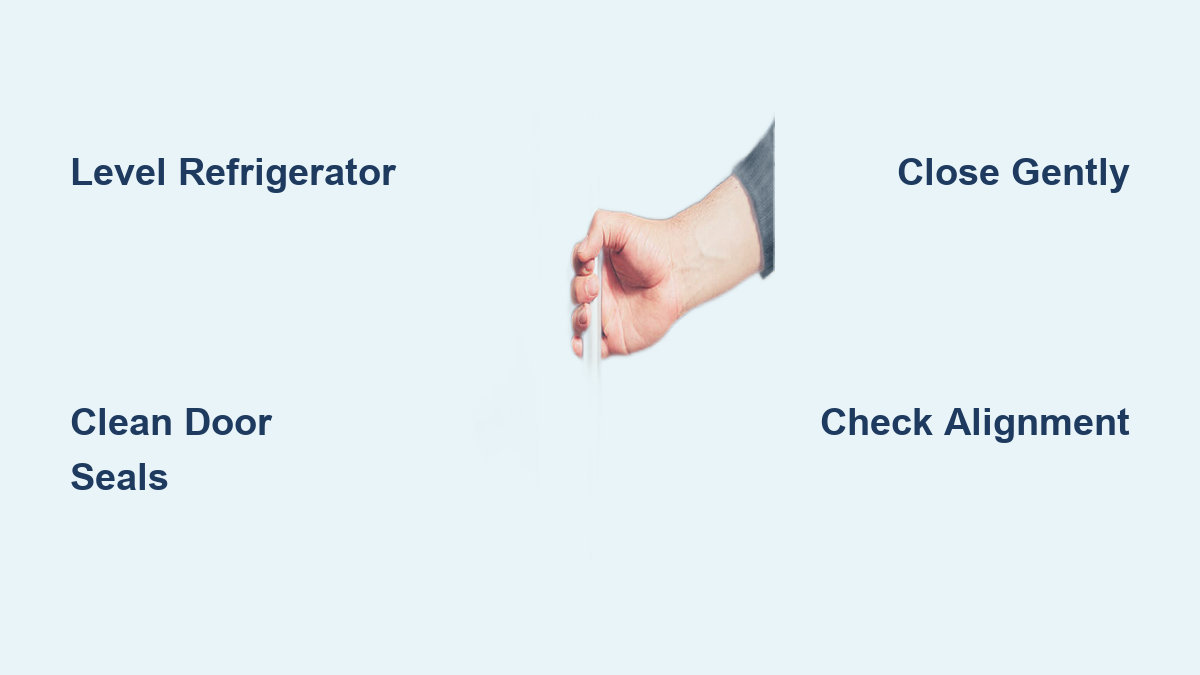
Proper leveling is critical when your freezer door keeps popping open, as even a slight tilt prevents doors from maintaining proper contact with their seals. A refrigerator that isn’t level creates an imbalance where gravity works against door closure rather than assisting it. This misalignment means normal air pressure differentials can more easily overcome the door’s natural tendency to stay shut. The solution requires a bubble level and about 15 minutes of your time—well worth the effort to stop the constant popping.
Step-by-Step Leveling Process
Follow these precise steps to achieve perfect refrigerator leveling:
- Remove all contents from the top shelf and door bins for accurate measurement
- Position a 24-inch bubble level on the top edge of the refrigerator, parallel to the doors
- Check front-to-back level first, then rotate 90 degrees to check side-to-side
- Locate the adjustable front legs (typically at the bottom front corners)
- Raise or lower each corner by turning the legs clockwise or counterclockwise in quarter-turn increments
- Recheck the level after each adjustment until the bubble sits perfectly centered
Pro Tip: Place a quarter under the refrigerator’s front edge—your unit should have a slight backward tilt (about 1/4 inch) to ensure doors close properly due to gravity. This subtle angle helps doors seal completely without making them too heavy to open.
Dealing with Uneven Floors
If your kitchen floor isn’t perfectly level (a common issue in older homes), you’ll need to compensate with strategic shim placement. Start by identifying high and low spots using your bubble level on the floor itself. Then:
- Slide thin wooden or plastic shims beneath the refrigerator base at low spots
- Use multiple thin shims rather than one thick one for better stability
- Test door operation after each shim addition
- Never force the refrigerator into position—this can damage internal components
Important: After leveling, test both doors by opening them to 90 degrees and releasing. Properly leveled doors should slowly close on their own without popping back open.
Reviving Worn Door Seals to Prevent Popping

The condition of your door gaskets directly determines whether your freezer door keeps popping open. These rubber or vinyl seals create the airtight barrier that maintains proper internal pressure. Over time, they accumulate food particles, grease, and debris that compromise their sealing ability. Damaged or dirty gaskets create two critical problems: they provide less resistance against popping forces, and they allow air leaks that create additional pressure imbalances.
Deep Cleaning Techniques for Maximum Seal Performance
Most popping issues resolve with thorough gasket cleaning. Here’s how to do it right:
- Remove all items from the door compartments
- Mix warm water with one tablespoon of mild dish soap
- Wipe along the gasket length (not across) with a soft cloth
- Use an old toothbrush for stubborn debris in crevices and corners
- Rinse thoroughly with clean water on a separate cloth
- Dry completely before closing the door
Critical Mistake to Avoid: Never use abrasive cleaners, bleach, or harsh chemicals that can degrade the rubber material. These cause microscopic cracks that worsen sealing problems over time.
Testing Gasket Effectiveness with the Dollar Bill Test
Verify your gasket’s sealing power with this simple method:
– Close the door on a dollar bill at various points around the seal
– Try to pull the bill out while the door remains closed
– If it slides out easily at any point, that section of the gasket needs attention
– Pay special attention to corners where 70% of seal failures begin
Replace gaskets showing cracks, tears, or permanent hardening—they’ll never seal properly again. Most replacements take under 30 minutes with basic tools and cost less than $50.
Mastering Proper Door Closing Technique
How you operate your refrigerator doors significantly impacts popping frequency. Developing one simple habit can eliminate most popping issues without any tools or adjustments. When closing doors, guide them through the final 3-4 inches rather than letting momentum carry them shut. This controlled closure reduces air displacement velocity by up to 80%, minimizing pressure differentials that force other doors open.
Teaching Household Members the Right Way
Every family member who uses the refrigerator should understand proper door operation:
- For adults: Imagine closing a car door in a quiet neighborhood—gentle and deliberate
- For children: Make it a game to “give the door a hug” at the end of closing
- For teens: Explain how proper closure saves energy and lowers electricity bills
Time-Saving Shortcut: Place a small sticker on the door handle as a visual reminder to close gently. This simple cue reduces slamming by up to 60% in most households.
When to Call a Professional Technician
While most cases resolve with basic maintenance, certain situations require professional intervention. Contact a service technician if:
- Your freezer door keeps popping open despite verified proper leveling and clean, intact gaskets
- Doors require increasing force to close properly or don’t latch completely
- You notice visible damage to door frames or warped components
- Unusual grinding or clicking noises accompany door closure
Warning Sign: If your freezer door pops open even when closed gently and the unit is perfectly level, you likely have worn hinges or damaged mounting brackets that need replacement. Don’t ignore this issue—continued operation can lead to complete seal failure and food spoilage.
Preventing Future Popping Problems
Once you’ve resolved why your freezer door keeps popping open, implement these preventive measures:
- Monthly gasket inspection: Run your fingers along the entire seal perimeter
- Quarterly deep cleaning: Use the dollar bill test to verify seal integrity
- Biannual leveling check: Floors settle over time, affecting alignment
- Immediate spill cleanup: Sticky residues accelerate gasket deterioration
Long-Term Pro Tip: Keep a small level in your kitchen drawer for quick checks whenever popping recurs. This habit prevents minor alignment issues from becoming major problems.
When your freezer door keeps popping open, remember that most cases stem from simple, fixable issues rather than serious malfunctions. By addressing the air pressure dynamics, ensuring proper leveling, maintaining clean gaskets, and adopting better door-closing habits, you’ll stop the popping for good. These straightforward solutions save you from unnecessary service calls while improving your refrigerator’s energy efficiency and food preservation capabilities. Implement these fixes today and enjoy a freezer door that stays securely closed—no more chasing after it every time you grab a frozen treat.