Freezer Door Stuck? Fix It Fast
That moment when you reach for frozen groceries only to find your freezer door refuses to budge creates instant frustration. This common household dilemma affects nearly every freezer owner at some point, but understanding why your freezer door gets stuck transforms panic into practical problem-solving. The tight resistance you feel isn’t mechanical failure—it’s basic physics at work inside your appliance. When warm air enters your freezer and cools rapidly, the air molecules contract, creating negative pressure that makes the door feel sealed shut.
This guide delivers immediate solutions to free your stuck freezer door while explaining exactly what causes this phenomenon. You’ll learn to distinguish normal vacuum effects from serious problems, discover quick fixes requiring no tools, and implement proven prevention strategies. Whether you own a top-freezer model, bottom-drawer unit, or chest freezer, these actionable techniques work across all appliance types, saving you time, money, and unnecessary service calls.
Physics Behind Your Stuck Freezer Door
How Temperature Changes Create Vacuum-Like Pressure
When warm room air enters your freezer and cools rapidly, the air molecules lose energy and contract, occupying less space than they did when warm. This contraction creates negative pressure inside the compartment, where internal pressure drops below the atmospheric pressure outside. The higher-pressure air outside pushes against the door with surprising force—sometimes requiring up to 80 pounds of force to overcome—making it feel like the door has been sealed shut.
This pressure imbalance develops most noticeably when you’ve left the freezer door open for several minutes allowing substantial warm air to enter, or immediately after the automatic defrost cycle completes when internal temperatures are rapidly changing. Freezers operating in warm rooms (24°C/75°F) while maintaining freezing temperatures (-18°C/0°F) experience more dramatic pressure differentials due to the significant temperature gradient.
Why That Tight Seal Actually Benefits Your Freezer
Before attempting fixes, recognize that the tight seal causing your stuck door serves a critical purpose. A properly functioning gasket prevents ambient humidity from entering the freezer compartment. When humid room air infiltrates your freezer, moisture condenses and freezes on evaporator coils, accelerating frost buildup that reduces cooling efficiency and increases energy consumption.
The fact that your freezer door creates this vacuum effect actually indicates your door gaskets are working exactly as designed. The seal performs its job: preventing air exchange between interior and exterior environments. The challenge arises not from seal failure but from the seal working too effectively in conjunction with normal thermodynamic processes.
Diagnose If Your Stuck Door Is Normal or Problematic

Recognize Acceptable Freezer Door Resistance
Freezer doors that require patience or a gentle prying motion to open immediately after closing fall within normal operating parameters. The pressure differential typically equalizes within 30 seconds to a few minutes as small amounts of air leak past the gasket or internal temperatures stabilize. After this brief period, the door should open with normal force.
A properly functioning freezer door might feel stuck for 10-30 seconds after closing, particularly if the door was open for an extended period or the room temperature significantly exceeds the freezer’s internal temperature. This temporary resistance is expected and doesn’t indicate appliance problems.
Identify Warning Signs Requiring Immediate Action
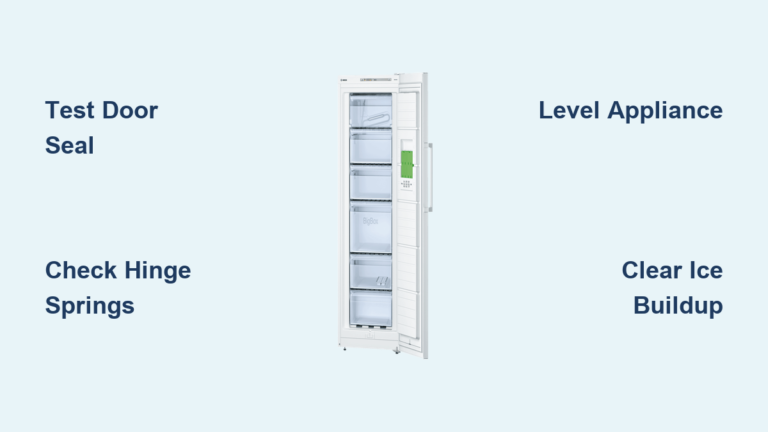
Certain symptoms indicate potentially serious issues needing attention. If your freezer door remains extremely difficult to open even after waiting several minutes, this suggests unusually strong sealing or damaged components. Bottom freezer models are especially prone to mechanical obstructions when users open and close drawers from one side rather than the center of the handle. This off-center operation causes the drawer to shift off track, creating gaps that allow humid air to enter and freeze overnight.
Critical warning signs include:
– Needing excessive force (more than 80 pounds) to open the door
– Persistent sticking problems that began after one year of normal operation
– Ice accumulation behind door seals or in drawer tracks
– Rushing air sounds lasting longer than 15 seconds after opening
Quick Fixes to Open Your Stuck Freezer Immediately
Wait for Natural Pressure Equalization
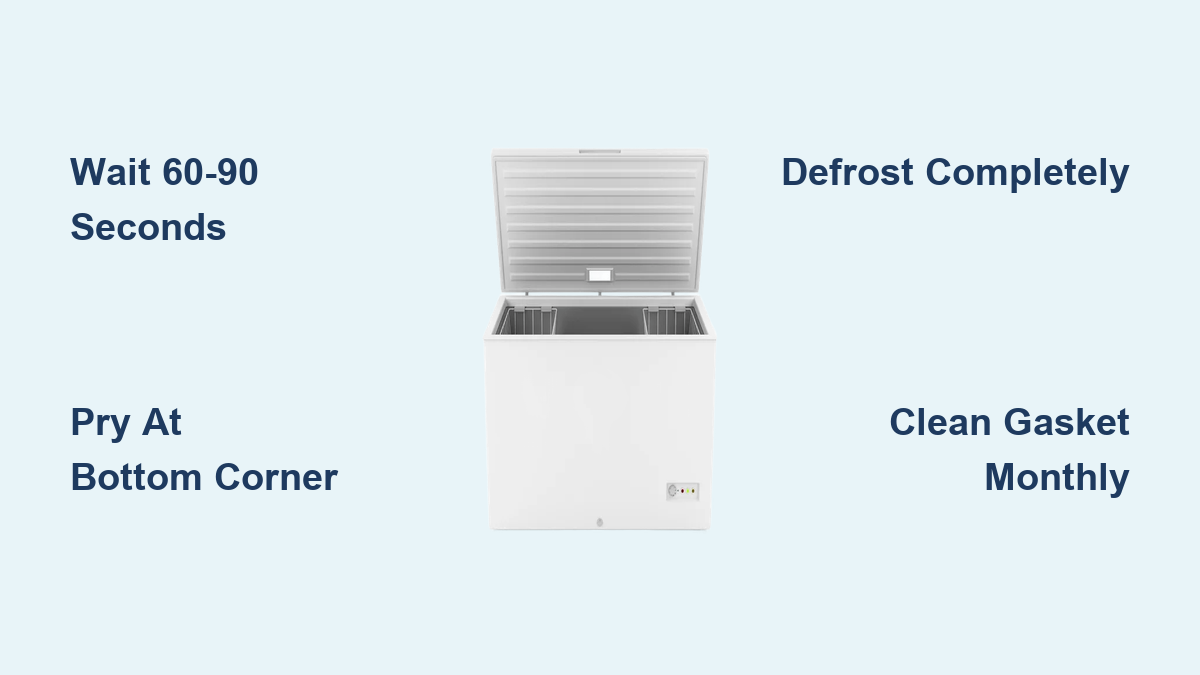
The simplest solution requires patience but no tools. Close the freezer door normally and wait exactly 60-90 seconds without attempting to open it. During this time, small amounts of air gradually leak past the gasket, allowing pressures to equalize naturally. After waiting, attempt to open the door using only light force. If the door opens relatively easily, your problem is pressure-related and falls within normal parameters. This method works for 80% of “stuck door” situations but requires planning ahead.
Break the Vacuum Seal Without Damage
For faster relief, use a gentle prying technique to break the vacuum seal safely. Place your hand near the handle and pull outward while simultaneously applying slight upward pressure to separate the gasket from the sealing surface. Focus on the bottom corner of the door—the most effective area for breaking the vacuum seal. Avoid forceful pulling that could damage the gasket or hinges.
Pro technique: Use your fingertips to lift the door gasket away from the sealing surface at one corner. This allows outside air to rush in and equalize pressure almost instantly. Some freezer models include built-in vacuum breaker mechanisms specifically designed for this purpose—check your owner’s manual for location details.
Eliminate Ice Blockages Preventing Door Opening
Locate Problematic Ice Accumulation
Ice buildup behind door seals or in drawer tracks transforms simple pressure issues into mechanical obstructions. For bottom freezer models, thoroughly inspect drawer tracks for ice buildup, frost accumulation, or debris obstructing smooth movement. Check behind the door gasket where it contacts the frame, as ice in this area can freeze the seal directly to the surface.
Examine the freezer interior for excessive frost on back walls or shelves, which indicates humidity ingress problems. Look for food items protruding into door closing zones that prevent complete closure and allow moist air to enter.
Complete Defrosting Procedure for Ice Removal
When ice causes sticking problems, thorough defrosting becomes necessary. Empty the freezer completely and prop the door open to allow ice to melt naturally—a process taking several hours depending on ice thickness. For faster results:
- Place bowls of hot water inside the freezer and close the door temporarily
- Check and replace water as it cools (repeat 3-4 times)
- Alternatively, use a hair dryer on low heat, constantly moving it to avoid damaging plastic components
Once ice has melted completely, dry all surfaces with clean towels, paying special attention to drawer tracks, gasket channels, and sealing surfaces. Apply a thin layer of food-grade grease to drawer tracks to prevent future ice accumulation and ensure smooth operation.
Prevent Future Sticking Problems with Proper Maintenance
Monthly Gasket Care Routine
Implement this simple monthly maintenance schedule to prevent most sticking problems:
- Inspect the rubber door gasket for damage, warping, or debris
- Clean the gasket with mild soap and warm water solution
- Run fingers along the entire perimeter feeling for cracks or flattened areas
- Ensure the gasket lies flat against the door frame when closed
- Verify no sections are curled, folded, or lifted from the sealing surface
Replace the gasket if visible damage appears, as damaged seals cause sticking while reducing energy efficiency. Replacement gaskets typically snap into place or attach with screws—ensure you obtain the correct model for your specific appliance.
Proper Opening Techniques for Drawer Models
How you open and close your freezer significantly impacts sticking problems, especially for bottom freezer drawers. Always open and close from the center of the handle, never from one side. Opening from an angle causes the drawer to shift on its tracks, gradually misaligning the mechanism until ice accumulation makes it difficult to open.
Avoid these common mistakes:
– Do not apply petroleum jelly or other lubricants to gaskets (attracts debris)
– Never force a drawer open if shifted off track (causes further damage)
– Avoid overfilling the freezer (restricts airflow causing pressure irregularities)
– Ensure items don’t prevent complete door closure (leads to ice accumulation)
When to Call a Professional Technician
Recognize Beyond-DIY Problems
Professional service becomes necessary when self-remedy efforts fail or symptoms indicate mechanical failures. Call a technician if:
- The door remains difficult to open after thorough defrosting and gasket inspection
- The problem returns repeatedly despite proper maintenance
- Bottom freezer drawers have shifted off track and won’t realign
- Ice accumulation continues despite proper operation and seal integrity
- You hear persistent rushing air sounds longer than 15 seconds after opening
For bottom freezer drawers that have shifted off track, professional realignment may be necessary to restore proper operation. A technician can assess track condition, realign the drawer, and apply appropriate lubrication to prevent recurrence.
Environmental Optimization for Sticking Prevention
Room temperature and humidity conditions significantly affect sticking severity. Position freezers in climate-controlled areas away from heat sources like ovens, heating vents, or direct sunlight. Maintain adequate clearance around the appliance exterior for proper ventilation, particularly for condenser coils on the back or bottom.
Avoid placing items directly in front of internal air vents, as blocked airflow causes temperature irregularities contributing to frost formation. Freezers in warm, humid environments experience more pronounced vacuum effects—consider using a dehumidifier in extremely humid locations.
The stuck freezer door phenomenon results from normal thermodynamics where cooling air contracts and creates pressure differentials. While frustrating, this vacuum effect actually benefits energy efficiency and frost prevention. Solutions range from simple patience during pressure equalization to targeted techniques that break seals instantly. Ice accumulation transforms minor pressure issues into mechanical obstructions requiring defrosting. Implementing monthly gasket inspections, proper opening techniques, and environmental adjustments prevents most sticking problems. When self-remedies fail or mechanical damage appears, professional service ensures your freezer operates reliably. Remember that a slightly resistant door often indicates proper sealing—only persistent, excessive resistance warrants concern.