Fix Deep Freezer Compressor Not Working
Your deep freezer has gone silent, and that unmistakable hum of the compressor is nowhere to be found. A non-functioning compressor is the most serious problem a deep freezer can experience, as this component is essentially the heart of the entire system. Without it circulating refrigerant, your freezer cannot maintain the low temperatures needed to preserve your food safely. The good news is that not every silent compressor means complete failure—sometimes the issue lies with a simpler component that costs far less to replace than the compressor itself.
This guide walks you through the most common reasons a deep freezer compressor stops working, how to diagnose the problem safely, and when it’s more economical to replace the entire unit rather than repair it. You’ll learn to interpret the signs your freezer is giving you, from unusual clicking sounds to complete silence, and take appropriate action before your food spoils completely.
Confirm Your Deep Freezer Compressor Has Actually Failed
Before diving into complex diagnostics, confirm that the compressor is indeed the component at fault. Deep freezers exhibit several telltale signs when compressor failure occurs, and recognizing these patterns helps you approach the problem correctly.
Complete silence is often the first indicator homeowners notice. When you walk into the room where your deep freezer sits, you expect to hear that low, consistent humming noise. If the room feels unusually warm near the unit and you hear absolutely nothing, the compressor has likely stopped running entirely. However, complete silence can also indicate a simple power supply issue, so don’t jump to conclusions about compressor failure immediately.
Clicking or ticking sounds coming from the back of the unit suggest a failing start relay or capacitor. The compressor motor needs a strong electrical surge to begin running, and when the start components degrade, you’ll hear repeated clicking as the motor attempts to start but fails. This is actually a protective mechanism—the clicking prevents the compressor from running with insufficient power that could damage the motor windings.
Warm exterior surfaces on a deep freezer that should be cold indicate the refrigeration cycle has stopped. Run your hand along the sides of the unit. A working compressor generates enough heat that the exterior walls feel noticeably warm, particularly at the back and bottom. If the exterior feels room temperature or only slightly warm, the compressor isn’t running.
Rule Out Power Supply Issues Before Compressor Diagnosis
Electrical power problems account for many “deep freezer compressor not working” complaints, and these are far simpler to diagnose and fix than actual compressor failures. Before touching internal components, systematically eliminate power supply problems.
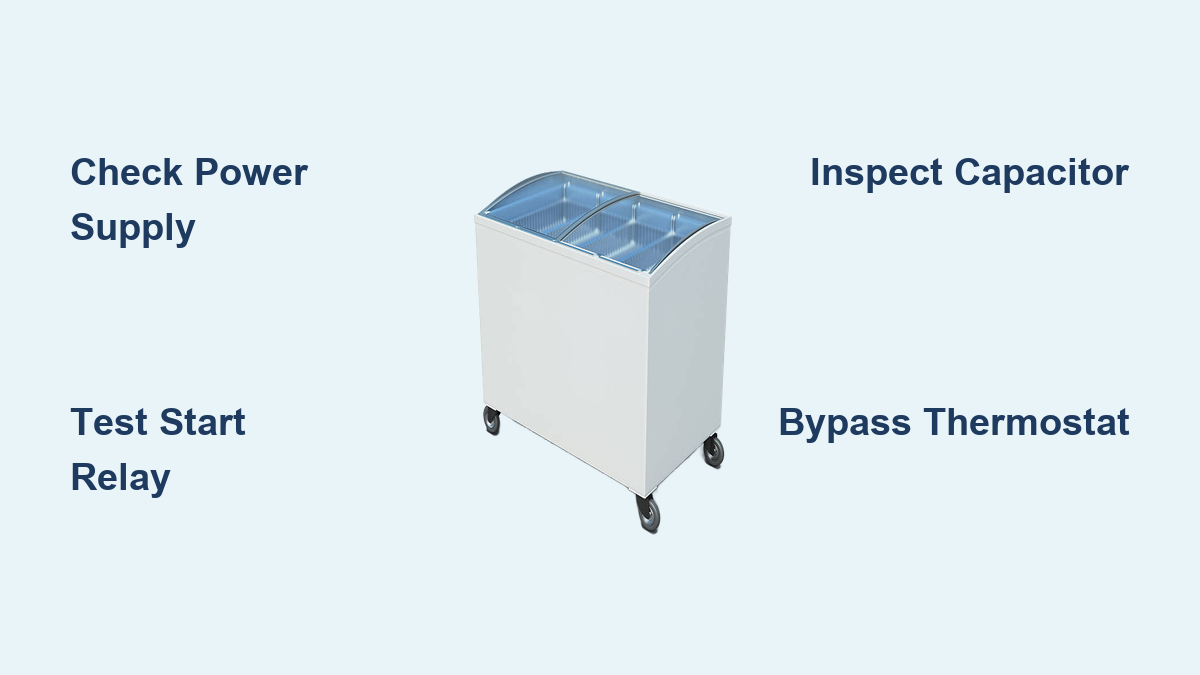
Verify the outlet by plugging in another device like a lamp or phone charger. If the other device works, the outlet is functional. If nothing powers up, check your home’s circuit breaker panel for a tripped breaker dedicated to that outlet or the kitchen appliances circuit. Reset any tripped breakers and test the freezer again. Some deep freezers draw significant current when the compressor starts, which can occasionally trip a borderline breaker.
Test the outlet voltage using a multimeter. Set the meter to AC voltage and insert the probes into the outlet slots. A functioning 120-volt outlet should read between 110 and 125 volts. Low voltage can prevent the compressor from starting even though the light and controls appear to work. If you consistently measure low voltage, contact an electrician before using the freezer.
Inspect the power cord for visible damage, especially near the plug ends and where the cord enters the back of the unit. Frayed wires, exposed conductors, or a cord that feels warm along its length indicate damage requiring cord replacement. Never use a damaged cord—electrical shorts can create fire hazards or damage internal components.
Diagnose the Start Relay and Capacitor Failure

The start relay and capacitor work together to give the compressor motor the powerful electrical kick it needs to begin running. When either component fails, the deep freezer compressor not working symptoms often include clicking sounds or brief humming without sustained operation.
Locate the start relay by removing the rear access panel of your deep freezer. The relay is a small, typically black or plastic-cased component plugged into a socket on or near the compressor itself. It connects to the compressor’s start and run winding terminals. On many models, the relay also incorporates an overload protector that trips if the compressor overheats or draws excessive current.
Perform the shake test on the start relay. Remove the relay from its socket and shake it gently. If you hear rattling inside the plastic housing, the internal points have failed and the relay needs replacement. The rattling sound comes from pieces of burnt or corroded metal bouncing inside the case. A silent relay may still be faulty, but a rattling relay is definitely bad.
Inspect the capacitor if your model includes one. The start capacitor stores electrical energy and releases it to give the compressor motor additional starting torque. Capacitors can bulge, leak, or show burnt terminals indicating failure. A bulging top or leaked fluid suggests the capacitor has failed.
Test the Overload Protector for Compressor Shutdown Issues

The overload protector serves as a safety device that cuts power to the compressor if it overheats or draws excessive current. When this component fails, it can prevent your deep freezer compressor from working even when everything else is functional.
Locate the overload protector attached directly to the side of the compressor body or integrated into the start relay assembly. It typically has two wires connected to terminals and a metal disc or sensor that presses against the compressor housing.
Test the overload protector by disconnecting it from the compressor and checking continuity with a multimeter set to resistance mode. Touch one probe to each terminal of the overload. A functioning overload shows near-zero resistance (continuity), while a failed overload shows infinite resistance (no continuity).
Allow cooling time before testing if the compressor has been struggling to start. Overload protectors can trip due to overheating from difficult starting conditions. Disconnect power for 30 minutes to an hour, then test again. If the overload shows continuity after cooling, the original problem may have been a failing start relay or capacitor causing excessive startup current.
Bypass the Thermostat to Confirm Control System Issues
The thermostat monitors internal temperature and signals the compressor to run or stop based on your settings. A failed thermostat can prevent the deep freezer compressor from working even when cooling is needed.
Bypass the thermostat to test whether it is preventing compressor operation. With the freezer unplugged, locate the two wires connected to the thermostat terminals. Remove these wires and connect them together with a wire nut or by twisting the bare ends together. Plug the freezer back in and listen for compressor operation. If the compressor starts and runs with the thermostat bypassed, the thermostat has failed and requires replacement.
Check the temperature dial setting before assuming thermostat failure. The control may have been accidentally bumped to the warmest setting or turned off entirely. Ensure the dial is set to a cold temperature, typically between -10 and -20 degrees Fahrenheit for a deep freezer.
Inspect control wiring for loose connections, burnt terminals, or damaged insulation. Wire connections can loosen over time, particularly at the thermostat terminals. Any signs of burning or melting indicate electrical problems that require attention before replacing components.
Evaluate Whether to Repair or Replace Your Deep Freezer

Once you’ve diagnosed the specific failure point, the economic decision becomes whether to repair or replace the deep freezer. Several factors influence this decision beyond just the component costs.
Consider the freezer’s age as a primary factor. Most deep freezers operate reliably for 10 to 20 years. If your unit is approaching or exceeding 15 years and the compressor has failed, replacement is often more economical. Newer models also operate more efficiently, potentially saving on electricity costs that offset purchase price over time.
Calculate total repair costs including parts, labor if hiring a professional, and any related expenses. A start relay and capacitor might cost $30 to $80 total including labor. Compressor replacement typically costs $400 to $800 for parts alone, plus $200 to $400 in labor. When repair costs exceed 50 percent of replacement cost, purchasing a new freezer usually makes more sense.
Factor in food storage needs during the repair period. If a new freezer is needed anyway, purchasing immediately avoids the uncertainty of a repaired unit and eliminates the waiting period. Deep freezers holding valuable frozen food justify more reliable solutions.
Prevent Future Deep Freezer Compressor Failures
While not all compressor failures are preventable, proper maintenance and smart operational practices can extend your deep freezer’s lifespan and reduce the likelihood of premature failure.
Keep the condenser coils clean on units where they are accessible. Dust, pet hair, and debris accumulation forces the compressor to work harder, generating more heat and stress. Vacuum coils regularly, following manufacturer recommendations—typically every six months or more frequently in dusty environments.
Maintain adequate ventilation around the freezer. Proper air circulation allows heat dissipation from the condenser and prevents the compressor from overheating. Leave several inches of space between the freezer and walls or cabinets, and ensure nothing blocks the bottom or back of the unit.
Use a surge protector to protect electrical components from voltage spikes. Power surges can damage the compressor motor windings, start relay, and control electronics. A quality surge protector designed for appliances provides essential protection, particularly in areas with unreliable electrical service.
Address unusual sounds or behaviors promptly rather than waiting for complete failure. Clicking, humming, or excessive cycling often indicates developing problems that are cheaper to address early. Ignoring warning signs typically leads to more expensive repairs or complete failure.
A deep freezer compressor that has stopped working doesn’t always mean the end of the appliance. By systematically diagnosing the electrical components that support compressor operation, you may find an inexpensive fix that restores your freezer to full functionality. However, when the compressor motor itself has failed, particularly in an older unit, replacement often provides better value and improved efficiency. Regular maintenance and attention to early warning signs give you the best chance of avoiding unexpected compressor failures and the food losses they cause.