Bottom Freezer Door Not Closing? Fix It Fast
That frustrating moment when your bottom freezer door won’t stay shut creates more than just an inconvenience—it triggers a destructive cycle that worsens over time. When your bottom freezer door not closing properly, warm air floods into the compartment, causing frost to accumulate on the gasket and door edges. This frost then physically blocks the door from closing completely, making the problem progressively worse until you’re left with a freezer that simply won’t seal no matter how many times you push it shut. Beyond the obvious annoyance, this issue wastes energy, increases your utility bills, and puts all your frozen food at risk of spoilage. The good news is that most bottom freezer door problems stem from just a handful of components—misaligned doors, displaced roller bars, or improperly positioned springs—and these issues can usually be diagnosed and fixed without calling a professional.
This guide walks you through every major cause of bottom freezer door closing problems, from quick visual inspections to detailed repair procedures. Whether your door won’t close at all, won’t stay closed, or closes unevenly compared to the upper refrigerator door, you’ll find step-by-step instructions to restore proper function. Most repairs require only basic tools and can be completed in under an hour, saving you the cost of a service call while extending the life of your appliance.
Why Your Bottom Freezer Door Won’t Close Completely
Understanding what keeps your bottom freezer door from closing properly starts with recognizing the components that work together to achieve a complete seal. The door must track correctly along its rollers, engage with properly functioning springs that pull it shut, and seat evenly against the gasket surrounding the cabinet opening. When any one of these elements falls out of alignment or malfunctions, the entire closing mechanism fails.
Door misalignment ranks as the most frequent culprit behind closing problems. Over months and years of opening and closing, the door can gradually shift out of position, causing it to sit crooked against the seal or fail to make contact completely. Even a slight deviation prevents the gasket from compressing fully, allowing warm, humid air to enter every time the door closes. This creates the perfect conditions for frost accumulation that further prevents your bottom freezer door not closing properly.
The index roller system guides the freezer drawers along their tracks during opening and closing movements. These small rollers must maintain consistent alignment to keep the door tracking properly. When rollers become unbalanced—usually because the roller bar has shifted out of position or debris has interfered with the mechanism—the door cannot follow its intended path, resulting in incomplete closure or uneven seating that prevents a proper seal.
Diagnose Bottom Freezer Door Problems in 5 Minutes

Before disassembling anything, perform a systematic visual inspection to identify the most likely cause of your closing problem. This initial assessment takes only a few minutes and can save significant time and effort by pointing you directly to the problematic component.
Start by opening the freezer door fully and examining the interior compartment. Remove any items that might be obstructing the door or interfering with drawer movement. Look for visible frost buildup along the door edges, gasket surfaces, or floor of the freezer—even small amounts of frost can indicate sealing problems. Check the door gaskets themselves for warping, cracking, or damage that might prevent proper compression when the door closes.
Examine the gap between the door and cabinet on all sides while the door is closed. Use a piece of paper as a test—slide it between the gasket and cabinet at various points around the door. The paper should meet resistance throughout; if it slides easily in certain spots, you’ve identified a sealing failure at that location. Pay particular attention to the corners, as these are common failure points for misaligned doors.
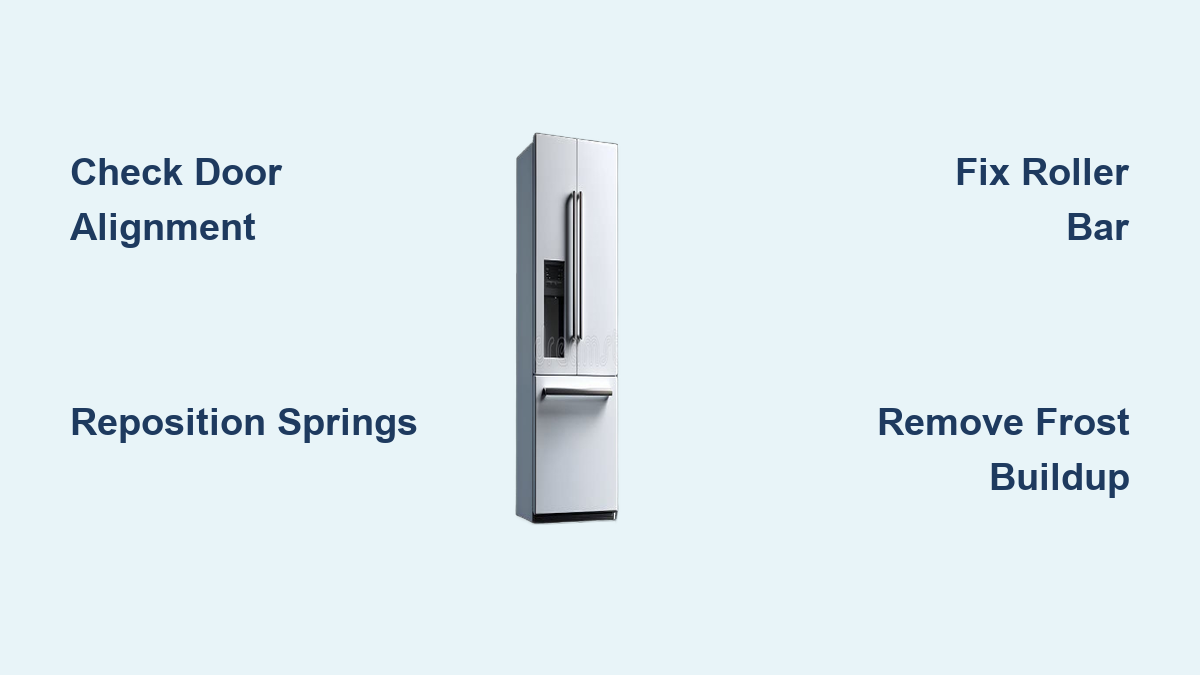
Fix Auto-Close Springs Causing Door Problems
The auto-close springs generate the force that pulls your freezer door shut and seats it against the seal. These components are located behind the left and right guide rails inside the freezer compartment, and their position is critical to proper function.
With all drawers removed, locate the springs on each side of the compartment. Each spring should have a locking pin that secures it in its proper position. Examine these pins carefully—they should be fully engaged in their designated locations. If a pin has slipped out of position:
- Slide it toward you
- Lift it until it clicks into place
- Verify that it’s locked securely
Pro tip: After repositioning springs, test the door by slowly closing it to approximately six to eight inches open, then closing it firmly without slamming. Listen for a positive clicking sound and observe whether the door seats fully against the cabinet. If the door fails to close completely, the springs may still need adjustment.
Correct Displaced Index Roller Bar Issues

The index roller bar is a horizontal metal bar that spans across the freezer compartment from one side to the other, stabilizing the rollers that guide the door along its tracks. This bar must be properly seated in both index wheels and secured by its retaining clip to function correctly.
Visually inspect the bar to confirm it spans the full width of the compartment. Both ends should be firmly seated in their corresponding index wheels or brackets. Look for the small plastic retaining clip—this clip should be inserted into the hole on one end of the bar to prevent it from sliding or falling out.
Here’s how to reseat the roller bar properly:
1. Insert the end with the hole into the right index wheel first
2. Seat the plain end into the left index wheel
3. Press the retaining clip firmly into the hole on the right end
4. Give the bar a gentle tug to verify it’s secured
After reseating, test the door by slowly closing it to six to eight inches open, then closing it firmly. Watch the index roller bar during this test to ensure it remains properly seated.
Adjust Uneven Bottom Freezer Doors
When your bottom freezer door sits at a different height than the upper refrigerator door, this misalignment affects sealing performance for both compartments. Uneven doors typically result from the hinges shifting slightly over time or from the refrigerator being slightly unlevel.
If the left freezer door sits lower than the right door:
– Locate the controller lever on the left side
– Insert a flat-blade screwdriver into the notch
– Turn clockwise to raise or counterclockwise to lower
– Make small adjustments and check progress after each turn
For precise adjustments on minor unevenness:
– Open the drawer to expose the lower hinge
– Insert the supplied hex wrench into the shaft
– Turn clockwise or counterclockwise to achieve desired height
– Use pliers to insert the supplied fastener-ring (1mm thick)
– Add as many rings as needed to close the gap completely
Remove Frost Causing Door Closure Problems
Frost accumulation both results from and causes door closing problems, making removal essential for breaking the destructive cycle. Before addressing underlying mechanical issues, clear all frost from the freezer compartment and clean the gaskets thoroughly.
Begin by removing all food items from the freezer and placing them in coolers. Unplug the refrigerator to allow the ice to soften. For faster results:
- Place bowls of hot water inside the closed freezer compartment
- Wait 15-20 minutes for steam to accelerate frost melting
- Use a plastic spatula to gently scrape away frost (avoid metal tools)
Critical warning: Never use sharp tools that could damage interior surfaces or puncture refrigerant lines. After removing frost, clean the door gaskets thoroughly using mild soap and warm water, working the soap into all creases. Rinse completely and dry thoroughly before closing the freezer.
When to Call a Professional for Bottom Freezer Repairs
Some bottom freezer door problems require professional service rather than DIY repair. Attempting to fix these issues without proper training may cause additional damage or void your appliance warranty.
Call a technician if:
– The center hinged flap doesn’t line up despite all adjustments
– Door gaskets are damaged, warped, or degraded beyond cleaning
– Auto-close springs are broken or disconnected from mounting points
– You notice visible damage to the door frame or cabinet structure
Technicians have access to specific hardware components, such as 5/8-inch washers designed to fit on hinges, that raise the door to achieve proper alignment between door tabs and cabinet slots. These repairs require precise measurements and specialized parts not available at retail stores.
Prevent Future Bottom Freezer Door Problems
Regular maintenance significantly reduces the occurrence of bottom freezer door closing problems. A few minutes of preventive care every few months prevents small issues from compounding into major problems.
Monthly maintenance checklist:
– Clean door gaskets with mild soap and warm water
– Remove food residue, ice buildup, or debris from gaskets
– Dry gaskets thoroughly to prevent stiffness or brittleness
– Inspect gaskets for signs of wear or cracking
– Check index rollers and tracks for debris accumulation
Test your door closing mechanism every few months by observing the door’s behavior during closure. The door should close smoothly, come to rest fully seated against the cabinet, and show no visible gaps. If you notice resistance, unusual sounds, or incomplete closure, perform the diagnostic procedures outlined above promptly.
By maintaining your freezer door components and addressing minor issues before they escalate, you ensure reliable operation, preserve food quality, and avoid the inconvenience and expense of major repairs. A properly closing freezer door maintains temperature efficiently, prevents frost accumulation, and protects your investment in both the appliance and the food it stores.