Bosch Fridge Freezer Leaking Water: How to Fix
Water pooling around your Bosch refrigerator creates immediate anxiety—you know that even a small leak can cause significant floor damage if left unaddressed. This frustrating problem affects countless Bosch fridge owners, with the defrost drain system accounting for approximately 74% of all water leakage incidents. The good news is most causes can be diagnosed and fixed without professional help, saving you costly service calls. When your Bosch fridge freezer leaking water becomes an issue, you’ll typically notice one of three patterns: water gathering beneath the unit, moisture accumulating under crisper drawers, or drips forming around door edges. Each pattern points directly to specific components that need attention.
Understanding why your Bosch refrigerator leaks water is the first step toward a permanent solution. Modern Bosch units use an automatic defrost cycle that runs every 8-12 hours, melting frost from evaporator coils and channeling the resulting water through a drainage system to a pan where it evaporates. When any part of this system fails, water escapes its intended path and creates leaks. By systematically identifying your specific leak pattern and addressing the root cause, you can resolve the problem efficiently and prevent recurrence.
Pinpoint Exactly Where Your Bosch Leaks Originate
Before attempting repairs, you must determine precisely where the water appears and when it occurs. This diagnostic step dramatically narrows potential causes and prevents wasted effort on unnecessary fixes.
Identify Your Leak Pattern and Timing
Water pooling directly beside your refrigerator typically indicates lower component issues—a cracked drain pan, disconnected drain tube, or water supply line problem. These leaks often occur continuously or in relation to defrost cycle timing (you might hear a clicking sound followed by humming). If moisture accumulates inside the refrigerator compartment beneath crisper drawers, a defrost drain blockage is almost certainly the culprit. Water around door edges or on shelves points directly to failing door seals.
Timing provides crucial additional clues. Leaks that appear shortly after the defrost cycle strongly suggest drainage system issues. Water emerging only when using the water dispenser indicates supply line problems. Continuous or intermittent leaks unrelated to specific cycles typically signal seal failures or pan damage. For Bosch B36CD50SNS models specifically, water beneath the freezer compartment rather than the refrigerator section indicates defrost drain problems in the freezer evaporator area.
Clear Your Bosch Defrost Drain in 15 Minutes
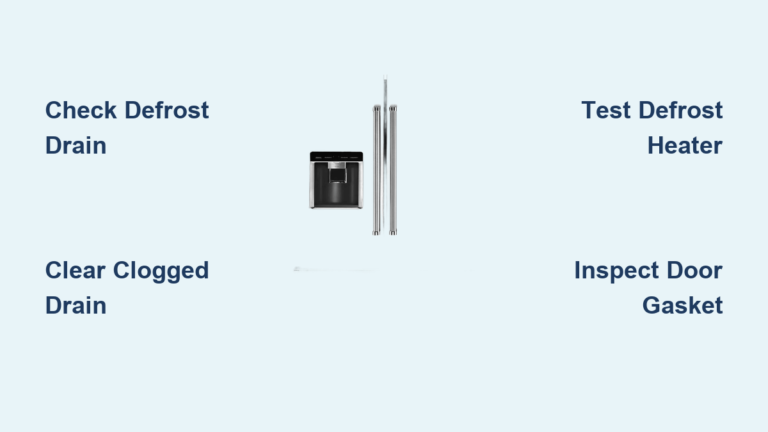
The defrost drain system handles water generated during automatic defrost cycles. When blocked or frozen, it causes overflow that appears as your Bosch fridge freezer leaking water—accounting for nearly three-quarters of all leakage cases.
Locate and Unblock Your Drain Opening
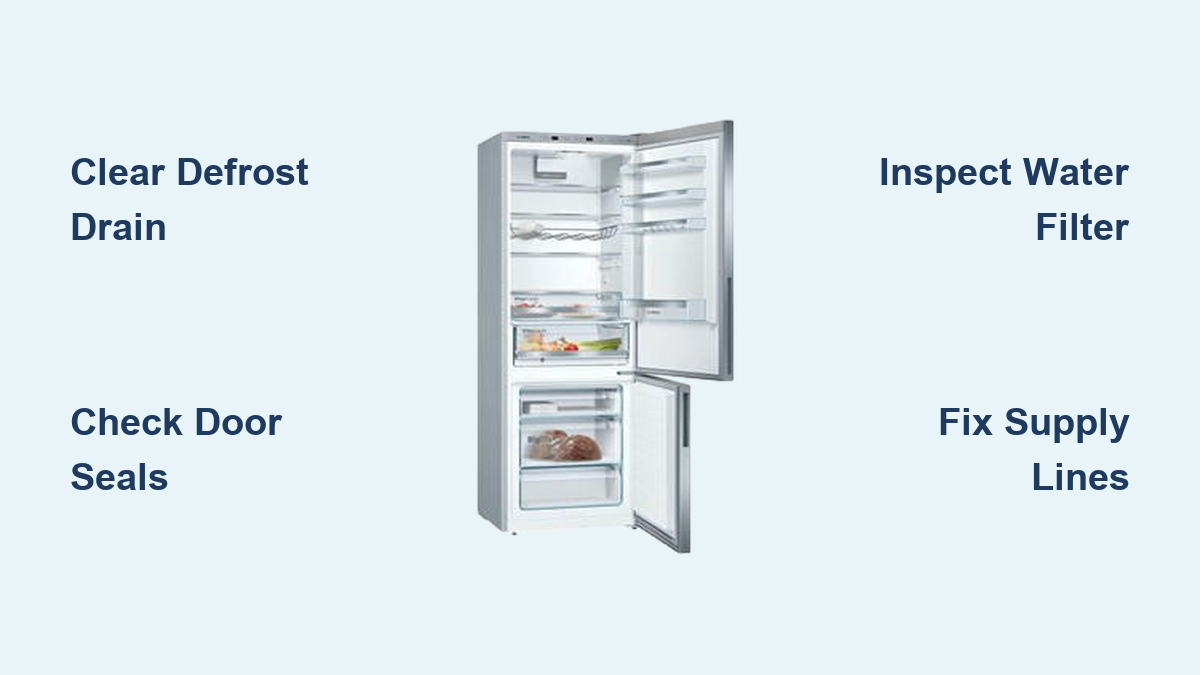
The defrost drain opening sits at the back of your refrigerator compartment near the bottom, usually behind a grille or cover. Remove crisper drawers if needed for access. Insert a flexible turkey baster bulb to test for blockages—if you encounter solid resistance where passage should exist, you’ve found your frozen or clogged drain.
Thaw the blockage carefully using a steamer for safest results—it delivers moist heat that melts ice without introducing additional water that could overflow. Hair dryers work but require constant attention to avoid melting plastic components. Never use sharp objects to chip ice, as you risk damaging the drain tube. After thawing, flush the drain with warm water using a turkey baster. Water should flow freely and emerge in the drain pan area at the bottom of your refrigerator.
Pro tip: For drains that freeze repeatedly, install a drain heater kit that provides continuous warmth to prevent future blockages—especially important for garage installations where temperature fluctuations are extreme.
Fix Damaged Door Seals Causing Water Leaks

Faulty door seals account for approximately 11% of Bosch refrigerator water leakage incidents. When seals fail, warm humid air enters the refrigerator, depositing moisture that freezes on evaporator coils and produces excessive defrost water that overwhelms the drainage system.
Perform the Critical Paper Seal Test
Visual inspection reveals obvious seal damage: tears, cracks, or areas where the seal has pulled away from the door frame. Pay special attention to corners and hinge areas where damage commonly develops. However, seals can appear intact while having lost compression strength.
The paper test provides definitive functional assessment: Close the door on a dollar bill around the entire perimeter, then attempt to withdraw it. A properly functioning seal holds the paper firmly—moderate pulling force should not easily extract it. If the paper slides out with minimal resistance in any position, that section of the seal has failed. Test multiple points, as seal failure may be localized.
Replace Your Door Seal in Under 30 Minutes
Replacing a damaged seal requires the correct replacement part for your specific Bosch model—verify compatibility before purchasing. Most Bosch refrigerator doors accept replacement seals that clip into the door frame without tools.
Remove the old seal by peeling it from its mounting groove, then clean the groove area thoroughly. Press the new seal into the groove starting at corners and working around the perimeter, ensuring it lies flat without twists. The magnetic strip must remain properly oriented to engage with the cabinet frame. After installation, repeat the paper test to confirm improved closure.
Check Water Supply Components for Hidden Leaks
Bosch refrigerators with water dispensers or ice makers include a water supply system that accounts for approximately 8% of leakage incidents. These leaks typically manifest near the dispenser area or inside the compartment where tubing runs.
Verify Proper Water Filter Installation
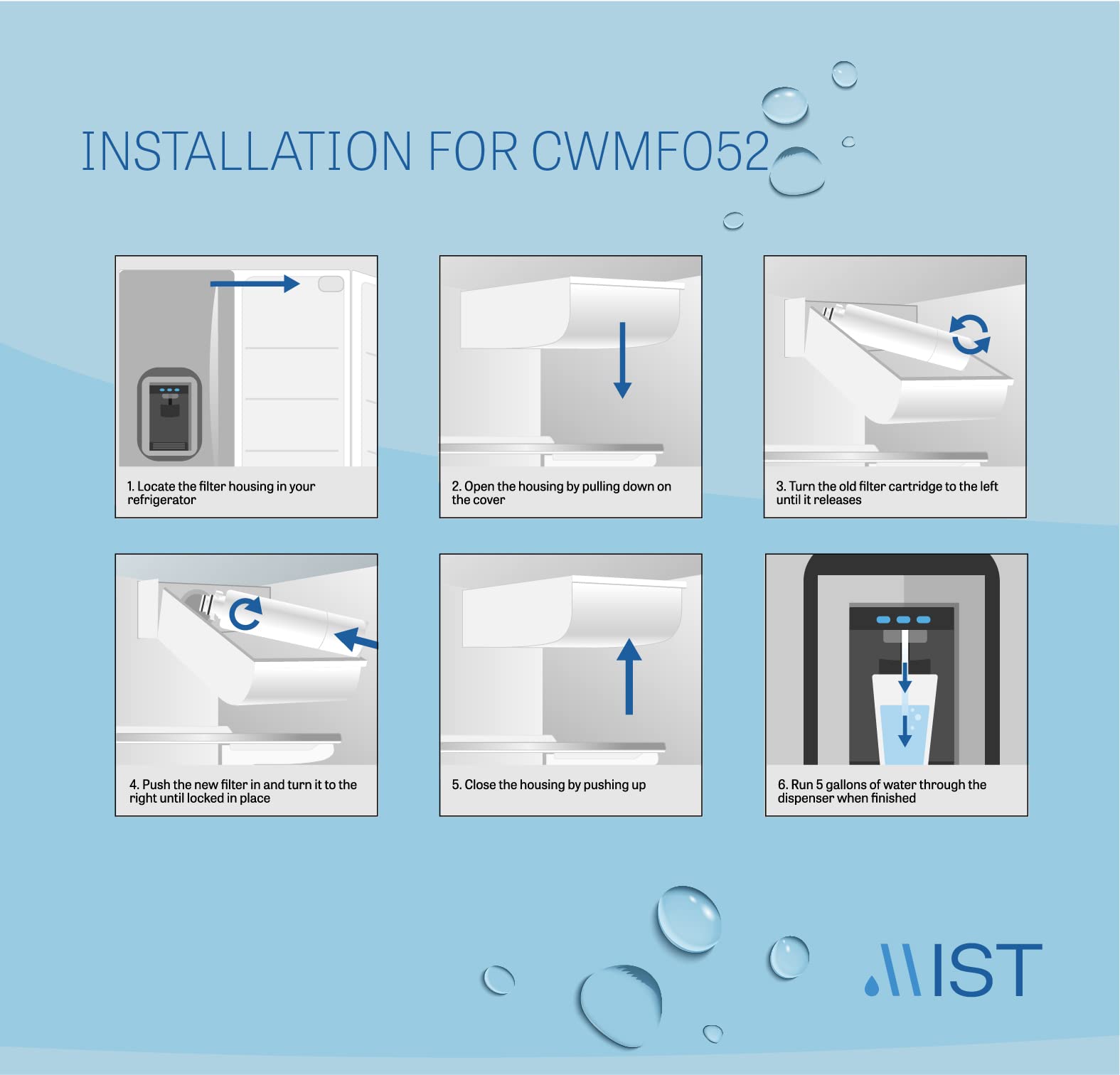
Improper filter installation represents a particularly common cause of water leakage. If the filter isn’t fully seated in its housing, water pressure forces water out around the seal rather than through the filter’s internal pathway. Confirm that your installed filter matches the manufacturer’s recommended part number and that the locking mechanism has engaged completely.
Inspect the filter housing for cracks that could allow water to bypass the seal. If damaged, the complete housing assembly requires replacement. Always replace your water filter every six months or after the manufacturer’s specified water volume—using an exhausted filter allows debris to enter the system and potentially cause blockages.
Inspect Supply Lines and Connections
Move your refrigerator away from the wall (with power disconnected) to access the rear. Examine the flexible tubing for cracks, kinks, or bulges, and check all connection points for tightness. Look for water staining or mineral deposits indicating past or current leakage at fittings.
The inlet valve controls water flow into your refrigerator. If it develops cracks or fails to seal properly, water can leak continuously. While replacement requires professional service, you can identify valve problems by disconnecting the outlet line and activating the water dispenser—water should only emerge when the dispenser runs.
Prevent Future Bosch Refrigerator Water Leaks
Regular maintenance significantly reduces the likelihood of your Bosch fridge freezer leaking water and extends your appliance’s service life. Implement these simple practices to avoid future problems.
Quarterly and Annual Maintenance Tasks
Every three months, inspect door seals using the paper test method and check beneath the refrigerator for early water accumulation signs. Verify doors close promptly after use. Annually, perform thorough defrost drain system inspection—access the drain opening, clear debris, and verify water flows freely. In hard water areas, perform this cleaning every three to six months.
Replace your water filter every six months regardless of usage. Always ensure new filters are fully seated and housings locked. Check that your refrigerator sits level in both front-to-back and side-to-side dimensions—use adjustable feet if needed. Proper leveling prevents door misalignment and improper drainage.
Optimize Installation and Usage Practices
Your refrigerator’s installation location significantly affects reliability. Units in garages face temperature extremes and humidity fluctuations that stress drainage systems. Ensure adequate clearance around the refrigerator—Bosch specifies minimum requirements that allow warm air from the condenser to dissipate effectively.
Close doors promptly after access rather than leaving them open while loading. Allow hot foods to cool before refrigeration and cover liquids before storage. Each reduction in warm air entering the refrigerator decreases the load on the defrost system and reduces leakage risk.
When to Call a Bosch Repair Professional
Some situations require professional expertise. If leaks persist despite thorough DIY troubleshooting, or if repairs involve electronic control boards, sealed system components, or internal parts not designed for customer access, professional service becomes necessary.
Professional technicians have access to diagnostic tools that read error codes from modern Bosch refrigerators’ electronic controls. They also identify contributing factors that may have caused the primary failure—addressing only the immediate symptom without correcting underlying issues typically results in recurrence.
Key Takeaways for Stopping Your Leaking Bosch Refrigerator
Your Bosch fridge freezer leaking water problem most likely stems from the defrost drain system—responsible for approximately 74% of all incidents. Most drain-related leaks can be resolved by locating and clearing frozen or clogged drain openings using a steamer and turkey baster. Secondary causes including damaged door seals, water filter issues, and supply line problems account for the remaining leakage cases.
Systematic diagnosis that considers all potential causes increases your chances of correct problem identification. Regular maintenance including quarterly door seal inspections, annual drain system clearing, and proper filter replacement significantly reduces future leakage risk. When leaks persist despite thorough troubleshooting, professional service provides the expertise necessary for complete resolution.
By addressing contributing factors during repair—not just the immediate symptom—you’ll prevent recurrence and protect both your appliance and your home from water damage. Implement these proven fixes today to stop your Bosch refrigerator water leak and enjoy reliable operation for years to come.