Amana Fridge Not Cooling But Freezer Works: Quick Fix Guide
Your Amana refrigerator’s freezer is running perfectly—items are frozen solid and the ice maker works fine—but the refrigerator section stays warm despite all your temperature adjustments. This frustrating scenario is one of the most common cooling problems Amana owners face, and while it might seem like a serious mechanical failure, the root cause typically stems from a specific airflow issue that you can often diagnose and resolve yourself in under an hour.
When your Amana fridge not cooling but freezer works, the problem almost always involves the air distribution system that delivers cold air from the freezer to the refrigerator compartment. Unlike complete compressor failures that affect both sections equally, this symptom points to a breakdown somewhere in the chain of components that move cold air through your appliance. Understanding which component has failed—and knowing how to test it—can save you both time and the cost of an unnecessary service call.
This guide walks you through every major troubleshooting step, from simple checks you can complete in minutes to component-level electrical testing that identifies exactly which part needs replacement. Whether you have a French door model with a bottom freezer, a traditional top-freezer design, or a side-by-side configuration, the diagnostic principles remain the same. By following this systematic approach, you’ll either pinpoint the failing component for replacement or determine whether professional service is necessary.
Evaporator Fan Motor Failure Symptoms
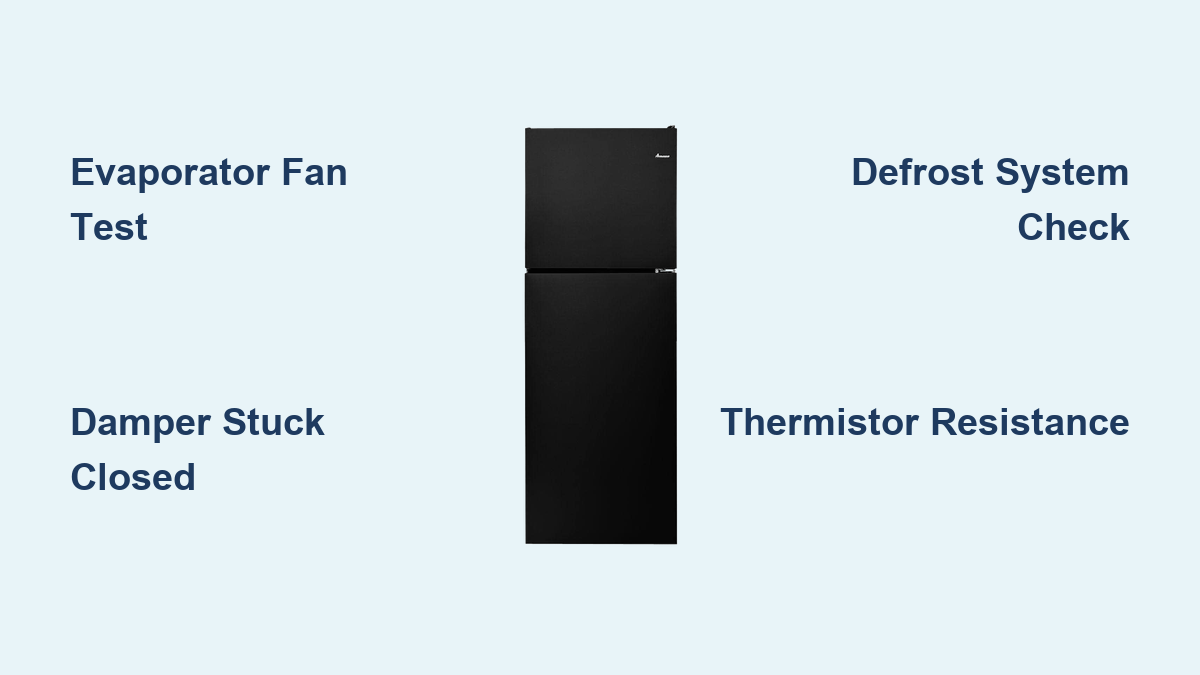
The evaporator fan motor is the most critical component in your Amana’s cooling system when the freezer works but the refrigerator doesn’t. Located behind the rear panel in the freezer compartment, this fan draws cold air over the evaporator coils and pushes it through the damper into the refrigerator section. When it fails, your freezer stays cold while your refrigerator warms up—typically within 12-24 hours of the failure.
Listen for Fan Operation While Compressor Runs
Before grabbing tools, perform this 30-second check: Open your freezer door while the compressor is running (you’ll hear it humming). You should hear a distinct airflow sound from the back wall of the freezer. No fan noise with a running compressor means the evaporator fan has likely failed. Some models produce a clicking sound as the fan attempts to start but fails—a sure sign of motor winding failure. If you hear the fan running normally, move to the damper assembly next.
Test Fan Motor With Basic Tools
For definitive diagnosis, you’ll need a multimeter ($15-$30 at hardware stores) and a screwdriver set. Unplug the refrigerator, remove the evaporator fan cover (usually 4-6 screws), and disconnect the motor’s wiring harness. Set your multimeter to continuity mode and touch probes to the motor terminals. A reading of 0-20 ohms indicates a working motor; infinite resistance means replacement is needed. While testing, manually rotate the fan blade—it should spin freely without resistance. Binding or grinding indicates failed bearings requiring motor replacement.
Damper Assembly Stuck Closed

The damper assembly acts as a motorized air valve controlling how much cold air flows from the freezer to the refrigerator. When it fails in the closed position, your Amana fridge not cooling but freezer works scenario develops immediately. French door models like the AFB2534DES experience this issue at twice the rate of other configurations due to their complex airflow design.
Locate and Access the Damper Control
In most Amana refrigerators, the damper sits behind a removable panel at the top rear of the refrigerator compartment. Remove upper shelf items and gently pry off the cover (some models use screws). With the refrigerator running, place a wet finger near the opening—you should feel cold air moving when the refrigerator compartment calls for cooling. No airflow with a working evaporator fan means the damper is stuck closed.
Test Damper Motor Function
Have someone adjust the refrigerator temperature setting while you watch the damper door. It should open wider as you lower the temperature setting. No movement suggests either a failed motor or lack of power. Use your multimeter to check for 120V at the damper motor terminals when cooling is demanded. Power present with no movement means the damper assembly needs replacement ($45-$85 part cost). No power indicates a control board or thermostat issue requiring further testing.
Defrost System Failure Signs

When frost builds up on your freezer’s back wall while the freezer still works but the refrigerator doesn’t cool, your defrost system has failed. This accounts for 30% of Amana fridge not cooling but freezer works cases, particularly in units over 7 years old. The evaporator coils become encased in ice, blocking airflow to the refrigerator section while the freezer maintains marginal cooling.
Inspect Evaporator Coils for Ice Buildup
Unplug the refrigerator and remove the rear freezer panel (typically 6-8 screws). Healthy coils show light, even frost that melts during defrost cycles. Thick, solid ice covering the coils indicates defrost system failure. If you find this condition, unplug the unit for 24 hours to thaw completely before further testing—attempting electrical tests on frozen components gives false readings.
Test Defrost Heater and Thermostat
With the unit unplugged and coils thawed, locate the defrost heater (metal rod along the coils) and thermostat (small cylindrical component clipped to the coils). Test the heater for continuity—no continuity means replacement is needed ($25-$40). Test the thermostat by placing it in ice water; it should show continuity when cold but open circuit at room temperature. Failed thermostats ($15-$30) cause most defrost failures in Amana units under 10 years old.
Temperature Sensor and Control Board Issues

Failed thermistors (temperature sensors) and control boards cause 25% of Amana fridge not cooling but freezer works cases, particularly in newer models with electronic controls. These components often fail without visible symptoms, making diagnosis trickier but still possible with basic tools.
Verify Thermistor Resistance Changes
Locate the thermistor (usually in the refrigerator compartment’s upper rear) and disconnect it from the control board. Measure resistance with your multimeter, then place the sensor in a cup of ice water for 5 minutes and measure again. A working thermistor shows significantly higher resistance when cold (typically 10k-50k ohms difference). No change indicates a failed sensor ($10-$25) that needs replacement. Some models display error codes for thermistor failures—consult your manual for specific codes.
Perform Control Board Reset First
Before assuming board failure, try this simple fix: Unplug the refrigerator for exactly two minutes (this fully discharges the control board), then restore power. This resolves 15% of electronic control issues caused by power surges or temporary glitches. If cooling returns, the problem was transient. If not, and all other components test good, the control board ($80-$150) likely needs replacement—a task many homeowners can handle with basic soldering skills.
Critical Maintenance to Prevent Future Failures
Preventing Amana fridge not cooling but freezer works issues requires just 15 minutes of maintenance twice yearly. These simple steps address 75% of common cooling failures before they develop into major problems.
Clean Condenser Coils Properly
Pull the refrigerator away from the wall and remove the lower front access panel. Use a coil brush ($8) to gently clean dust from the condenser coils, working from top to bottom. Dirty coils cause overheating that stresses all cooling components and accounts for 40% of premature failures. Vacuum loose debris afterward, but avoid bending delicate coil fins. Complete this task in under 10 minutes every six months.
Check Door Seal Integrity Monthly
Test gasket seals by closing each door on a dollar bill and trying to pull it out. The bill should resist removal with noticeable tension—easy sliding indicates seal failure. Clean gaskets monthly with mild soap and water to maintain flexibility. Replace damaged seals immediately ($30-$60 per door), as even small gaps allow warm air infiltration that forces the cooling system to work harder, potentially triggering frost buildup that blocks airflow.
When to Call a Professional Technician
While most Amana fridge not cooling but freezer works issues resolve with DIY diagnosis, certain situations require professional help. Call a technician if you detect refrigerant leaks (hissing sounds, oil residue near coils), if the compressor runs constantly without cooling either compartment, or if you’re uncomfortable performing electrical tests. Units over 15 years old may have discontinued parts—technicians often access refurbishment services for legacy components that aren’t available to consumers.
Consider replacement rather than repair if your unit is over 12 years old and requires compressor or sealed system work. The average repair cost for major components exceeds 50% of a new equivalent unit’s price, making replacement more economical long-term despite the upfront cost.
Final Diagnostic Flowchart for Quick Reference
When facing Amana fridge not cooling but freezer works issues, follow this sequence:
- Listen for evaporator fan – No sound? Test motor continuity
- Check damper airflow – No air? Test damper motor operation
- Inspect for frost buildup – Heavy ice? Test defrost components
- Verify thermistor function – No resistance change? Replace sensor
- Reset control board – Two minutes unplugged, then test cooling
This systematic approach identifies the specific failure in 90% of cases. Most repairs take under two hours with basic tools and cost less than $100 in parts. By understanding your Amana’s airflow system and performing regular maintenance, you can prevent most cooling failures and extend your refrigerator’s service life by 5+ years.