Hotpoint Freezer Fan Not Working: Quick Fix Guide
Your Hotpoint freezer fan not working properly means your appliance can’t circulate cold air effectively, causing uneven temperatures, excessive frost buildup, and potential food spoilage. If you’ve noticed certain areas of your freezer warming up while others stay frozen, or if you’re seeing unusual ice accumulation on the walls and shelves, the cooling fan is likely the culprit. This critical component runs constantly when your freezer operates, distributing cold air throughout the compartment to maintain consistent freezing conditions.
Ignoring a malfunctioning fan leads to serious consequences—spoiled food, increased energy consumption, and additional strain on other components like the compressor. Understanding why your Hotpoint freezer fan not working occurs and knowing how to diagnose the problem can save you hundreds in repair costs or prevent unnecessary appliance replacement. This guide provides specific troubleshooting steps and repair solutions tailored to Hotpoint freezer models.
Why Your Hotpoint Freezer Fan Suddenly Stops Spinning
When your Hotpoint freezer fan not working becomes evident through warm spots or unusual sounds, several specific mechanical failures could be responsible. Unlike general cooling problems, fan failure creates distinctive symptoms that help pinpoint the issue.
Temperature inconsistencies appear as the most immediate warning sign. You might discover that items on the top shelf remain frozen while those near the bottom soften, or notice ice cream partially thawed despite other foods staying solid. Your freezer thermometer will register temperatures above the safe range of 0°F to 5°F, particularly in areas farthest from the evaporator coils. This uneven cooling happens because without proper air circulation, cold air pools near the cooling elements while distant areas warm dangerously.
Excessive frost accumulation on the back wall or floor indicates failed air distribution. When the fan stops working, moisture in the air doesn’t circulate evenly, causing localized ice buildup that often starts near the evaporator coils. This frost typically forms thick layers in specific areas rather than spreading uniformly throughout the compartment. You might need to manually defrost these sections more frequently as the problem worsens.
Unusual operational sounds often precede complete fan failure. Listen for grinding noises from the rear panel, high-pitched whirring that wasn’t present before, or persistent clicking sounds during cooling cycles. These auditory clues indicate mechanical stress on the fan motor or blades. Sometimes the fan operates intermittently, working briefly before stopping completely—a clear warning that immediate diagnosis is needed.
Compressor running nonstop without achieving proper temperatures frequently accompanies fan failure. The compressor works overtime trying to compensate for poor air circulation, leading to higher electricity bills and increased wear on this expensive component. If your freezer feels warm inside but the compressor housing is hot to the touch, fan failure is likely the root cause.
How to Diagnose Hotpoint Freezer Fan Problems in 15 Minutes

Before replacing expensive parts, verify whether your Hotpoint freezer fan not working stems from a simple obstruction or requires component replacement. Proper diagnosis prevents unnecessary part purchases and wasted effort.
Checking for Physical Obstructions
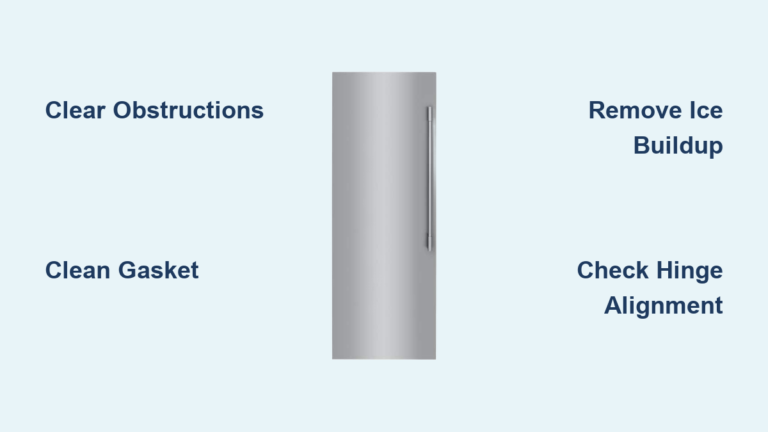
Begin with a thorough visual inspection of accessible fan areas while the freezer runs. Remove all food items blocking the rear wall vents where cold air circulates. Look for ice chunks, food packaging debris, or misplaced containers that might jam the fan blades. Use a flashlight to examine the intake area thoroughly—sometimes obstructions aren’t visible from the front.
If you spot blockages, carefully remove them using plastic tools to avoid damaging components. After clearing obstructions, reset the freezer by unplugging it for five minutes before restoring power. Listen for the fan restarting normally during the next cooling cycle. Persistent silence indicates an electrical or mechanical issue beyond simple blockage.
Testing Fan Motor Operation
When visual inspection reveals no obvious obstructions, determine whether power reaches the fan motor. Locate the rear access panel (typically secured by screws on the freezer’s back interior wall) and remove it carefully. With the freezer running, observe whether the fan blades rotate when the compressor activates.
If the fan remains stationary while the compressor runs, check for ice binding the blades. Use a plastic scraper to gently remove frost buildup around the fan assembly—never use metal tools that could puncture refrigerant lines. After defrosting, restart the freezer to see if the fan operates normally. If it still doesn’t work, proceed to electrical testing.
Common Causes Behind Hotpoint Freezer Fan Failure

Understanding why your Hotpoint freezer fan not working occurs helps prevent future breakdowns and informs your repair approach. Most failures stem from these specific, recurring issues across Hotpoint models.
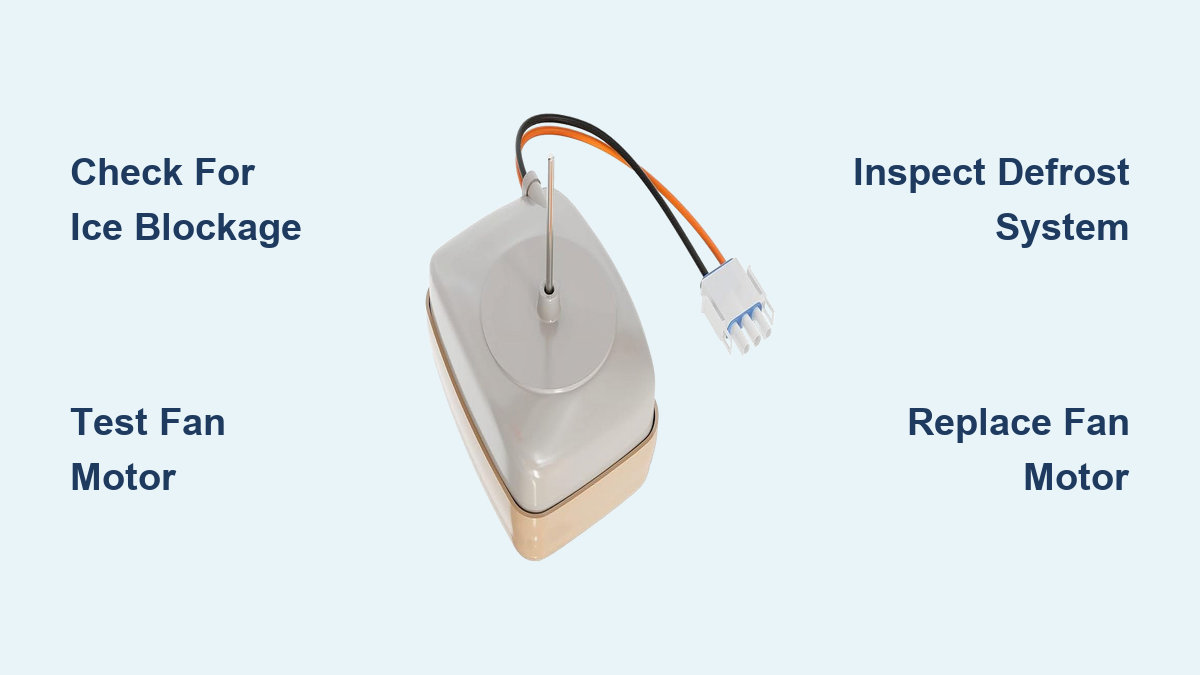
Motor burnout from continuous operation represents the most frequent cause. Hotpoint freezer fans run constantly during cooling cycles, subjecting motors to relentless wear. Over time, bearings degrade from friction, windings overheat, or internal components fail from extended use. Motors often fail without warning but may produce unusual noises beforehand. Once burned out, the motor requires complete replacement rather than repair.
Ice accumulation binding the fan assembly creates secondary failure modes. When the defrost system malfunctions, frost builds on evaporator coils and spreads to the fan blades. This ice forces the motor to work harder until it fails. In severe cases, ice completely encases the fan, preventing rotation even if the motor remains functional. Regular defrosting prevents this common failure pathway.
Control board malfunctions prevent power delivery to the fan despite a functional motor. The main control board manages fan activation during cooling cycles. Faulty relays or damaged circuitry can interrupt power supply, mimicking motor failure. Testing voltage at the fan connector helps distinguish between control board issues and actual motor problems.
Defective temperature sensors provide inaccurate readings to the control system, potentially preventing fan activation. If thermistors indicate falsely cold temperatures, the control board won’t engage the fan when needed. Sensor testing requires multimeter measurements against specified resistance values for your model.
Hotpoint Defrost System Failures That Stop Your Fan
Your Hotpoint freezer fan not working might actually stem from defrost system problems rather than the fan itself. Understanding this relationship prevents misdiagnosis and unnecessary part replacement.
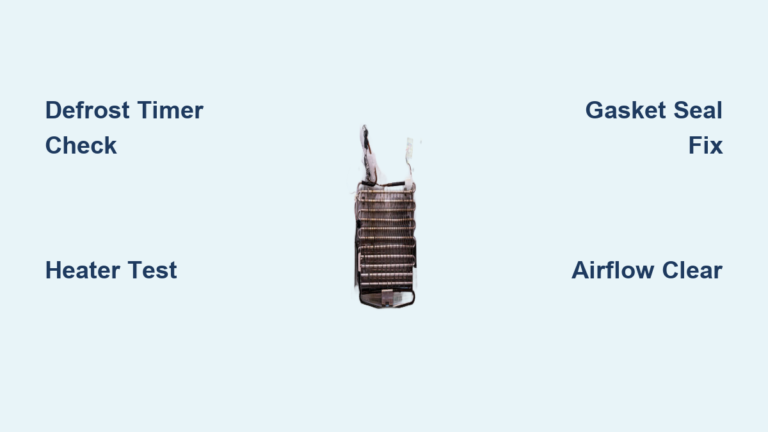
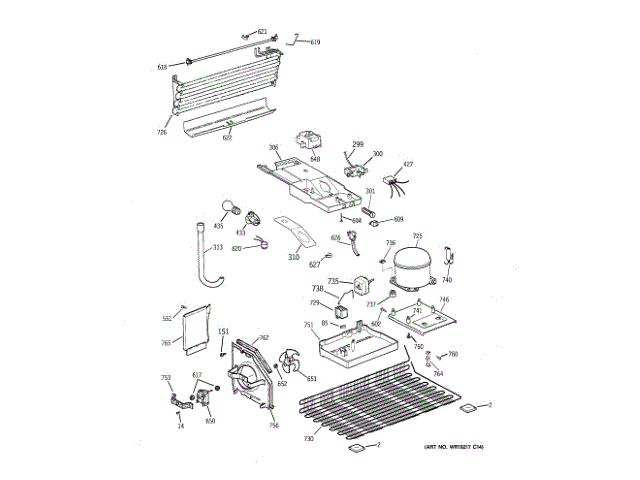
The defrost system consists of heating elements, thermostat, and timer that work together to melt frost from evaporator coils periodically. When functioning properly, it activates during scheduled intervals, turning off the compressor and fan while energizing the heating element. If any component fails, excessive ice accumulates on coils and eventually reaches the fan assembly.
Testing the defrost heater requires accessing the evaporator coil area behind the rear panel. Disconnect power, locate the heater element along the coil assembly, and test for continuity with a multimeter. No continuity indicates a burned-out heater that needs replacement. A functional heater shows resistance between 15-30 ohms depending on model.
Checking the defrost thermostat ensures proper temperature activation of the defrost cycle. This component clips onto the evaporator coils and opens the circuit when temperatures rise during defrost. Test by warming the thermostat in your hand while measuring resistance—it should show continuity when cold and open when warm. No change indicates failure.
Replacing Your Hotpoint Freezer Fan Motor Step-by-Step
When diagnosis confirms your Hotpoint freezer fan not working requires motor replacement, follow these specific steps for successful installation.
Identifying the Correct Replacement Part
Locate your Hotpoint freezer’s model number, typically found on a label inside the door frame or on the rear exterior panel. This number determines the exact fan motor specification—using an incompatible part causes operational issues. Cross-reference the model number with Hotpoint’s parts database or authorized retailers to ensure compatibility.
Verify electrical specifications match the original: voltage (usually 110-120V), amperage rating, and connector type. The replacement fan’s CFM (cubic feet per minute) airflow rating must equal the original to maintain proper cooling performance. Most Hotpoint freezer fan motors cost $60-$140 depending on model compatibility.
Installing the New Fan Motor
- Unplug the freezer and remove all food items
- Empty the interior and allow components to defrost completely
- Remove the rear interior panel securing screws
- Disconnect the wiring harness from the old fan motor
- Unscrew the mounting hardware holding the fan assembly
- Carefully extract the old motor, noting blade orientation
- Install the new motor using original mounting hardware
- Reconnect the wiring harness securely
- Reinstall the rear panel and test operation
Cost-Benefit Analysis: Repair vs. Replace Your Hotpoint Freezer
When your Hotpoint freezer fan not working requires professional service, weigh these financial considerations before proceeding.
DIY repair costs typically range from $60-$150 for the replacement fan motor plus basic tools you may already own. Allow 2-3 hours for the repair if you have moderate appliance experience. Success rates exceed 85% when the diagnosis correctly identifies fan motor failure as the sole issue.
Professional service costs add $100-$200 labor charges to the parts expense, totaling $160-$350. Authorized technicians complete the repair in 1-2 hours but may require scheduling flexibility. Warranty coverage applies if your freezer remains under manufacturer protection—check your documentation before authorizing service.
Replacement threshold considerations become critical for freezers over 10 years old. When repair costs exceed 50% of a comparable new model’s price, replacement often makes better financial sense. New freezers offer 30-40% better energy efficiency, potentially saving $20-$40 annually on electricity costs.
Preventing Future Hotpoint Freezer Fan Failures
Implement these specific maintenance practices to extend your freezer fan’s lifespan and prevent recurrence of “Hotpoint freezer fan not working” issues.
Check door seals monthly by closing a dollar bill in various door positions—if you can pull it out easily, replace the gasket. Damaged seals allow humid air entry that accelerates frost buildup on fan components. Properly sealed doors reduce defrost system strain by 30-40%.
Minimize door openings to less than 20 seconds each time. Every opening introduces warm, moist air that eventually freezes on coils and fan assemblies. Organize contents for quick access to reduce exposure time.
Defrost manually when ice buildup reaches ¼ inch thickness on interior walls. Automatic defrost systems sometimes fail to remove all frost, particularly in high-humidity environments. Regular manual defrosting prevents ice accumulation from reaching the fan assembly.
Clean condenser coils every six months using a specialized coil brush. Dust-clogged coils force the entire cooling system to work harder, increasing strain on the fan motor. Proper coil maintenance extends fan lifespan by 25-35%.
If your Hotpoint freezer fan not working persists after basic troubleshooting, professional diagnosis becomes essential—especially when multiple symptoms appear simultaneously. Early intervention prevents secondary damage to expensive components like the compressor. Whether you choose DIY repair or professional service, addressing fan failure promptly protects your frozen food investment and maintains optimal appliance performance. Regular maintenance and attention to early warning signs significantly extend your Hotpoint freezer’s reliable service life while ensuring consistent, energy-efficient operation.