Freezer Thawing Problem Solved
You open your freezer expecting rock-hard ice cream and frozen vegetables, only to find a pool of melted soup and softening meat. A freezer that repeatedly thaws without warning ranks among the most frustrating appliance problems homeowners face. Beyond the immediate mess and wasted groceries, this issue signals underlying mechanical failures that demand attention. Understanding why your freezer is defrosting unexpectedly—whether it’s a simple thermostat adjustment or a failing defrost system component—can save you hundreds in spoiled food and potentially extend your appliance’s lifespan.
The problem manifests in distinct patterns: some freezers thaw completely every few days, while others experience gradual warming that slowly ruins stored items. Some units cycle through predictable defrost schedules that have drifted out of specification, while others seem to defrost at random intervals. Each pattern points toward different root causes, though most trace back to failures in the defrost system, temperature regulation components, or the sealed refrigeration system itself. This guide walks you through the most common causes of freezer thawing problems and provides actionable steps to diagnose and fix them before your food spoils.
Why Your Freezer’s Thermostat Is Causing Unexpected Thawing
Incorrect Temperature Settings You Can Fix Immediately
The thermostat controls when your freezer’s compressor runs and shuts off based on interior temperature. When set incorrectly, it can trigger defrost cycles too frequently or prevent the compressor from running long enough to maintain proper freezing temperatures. A setting that’s too high tells the system the freezer has reached target temperature prematurely, causing frequent defrost cycles.
Before assuming component failure, verify your thermostat setting—most freezers should be set to 0°F. Lower the setting by one or two degrees and wait at least 24 hours for the system to stabilize. Document any changes you make so you can revert if needed. This simple adjustment resolves many apparent thawing problems without requiring parts replacement or professional service.
Failing Thermostat Components That Need Replacement
Thermostats can fail in ways that cause intermittent operation rather than complete breakdown. A failing thermostat may become sticky or develop inconsistent response patterns. One telltale sign is a freezer that cuts out on a predictable schedule—thawing everything, then resuming normal operation the following day. If firmly tapping the thermostat control causes the indicator light to blink or the compressor to kick back on, the thermostat requires replacement.
Replacing a faulty thermostat involves accessing the control inside an access panel, disconnecting electrical connectors, removing mounting screws, and installing a new component. The most delicate part is the temperature-sensing tube that extends into the freezer compartment. This tube contains fluid that responds to temperature changes, and damaging it will cause immediate thermostat failure. Thermostat replacement parts typically cost around $55, though prices vary by model.
Defrost System Failures That Trigger Unwanted Thawing Cycles

Defrost Timer Malfunctions Creating Weekly Thawing Patterns
The defrost timer serves as the clock for your frost-free system, triggering defrost events every 8-12 hours in properly functioning units. When this timer malfunctions, it may advance too quickly, causing defrost cycles every few days instead of the normal interval. A freezer that thaws on a predictable weekly schedule often has a defrost timer that has drifted out of calibration.
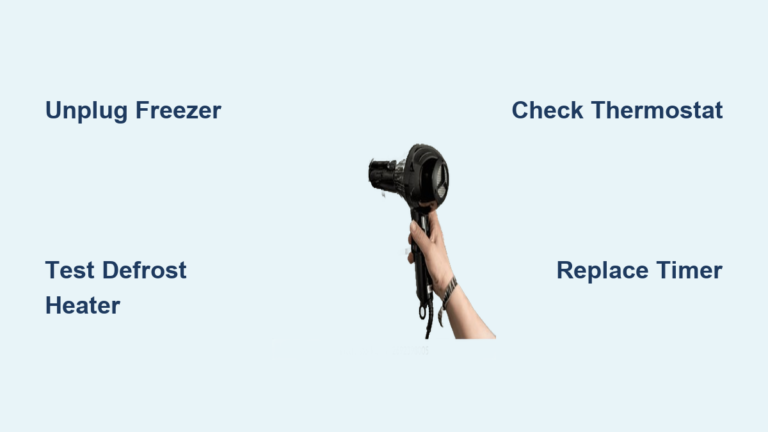
The timer is typically located at the bottom or back of the unit and can be identified by its small clock-like appearance. Some models allow manual advancement through the defrost cycle by turning a small screw or pressing a button. If you manually advance the timer into defrost mode and the defrost heater doesn’t activate, the timer, heater, or thermostat may be at fault. Timer replacement is relatively inexpensive and straightforward for experienced DIYers, though professional diagnosis is recommended if you’re unsure which component is failing.
Defrost Heater Failures Causing Gradual Temperature Rise
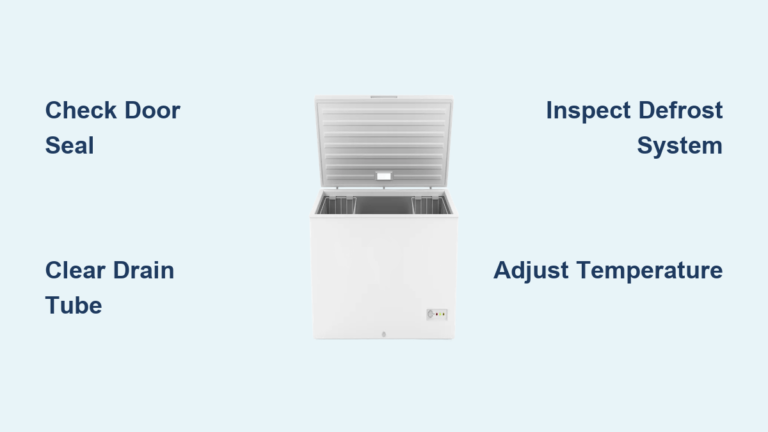
The defrost heater warms the evaporator coils during defrost cycles, melting accumulated frost. When this heater fails, ice builds up on the coils over time. The frost initially insulates the coils, reducing their ability to transfer cold air. Eventually, the frost layer becomes thick enough to block airflow completely, at which point the freezer can no longer maintain freezing temperatures.
The symptom pattern with gradual heater failure differs from timer-related issues. Rather than a complete thaw followed by refreezing the next day, the freezer slowly loses its ability to maintain temperature over several weeks. You might notice the freezer seems to be working harder (longer compressor run times) while achieving poorer results. Food that was previously frozen may begin showing signs of thaw, but the process is gradual rather than sudden.
Defrost Thermostat Issues That Disrupt Normal Cycling
The defrost limiter thermostat monitors temperature during the defrost cycle and signals the system to return to cooling mode once the coils have warmed sufficiently. This component is designed to open and stop conducting electricity when temperatures reach approximately 45-55°F, ensuring the heater turns off before the system overheats.
When this thermostat fails, it may open too early (before all frost has melted) or fail to close properly when the cooling cycle resumes. Some defrost limiters can partially fail, cycling erratically and causing irregular defrost behavior. A thermostat that fails completely closed will cause the heater to run continuously during defrost cycles, potentially overheating the system.
Ice Buildup and Airflow Restrictions That Compromise Freezing

Frost on Evaporator Coils Causing Progressive Warming
Ice accumulation on the evaporator coils represents both a symptom and a cause of freezer thawing problems. When coils become frosted, their ability to transfer heat diminishes progressively. The compressor runs longer to achieve the same cooling, increasing energy consumption and component wear. Eventually, the frost layer becomes thick enough to block airflow entirely.
If defrosting resolves the problem temporarily but ice returns quickly, an underlying component failure in the defrost system is indicated. The timer, heater, and thermostat should all be inspected for proper operation. In some cases, repeated manual defrosting may be necessary to maintain freezer function while awaiting parts or service.
Airflow Blockages Creating Warm Spots in Your Freezer
Proper airflow is essential for consistent freezer temperatures throughout the compartment. When vents become blocked by frozen food items, containers, or ice accumulation, cold air cannot circulate effectively. This creates warm spots where food may thaw even though other areas remain frozen.
Diagnosing airflow problems requires visual inspection of all vents and airways within the freezer compartment. Ensure no items are resting against or blocking these openings, particularly items stored near the back wall or in front of floor-level vents. Rearrange stored items to create space for air circulation, typically maintaining at least an inch of clearance around all vents. Avoid overfilling the freezer, as this is a common cause of airflow restriction that leads to temperature variations.
Door Seal Problems That Allow Warm Air Infiltration
Worn or Damaged Door Gaskets Creating Temperature Fluctuations
The door gasket creates the essential barrier between the cold freezer interior and the warmer room air. When this gasket becomes cracked, torn, or deformed, cold air escapes and warm air enters. The compressor runs more frequently to compensate, increasing energy consumption. More significantly, the temperature fluctuations near the door can cause food stored in those areas to thaw partially.
Testing gasket integrity is simple and requires only a piece of paper. Close a dollar bill in the door and attempt to pull it out. If the paper slides out easily with little resistance, the gasket is not sealing properly. Perform this test at multiple points around the entire door perimeter, as gasket failures may be localized to specific areas—typically the corners where the door closes last.
Door Alignment Issues That Prevent Complete Closure
Even with a good gasket, door problems can cause thawing if the door does not close completely or reopens after closing. Door alignment issues may result from hinges that have shifted, worn hinge pins, or the freezer being out of level. Some combination units have doors that are adjustable to compensate for settling or flooring changes over time.
Inspect the hinges for signs of wear or damage. Worn hinge pins can be replaced on many models, restoring proper door alignment. Check that the freezer is level using a bubble level placed on top of the unit. If the freezer is not level, adjust the leveling feet at the corners until it sits evenly. An unlevel freezer can cause door seal problems because the door may not close evenly and allow warm air infiltration.
When to Repair or Replace Your Thawing Freezer

Age and Cost Considerations for Freezer Repairs
Freezers that are more than 10 years old present challenging repair decisions. While well-maintained units can operate for 20 years or more, the probability of multiple component failures increases with age. When a sealed system repair (compressor or refrigerant issues) is needed on an older freezer, the cost typically exceeds the replacement value of the appliance.
Modern freezers are significantly more energy-efficient than older models. The energy savings alone may justify replacement rather than repair for units approaching or exceeding 15 years of age. When evaluating repair costs, obtain quotes for the specific repair needed and compare it to the cost of a similar new unit. As a general rule, if the repair cost exceeds 50% of the replacement cost and the freezer is more than 10 years old, replacement is usually the better financial decision.
Preventing Future Freezer Thawing Problems
Essential Maintenance Tasks to Avoid Thawing Issues
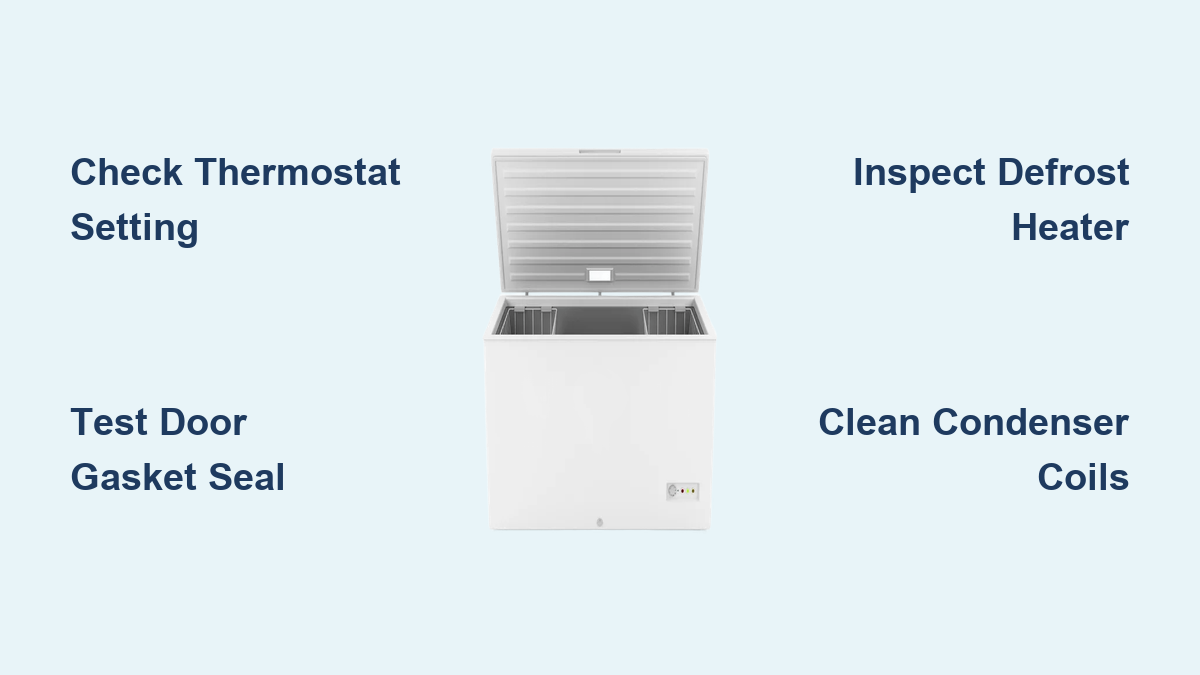
Preventive maintenance significantly extends freezer service life and prevents thawing problems before they develop. The most important maintenance task is cleaning condenser coils every six months. Dirty coils reduce cooling efficiency and cause the compressor to work harder, accelerating wear on components.
Door seal inspection should occur annually. Visual inspection for cracks, tears, or deformation should be supplemented with the paper test. Worn seals should be replaced before they fail completely. Monitoring actual freezer temperature with a standalone thermometer provides early warning of cooling problems.
Several simple practices prevent most freezer thawing problems:
– Avoid leaving the door open longer than necessary
– Don’t place hot or warm items directly in the freezer
– Maintain adequate clearance around the freezer for airflow
– Ensure the freezer remains level
By understanding these common causes of freezer thawing problems and implementing regular maintenance, you can protect your frozen food investments and extend your appliance’s service life. When problems do occur, addressing them promptly prevents further damage and potential food spoilage—saving you money, time, and frustration in the long run.