Maytag Freezer Not Freezing? Fix It Fast
Your Maytag freezer suddenly stops freezing, and your ice cream turns to soup while frozen vegetables begin to thaw. This common but urgent problem threatens your entire frozen food inventory and requires immediate attention. When a Maytag freezer fails to maintain proper temperatures, the consequences range from wasted food to complete appliance failure if left unaddressed. Temperature issues manifest in various ways—some freezers run constantly without achieving freezing temperatures, while others become completely warm despite the compressor humming. Understanding the root cause separates quick DIY fixes from problems requiring professional service.
The symptoms provide crucial diagnostic clues: Is the freezer merely cold instead of freezing? Does ice cream soften while other items remain frozen? Does the compressor run nonstop or not at all? Each pattern points to specific component failures within your Maytag’s complex refrigeration system. This guide cuts through the confusion with actionable steps to diagnose and resolve your freezing problem, saving you from unnecessary service calls or premature replacement.
Verify Power Connection Before Panicking
Before assuming mechanical failure, confirm your Maytag freezer actually receives proper electrical power—this simple oversight causes more “not freezing” problems than any mechanical issue.
Test Wall Outlet Functionality Immediately
Plug a working lamp or phone charger into the same outlet to verify power delivery. If no power reaches the outlet, check your home’s circuit breaker panel for tripped breakers, especially those controlling garage or basement circuits where freezers often live. Reset any tripped breakers by switching them fully off then firmly back on. Don’t forget to check for silent GFCI outlet trips—common in garage installations—which can cut power without obvious signs. Press the reset button on the GFCI faceplate, though manufacturers recommend avoiding GFCI connections for refrigeration appliances due to their sensitive electronics.
Examine Power Cord for Damage
Inspect the entire cord length for cuts, fraying, or crushed sections that create intermittent connections. Damaged cords cause erratic cooling behavior and create fire hazards—never attempt temporary repairs with tape. Pay special attention to where the cord enters the freezer’s rear panel, as this area often suffers stress damage from being pulled against walls. Ensure the plug seats firmly in the outlet with no loose connections that could interrupt power flow.
Perform a Complete Power Reset
Electrical glitches can disrupt your freezer’s control system, causing it to enter fault mode. Unplug the unit for at least five minutes to allow the control board to fully discharge and reset. Alternatively, switch off the circuit breaker for five minutes then restore power. After resetting, close the door and allow the unit to run for 30 minutes before checking temperatures. Listen for the compressor to start—a steady humming sound indicates normal operation. If no sound occurs after 30 minutes, move to the next diagnostic step.
Diagnose Temperature Control System Failures

When your Maytag freezer won’t freeze but the light works, temperature control components often cause the problem—not the mechanical cooling system.
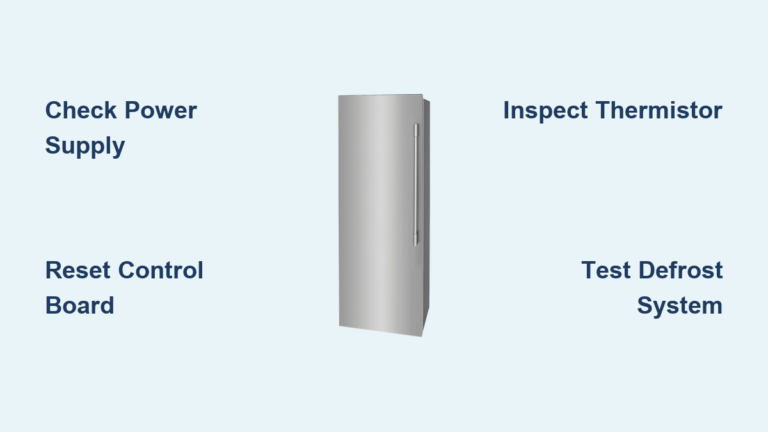
Test the Thermostat for Proper Function
Rotate the temperature dial from lowest to highest setting while listening for an audible click at various points. No clicking sounds indicate thermostat failure. For definitive testing, use a multimeter set to continuity mode. Touch probes to the thermostat terminals while rotating the dial—working thermostats show continuity at some settings and infinite resistance at others. If no continuity registers at any setting, replace the thermostat immediately. Modern Maytag models often use electronic thermistors instead of mechanical thermostats—these require resistance testing against specifications in your model’s technical documentation.
Check Evaporator Fan Motor Operation
This critical component circulates cold air throughout your freezer. Open the door and manually depress the door switch (the small plastic button that releases when the door closes). Listen for the fan to start running immediately. If no fan sound occurs, the motor has failed and requires replacement. A slow-running or binding fan creates temperature stratification where bottom contents freeze while upper items remain warm—a clear sign of inadequate air circulation. Accessing this motor typically requires removing interior panels and shelves.
Clear Ice-Packed Evaporator Coils

Excessive frost buildup on coils is a leading cause of Maytag freezer freezing failures, especially in models like the MZF34X16DW00 where ice-packed coils completely block airflow.
Identify Defrost System Failure Symptoms
Uniform heavy frost across all evaporator coils indicates defrost heater failure. Heavy frost concentrated in one section suggests refrigerant restriction or leak. Ice balls forming in corners typically point to door seal problems. When coils become completely blocked with ice, your freezer stops freezing despite the compressor running normally.
Perform Emergency Manual Defrost
Turn off the freezer at the wall outlet and remove all food to coolers with ice packs. Place towels around the base to catch melting water and leave the door open for 4-6 hours. Never use sharp objects to chip ice—this can puncture refrigerant lines. After complete melting, thoroughly dry interior surfaces before restoring power. Allow the unit to run for one hour before reloading food. If ice quickly returns, your automatic defrost system requires repair.
Test Defrost Heater Assembly
Locate the heater behind the rear freezer panel near the evaporator coils. Use a multimeter to test for continuity—absence of continuity confirms a burned-out heater requiring replacement. The defrost heater assembly for Maytag model MZF34X16DW00 uses part number W10316428 and is readily available from appliance parts suppliers. Proper installation ensures the heater contacts the coils directly to melt frost during defrost cycles.
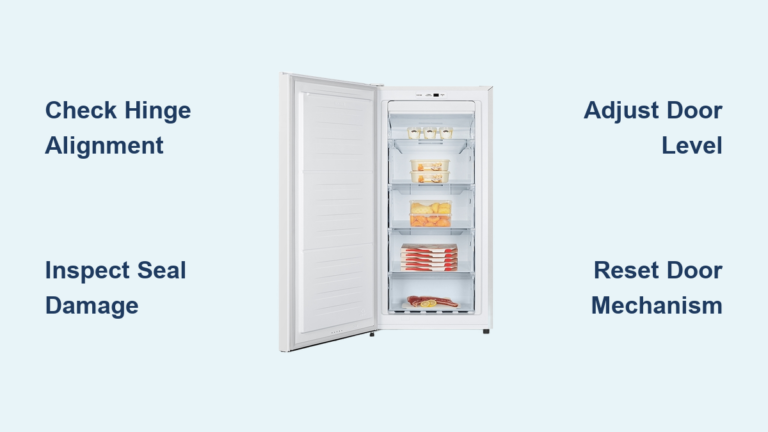
Inspect Door Seal Integrity Thoroughly
A compromised door gasket allows warm, humid air to infiltrate your freezer, overwhelming the defrost system and preventing proper freezing.
Execute the Paper Seal Test
Close the freezer door on a dollar bill positioned so it extends from inside to outside. Attempt to pull the paper out—if it slides easily, your seal has failed. Test the entire perimeter, especially corners where gaskets commonly crack. Run fingers along the gasket feeling for sticky or tacky areas indicating deteriorating rubber. A properly sealing gasket holds the paper firmly in place, requiring significant force to remove.
Replace Damaged Gaskets Correctly
Newer Maytag models feature wraparound gaskets replaced without tools—simply pull the old gasket from its groove and press the new one into place starting at corners. Older models use screw-mounted gaskets—take photos before disassembly for correct reinstallation. After replacement, immediately retest the seal using the paper method. A new gasket should restore sealing capability within 24 hours as the rubber settles into position.
Evaluate Compressor and Start System

When your Maytag freezer won’t freeze but the compressor runs, the start system often causes the problem—not the compressor itself.
Test Start Relay Function
This small component provides the electrical surge needed to start the compressor. Listen for clicking or buzzing sounds indicating relay failure. Unplug the freezer and remove the relay from the compressor housing. Test continuity between start and run terminals—no continuity confirms relay failure. A burnt smell from the relay or visible damage requires immediate replacement. Relay replacement costs $20-50 and takes 15 minutes for most models.
Assess Compressor Operation
Monitor your freezer for 30 minutes listening for compressor operation. A properly functioning compressor produces a steady, low humming sound. If it runs but fails to cool, internal mechanical failure or refrigerant problems exist. The compressor should feel warm but not too hot to touch—if too hot, the condenser fan has likely failed. Bottom-drawer freezer models like the PBB2255GES position the compressor at the base—check for proper ventilation space around this component.
Know When to Call a Professional
Some Maytag freezer not freezing problems require professional expertise and specialized tools.
Recognize Sealed System Failures
Uneven frost patterns on evaporator coils—where only one section frosts while the rest remains clear—indicate refrigerant restrictions or leaks. These sealed system problems require EPA-certified technicians with specialized equipment. Repair costs typically exceed $400, making replacement more economical for freezers over 10 years old. Attempting DIY repairs on sealed systems violates environmental regulations and often causes further damage.
Understand Repair Economics
When repair costs exceed 50% of a new unit’s price, replacement becomes the smarter investment. Simple fixes like gasket replacement ($30-50) or fan motor replacement ($80-150) provide good value on reliable units. Complex repairs involving control boards ($200-400) or sealed systems warrant careful cost-benefit analysis. Most modern freezers last 10-15 years—consider age when deciding between repair and replacement.
Prevent Future Freezing Failures
Maintain your Maytag freezer’s performance with these simple preventive measures:
- Clean condenser coils every 6-12 months using a soft-bristle brush
- Verify actual temperatures with an appliance thermometer (set to 0°F)
- Check door seals monthly using the paper test
- Avoid overpacking to ensure proper airflow (leave 2-3 inches clearance)
- Never use sharp objects to remove ice—allow natural melting
By following these diagnostic steps, you can resolve most Maytag freezer not freezing problems without professional help. Simple issues like power supply problems, door seal failures, and defrost system malfunctions account for over 70% of freezing failures and can often be fixed in under an hour. For persistent problems involving the compressor or sealed refrigeration system, professional service becomes the most reliable solution—knowing this distinction saves you time, money, and spoiled food.