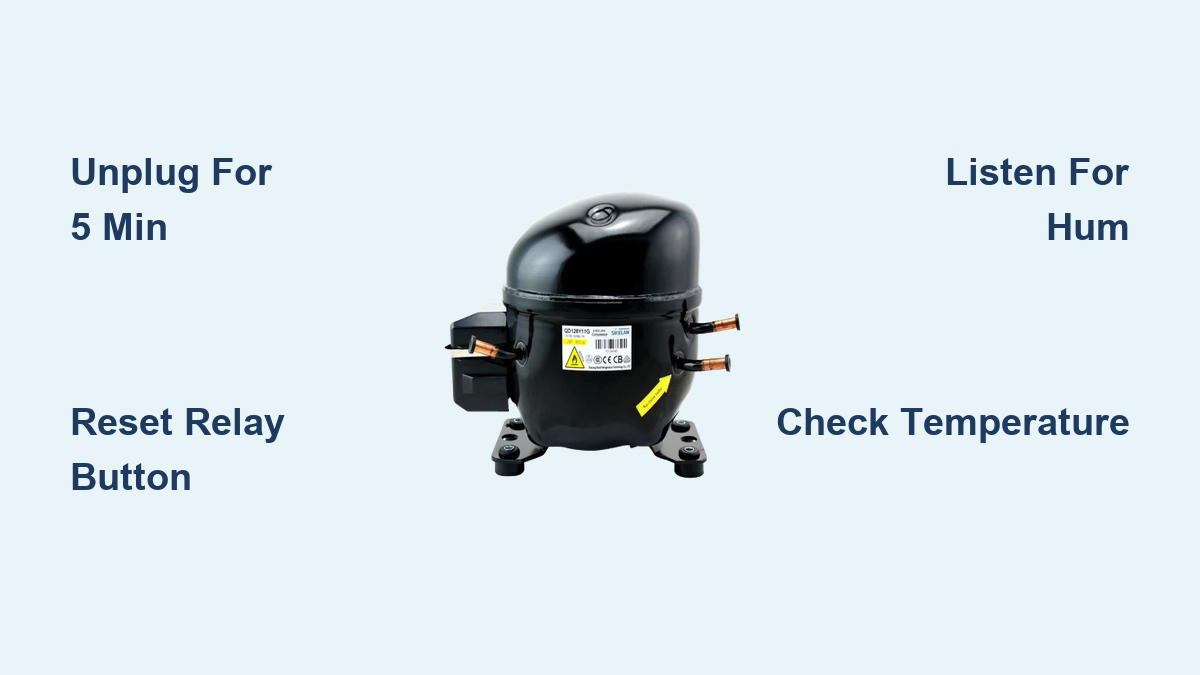
How to Reset a Freezer Compressor: Quick Steps
Your freezer suddenly stops cooling, and your frozen goods are beginning to thaw. This stressful situation often stems from a compressor that’s entered protective mode. Knowing how to reset a freezer compressor properly can save you from costly service calls and prevent food spoilage. Many compressor issues aren’t permanent failures but temporary faults that a simple reset procedure can resolve in minutes. This guide provides the exact steps to safely reset your freezer compressor and get your appliance back to optimal performance.
Recognize Compressor Reset Signs

Before attempting any reset procedure, you must confirm that your freezer compressor actually needs resetting rather than suffering from a more serious mechanical failure. Freezer compressors rarely fail suddenly without warning—they typically exhibit telltale symptoms that indicate an internal overload protection mechanism has activated or that the system needs a cycle reset.
Temperature and Performance Indicators
The most obvious sign that your freezer compressor requires attention is improper temperature regulation. If your freezer thermometer reads above zero degrees Fahrenheit despite the temperature setting being correct, the compressor may have shut down. Additionally, if the interior lights remain on but the motor running sounds have stopped entirely, the compressor has likely ceased operation. Some modern freezers display error codes on their digital panels when compressor issues occur—common codes include “dF” for defrost failure or “H” for high temperature alerts.
Pay attention to cycling behavior as well. A properly functioning compressor cycles on and off periodically, typically running for 8 to 12 hours per day in a typical household freezer. If your compressor runs continuously for more than 24 hours without cycling off, or if it refuses to start at all after a period of inactivity, a reset may be necessary to restore normal operation. Continuous running often indicates the compressor is struggling to maintain temperature due to poor airflow or a failing component.
Unusual Sounds and Behavioral Changes
Your ears provide valuable diagnostic information when troubleshooting compressor issues. A healthy compressor produces a steady, low hum that starts and stops gradually. Warning signs include clicking sounds that repeat frequently without the compressor actually starting, loud buzzing noises that indicate the compressor is trying but failing to start, or complete silence where you should hear the motor running. These sounds often accompany thermal overload trips where the compressor’s internal temperature sensors detect an abnormal condition and shut down the system as a protective measure.
Perform Safety Precautions First
Working with freezer compressors involves electrical components and moving parts, making safety precautions absolutely essential before beginning any reset procedure. Taking the proper safety steps protects you from electrical shock and prevents further damage to your appliance.
Electrical Disconnection Steps
Always unplug your freezer from the wall outlet before performing any reset procedure or internal inspection. If your freezer is hardwired into an electrical circuit rather than using a plug, locate the circuit breaker controlling the appliance and switch it to the off position. This complete disconnection ensures no electrical current can reach the compressor or its control systems while you’re working. Wait at least five minutes after disconnection before proceeding—the compressor contains capacitors that can retain a dangerous electrical charge even after power is removed.
For refrigerators and freezers with removable access panels, you may need to use insulated screwdrivers or tools specifically designed for appliance repair. Never use metal objects that could accidentally contact electrical components or create short circuits. If you’re uncomfortable working with electrical appliances or if your freezer shows any signs of physical damage to the power cord or electrical housing, consider calling a qualified technician instead.
Execute the Power Cycle Reset
The most effective and commonly successful method for resetting a freezer compressor is a complete power cycle. This procedure essentially reboots the compressor’s control system, clearing temporary faults and allowing the compressor to restart with a clean slate. The power cycle reset works for approximately 80% of minor compressor issues and should always be attempted before more invasive procedures.
Complete Power Disconnection Process
Begin by unplugging the freezer’s power cord from the wall outlet. With the power disconnected, locate the temperature control dial or digital thermostat inside the freezer compartment and turn it to the off position. Some models require you to turn the dial counterclockwise until it reaches zero or the “off” marking. If your freezer has a digital control panel, navigate through the menu to find the reset option or simply turn the temperature settings to the warmest setting before powering down.
Once the freezer is fully disconnected and the controls are set to off, you must wait for the compressor’s residual charge to dissipate. The recommended wait time is five to fifteen minutes, depending on the model and the severity of the issue you’re addressing. During this waiting period, you can inspect the compressor’s external components for obvious problems such as clogged coils, damaged wiring, or debris accumulation.
Power Restoration and Initial Monitoring
After waiting the appropriate amount of time, restore power to the freezer by plugging it back into the wall outlet or turning the circuit breaker back on. Immediately turn the temperature control dial or digital panel to your desired setting, typically around 0°F for a standalone freezer. You should hear the compressor attempt to start within the first few minutes.
Listen carefully for the compressor to engage—it should produce a humming sound that gradually increases in intensity as the motor reaches full speed. The compressor may cycle on and off several times during the first hour as it stabilizes, which is normal behavior. Monitor the freezer temperature using a reliable thermometer, checking every few hours to ensure it’s dropping toward your target temperature. A successful reset should result in the freezer reaching proper operating temperature within four to eight hours.
Access and Reset Internal Components

If the power cycle reset fails to resolve your compressor issues, you may need to access internal components for a more targeted reset procedure. This level of troubleshooting requires more technical knowledge and careful attention to detail, but many compressor protection mechanisms include manual reset options that homeowners can access.
Locating the Compressor and Relay Assembly
The compressor motor is typically located at the rear bottom of the freezer, encased in a metal or plastic shell. To access it, you may need to remove a rear access panel, which is usually held in place by screws along the edges. Before removing any panels, double-check that the power is disconnected and you’ve waited the appropriate amount of time for capacitors to discharge.
Once the panel is removed, you’ll see the compressor—a black, cylinder-shaped motor with three terminals and a small device attached to its side called the overload relay or start relay. This relay device is the most common source of compressor starting problems and often includes a manual reset button. The overload relay protects the compressor from electrical overload and overheating, and its built-in reset button can be pressed to clear a tripped protection mechanism.
Manual Relay Reset Procedure
Examine the overload relay carefully—it’s usually a small, dark-colored component with a red or black reset button in the center. Press the reset button firmly and release it; you should feel or hear a distinct click indicating the mechanism has reset. If the button doesn’t click or move freely, the relay may be defective and require replacement rather than reset.
After resetting the relay, inspect it for signs of damage such as discoloration, burning smells, or visible corrosion on the electrical terminals. Gently shake the relay—if you hear rattling inside, the internal components have failed and the relay needs replacement. Also check the capacitor, which is often mounted alongside the relay and appears as a small cylindrical can with two or three terminals. A defective capacitor can prevent the compressor from starting and may require professional testing with specialized equipment.
Test After Reset Procedures

After completing any reset procedure, systematic testing ensures the freezer compressor is functioning properly and that your intervention was successful. Rushing this verification process can lead to undetected problems that cause food spoilage or further appliance damage.
Immediate Post-Reset Observations
When you first restore power to the freezer, watch and listen carefully during the first fifteen minutes of operation. The compressor should start within three to five minutes of power restoration, producing a steady humming sound. You may notice the compressor cycling on and off more frequently than usual during the first hour—this is normal as the system stabilizes and the internal temperatures equalize. However, if the compressor fails to start at all, makes loud clicking sounds repeatedly, or produces a loud buzzing noise without running, the underlying issue requires further diagnosis.
Touch the side of the compressor gently after about ten minutes of operation—it should feel warm but not hot to the touch. An excessively hot compressor indicates ongoing problems with the starting system, refrigerant levels, or ventilation that require professional attention. Check that the condenser coils, typically located at the back or bottom of the freezer, are clean and have adequate airflow around them.
Temperature Verification Protocol
Allow the freezer to run for at least four hours before evaluating its cooling performance, though eight hours provides more reliable results. Use a separate thermometer placed in the center of the freezer compartment—not on the walls or near the door—to verify the internal temperature. A properly functioning freezer should maintain 0°F or below.
If the temperature continues to rise or fails to drop after twelve hours, the compressor may not be running at all or may be severely underpowered. At this point, you should check for power at the outlet using another appliance or a voltage tester, verify that the temperature control is functioning, and consider whether the refrigerant charge has been lost due to a leak. These issues typically require professional service, though a second power cycle reset is sometimes successful if the first attempt didn’t fully reset the control system.
Final Notes on Freezer Compressor Reset Success
Resetting a freezer compressor is often a straightforward DIY solution that restores your appliance’s functionality without the expense of professional service. The power cycle method resolves the majority of minor compressor issues, while manual relay resets address problems stemming from the compressor’s overload protection mechanism. Always prioritize safety by disconnecting power before any internal procedures, and allow adequate time for residual electrical charge to dissipate.
If reset procedures fail to restore your freezer’s operation, the underlying cause likely requires professional diagnosis and repair. Persistent problems may indicate compressor motor failure, refrigerant leaks, or control system malfunctions that exceed typical DIY repair capabilities. In these cases, investing in professional service—or considering appliance replacement if repairs would exceed the freezer’s remaining useful life—is the most practical approach.
Regular preventive maintenance remains your best strategy for avoiding compressor issues altogether. By keeping condenser coils clean, ensuring proper door seals, and maintaining appropriate environmental conditions, you can significantly extend your freezer’s operational lifespan and minimize the need for emergency reset procedures.