How Long Is Ham Good in Freezer: Storage Guide
You’ve got leftover holiday ham or scored a great sale on a spiral-cut ham but aren’t sure when you’ll use it. The pressing question on your mind: how long is ham good in the freezer? Understanding the precise freezer lifespan for different ham varieties prevents food waste while ensuring every slice maintains peak flavor and texture. While frozen ham technically remains safe indefinitely at 0°F (-18°C), its quality steadily declines over time, transforming a once-delicious centerpiece into a dry, flavorless disappointment. This guide cuts through the confusion with specific timelines, practical storage techniques, and clear visual indicators that tell you exactly when to use or discard your frozen ham.
Fully Cooked Ham Freezer Timeline Revealed
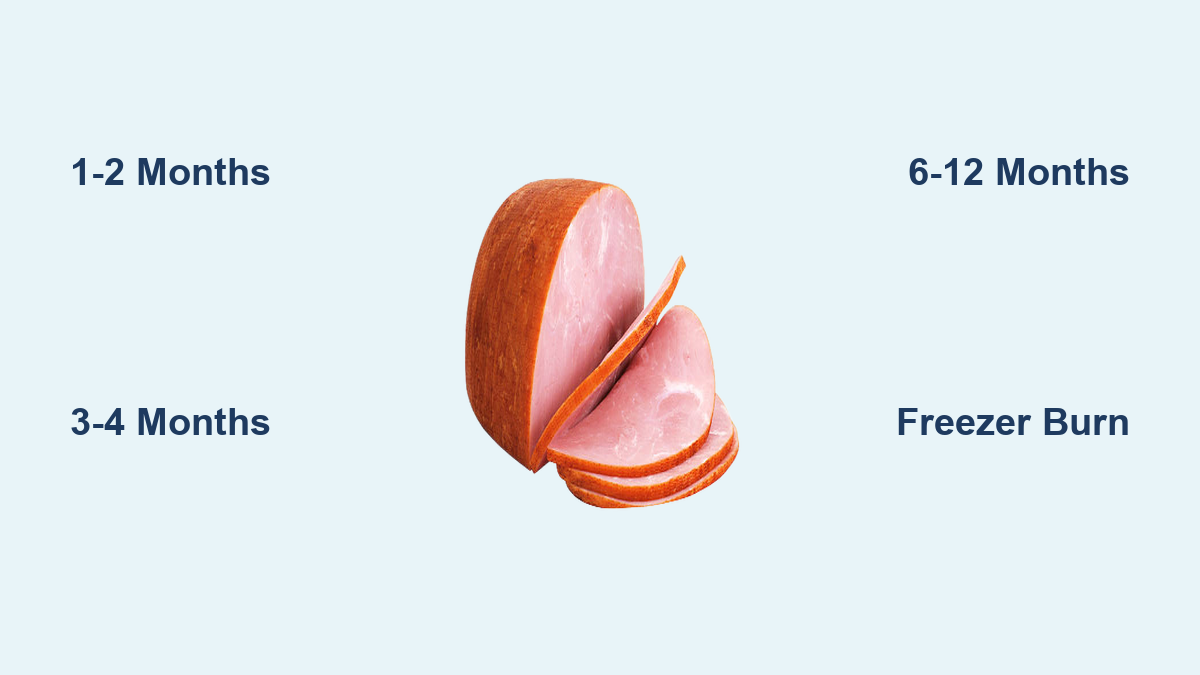
Spiral-cut hams, honey-glazed varieties, and standard city hams follow a strict quality window once frozen. Your fully cooked ham maintains optimum flavor and texture for just one to two months in the freezer before noticeable degradation occurs. The USDA confirms frozen ham safety is indefinite at proper temperatures, but quality tells a different story. As ice crystals form within the high-moisture meat, they rupture cellular structures, causing that dreaded mushy texture or dry patches you’ve probably encountered after thawing older frozen ham.
Here’s what happens month by month:
– Month 1: Near-perfect quality with minimal texture changes
– Month 2: Slight moisture loss, flavor begins fading
– Beyond 2 months: Significant texture deterioration, noticeable flavor decline
For best results, freeze fully cooked ham in meal-sized portions immediately after your holiday feast or grocery trip. Wrap each portion tightly in plastic wrap, then add aluminum foil before placing in a freezer bag with all air squeezed out. This multilayer approach buys you precious extra days of quality compared to single-layer wrapping.
Uncooked Fresh Ham vs. Country Ham Freezer Durability

Uncooked fresh ham (the uncured variety resembling raw pork) withstands freezing better than its cooked counterparts, maintaining good quality for three to four months. This extended window makes fresh ham ideal for bulk purchases you plan to cook later. The absence of curing agents means it freezes more like standard pork cuts, but proper packaging remains essential to prevent freezer burn.
Country ham tells a dramatically different story. This salt-cured Southern specialty thrives in the freezer for six months to a full year while retaining acceptable quality. The high salt concentration acts as nature’s preservative, inhibiting bacterial growth and protecting texture during extended storage. Before freezing country ham, wrap it tightly in butcher paper followed by heavy-duty aluminum foil—this dual barrier preserves the distinctive flavor profile that makes country ham so prized.
Ham Hocks and Specialty Cuts Freezer Limits
Don’t assume all ham products follow the same freezer rules. Ham hocks, those bony joints perfect for flavoring soups and beans, maintain usefulness for three to four months in the freezer. Since you’re primarily using them for flavor extraction rather than eating the meat directly, minor texture changes matter less. Still, wrap them tightly in freezer paper to prevent the connective tissues from drying out.
Ground ham and trimmings present the shortest freezer lifespan of just one to two months. The increased surface area from grinding accelerates oxidation, causing faster quality decline. If you’ve got ham scraps to freeze, press them into an ice cube tray, cover with broth, then transfer the frozen cubes to an airtight container—this method preserves flavor better than loose freezing.
Vacuum Sealing vs. Standard Wrapping: What Actually Works
Your packaging method determines whether your ham hits the quality deadline or misses it by months. Vacuum sealing delivers superior protection by eliminating air exposure—the primary cause of freezer burn. Without oxygen contact, your ham avoids the dehydration and oxidation that create those unappetizing gray patches.
When vacuum sealing isn’t an option, use this triple-wrap technique:
1. Press plastic wrap directly against the ham’s surface
2. Add a layer of freezer paper with the wax side against the meat
3. Finish with heavy-duty aluminum foil
Label every package with both contents and freeze date using a permanent marker. This simple step prevents freezer mystery meat and ensures you use older items first. Never rely on store packaging alone—transfer ham to proper freezer materials within 24 hours of purchase for maximum protection.
Temperature Fluctuations: The Silent Ham Killer
Your freezer’s temperature consistency matters more than you think. Even brief warm-ups during power outages or frequent door openings cause ice crystals to melt and refreeze, progressively damaging ham’s cellular structure. Maintain a rock-solid 0°F (-18°C) or below using these proven tactics:
- Place a dedicated freezer thermometer inside (not just rely on the dial)
- Keep your freezer at least 70% full (add water containers if needed)
- Organize items so you can grab what you need in under 30 seconds
- During power outages, keep the door closed—full freezers stay cold for 48 hours
Thawed ham that was accidentally exposed to temperature fluctuations should be cooked immediately rather than refrozen, as quality has already been compromised.
Spotting Quality Loss: Beyond the Expiration Date

Don’t just trust the calendar—learn to identify actual quality degradation in your frozen ham. Freezer burn appears as dry, leathery patches with grayish, brownish, or powdery white discoloration. While safe to eat, these areas should be trimmed before cooking as they’ll be tough and flavorless. Limited freezer burn means salvage the good portions; extensive coverage across more than 25% of the surface warrants discarding the entire piece.
Upon thawing, trust your senses:
– Safe odor: Mild, slightly salty meat scent
– Warning signs: Rancid, sour, or “off” smells indicating fat oxidation
– Good color: Pinkish-red hue (varies by ham type)
– Danger signals: Green, yellow, or brown discoloration
If your thawed ham shows multiple warning signs, don’t risk foodborne illness—discard it immediately.
Thawing Frozen Ham the Right Way
How you thaw frozen ham significantly impacts final quality. Refrigerator thawing delivers the best results but requires planning—allow 24 hours for every 5 pounds of ham. Place the wrapped ham on a tray to catch drips and keep it at the back of the fridge where temperatures are most consistent.
For same-day thawing, use the cold water method:
1. Keep ham in waterproof packaging or a sealed plastic bag
2. Submerge completely in cold water
3. Change water every 30 minutes
4. Allow 30 minutes per pound of ham
5. Cook immediately after thawing
Never thaw ham at room temperature—this keeps it in the bacterial danger zone (40-140°F) too long. Microwave thawing is acceptable only for immediate cooking, as it unevenly thaws and partially cooks edges.
Proven Strategies to Extend Ham’s Freezer Life
Maximize your ham’s freezer performance with these chef-approved techniques. Trim thick fat layers before freezing—while a thin fat cap protects the meat, excessive fat turns rancid faster than lean portions. Portion large hams into meal-sized servings before freezing to avoid repeated thawing cycles that degrade quality.
For uncooked ham you plan to cook later, apply a simple salt-and-sugar rub before freezing. The seasoning penetrates during storage and helps protect against moisture loss. When freezing cooked ham slices, separate them with parchment paper to prevent sticking and enable grabbing just a few slices at a time.
Ham Freezer Lifespan Quick Reference Chart

| Ham Type | Max Quality Duration | Critical Notes |
|---|---|---|
| Fully Cooked (spiral, city, honey-baked) | 1-2 months | Texture degrades rapidly after 60 days |
| Uncooked Fresh Ham | 3-4 months | Treat like raw pork for storage |
| Country Ham (salt-cured) | 6-12 months | High salt content extends viability |
| Ham Hocks | 3-4 months | Best for flavoring, not eating directly |
| Ground Ham/Trimmings | 1-2 months | Highest surface area = fastest quality loss |
When to Use or Toss Your Frozen Ham
Now you know exactly how long ham stays good in the freezer across all varieties. Remember that while frozen ham never becomes unsafe at proper temperatures, quality decline makes it increasingly unappetizing. Fully cooked ham should be used within two months for best results, while country ham’s salt preservation allows six months to a year of quality storage.
Before thawing any frozen ham, inspect it for freezer burn extent, check the freeze date, and consider your packaging method. When in doubt, follow this decision tree:
1. Less than quality deadline + minimal freezer burn = use as planned
2. Past deadline + minor freezer burn = use in cooked dishes (soups, casseroles)
3. Past deadline + significant freezer burn = discard
By following these precise timelines and storage techniques, you’ll transform frozen ham from a gamble into a reliable kitchen asset. Whether preserving holiday leftovers or stocking up on sales, you can now freeze ham with complete confidence in its future quality.