Garage Freezer Not Working in Winter? Fix It Fast
Your garage freezer suddenly stops working as winter temperatures drop, leaving you staring at soft ice cream and thawing meat with no explanation. This frustrating paradox affects countless homeowners who rely on garage storage for bulk food purchases. Standard freezers are engineered for climate-controlled indoor spaces, not unheated garages where temperatures regularly fall below freezing. When winter arrives, these units encounter operational hurdles that prevent proper cooling despite the cold environment seemingly ideal for freezing. Understanding why your garage freezer fails in winter—and implementing the right solutions—can save you from costly food spoilage and unnecessary appliance replacements.
Why Your Standard Freezer Fails Below 50°F

Most freezers operate efficiently only when surrounding air stays between 50°F and 110°F. When garage temperatures drop below this threshold, critical components struggle to function properly. The compressor relies on specific pressure differences between high-pressure and low-pressure sides of the refrigeration circuit to circulate refrigerant. In freezing conditions, the refrigerant cools too quickly in the condenser coils, dropping below the pressure required for proper circulation. This causes the compressor to either overheat, shut down entirely, or fail to start completely because it cannot maintain necessary pressure differentials.
How Cold Weather Disables Your Thermostat
Thermostat complications significantly contribute to winter freezer failures. Most freezer thermostats sense either evaporator coil temperature or internal air temperature. When cold ambient air infiltrates the thermostat housing or influences its capillary sensor, the thermostat mistakenly believes the freezer has reached its target temperature. This triggers premature compressor shutdowns, resulting in insufficient cooling cycles that never achieve proper freezing temperatures inside the cabinet. Lowering the thermostat setting rarely solves this problem since the issue stems from the unit’s inability to physically operate in cold ambient conditions—not from insufficient cooling demand.
Lubrication Failure in Subzero Temperatures
Another critical factor involves compressor lubrication. The oil inside the compressor motor thickens dramatically in cold conditions, creating extra resistance for moving parts. This increased friction forces the compressor to work harder during startup attempts, drawing more current and accelerating wear on electrical components like the start relay and overload protector. You might hear rapid clicking sounds as the start relay repeatedly attempts—and fails—to engage the compressor against this excessive resistance. Over time, repeated cold-weather startups degrade the compressor’s lifespan, potentially causing permanent damage.
Recognize These Winter-Specific Failure Patterns
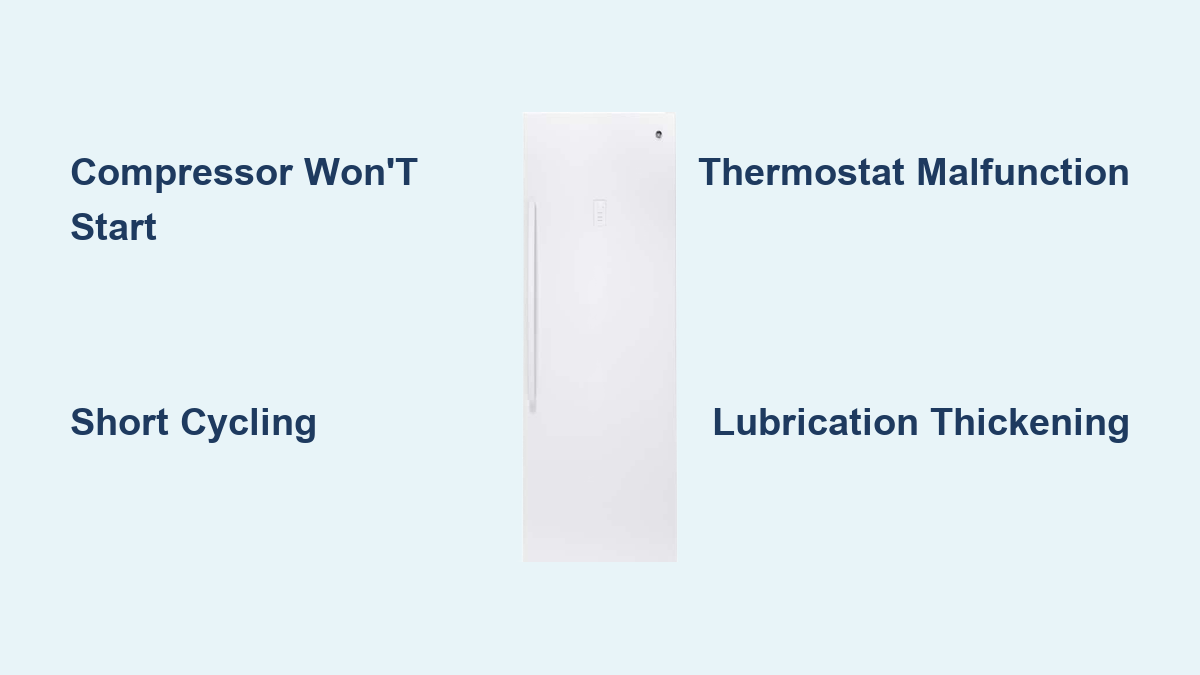
Compressor Won’t Start Despite Power Connection
The most common winter complaint involves a compressor that refuses to start. When you plug in your freezer or after a defrost cycle completes, you might hear a single click followed by silence, or a rapid clicking sound indicating the start relay is attempting and failing to engage the compressor. This happens because the compressor lacks the mechanical conditions needed to begin its cycle. The overload protector clicks repeatedly as a safety measure when the motor overheats or draws excessive current during failed startup attempts.
Short Cycling With Inadequate Cooling
Intermittent cooling with short running cycles appears when the compressor starts but cannot sustain operation. You might notice the freezer runs for only five or ten minutes before shutting off, then remains idle for much longer periods. During these brief on-cycles, the interior may not reach freezing temperatures, leading to soft ice cream, mushy frozen vegetables, or partially thawed items. The freezer feels cool but not truly frozen throughout—typically hovering between 30°F to 35°F, which is cold enough to feel chilly but dangerously warm for food preservation.
Create Immediate Winter Operation Fixes
Build a Warmer Microclimate Around Your Freezer
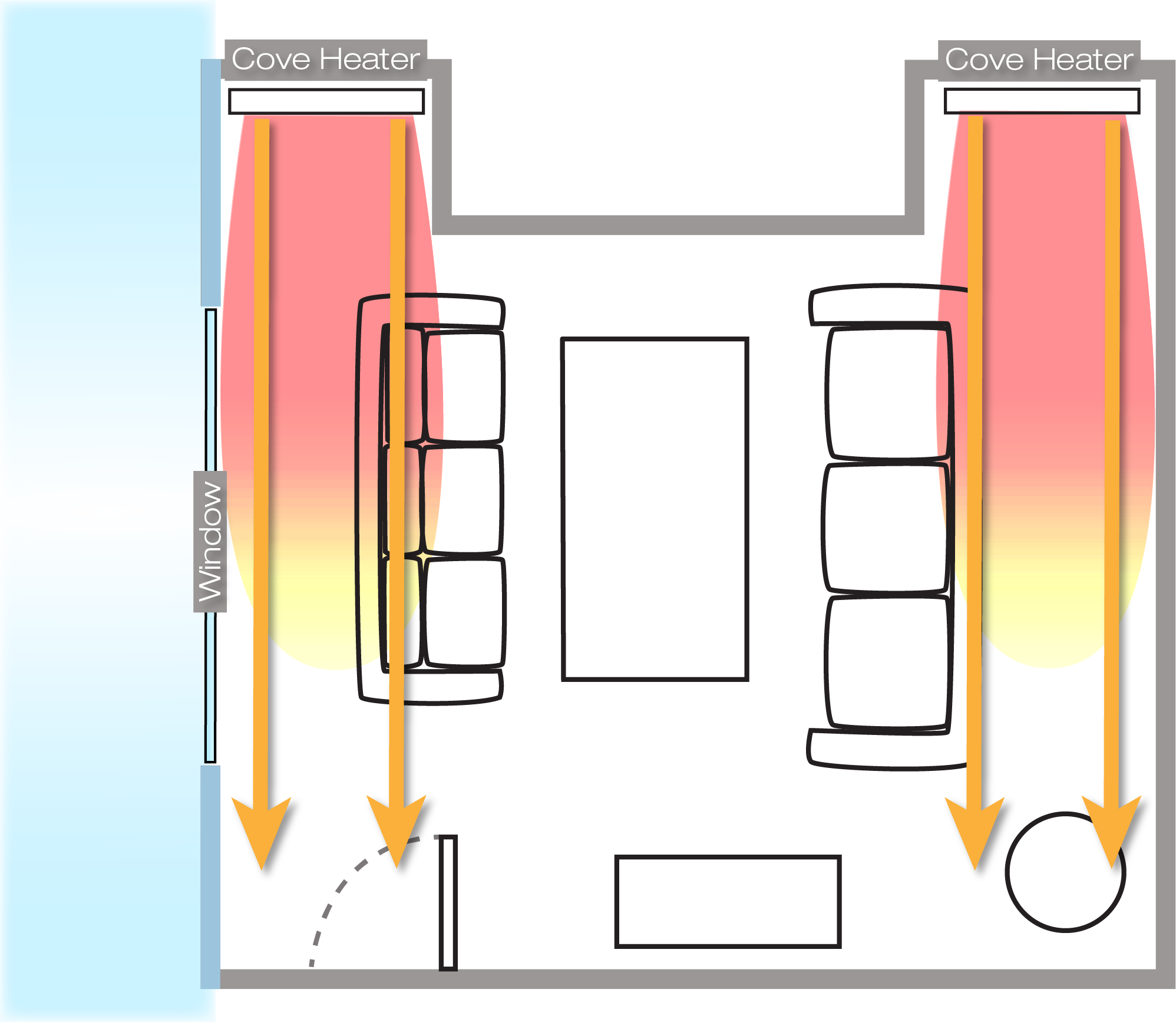
Position a space heater near your freezer set to maintain garage temperatures above 50°F. This simple solution often resolves compressor startup problems by keeping surrounding air warm enough for proper heat exchange. Place the heater on a stable surface away from flammable materials, and aim it to circulate warm air across the freezer’s condenser coils without directly heating the interior cabinet. Setting the garage temperature to 55°F to 65°F typically provides sufficient warmth for standard freezers to operate correctly. Monitor with a separate thermometer to ensure consistent temperatures.
Install a Thermostat Bypass Solution for Chest Freezers
For chest freezers, place a 40-watt incandescent bulb inside the compartment to provide consistent low-level heat. This warms the temperature sensor enough to prevent premature compressor shutdowns. Position the bulb near the back of the freezer where it won’t contact stored items, and use a socket with a built-in timer to prevent overheating. Monitor interior temperatures with an appliance thermometer to verify the freezer maintains 0°F or below. Never leave this setup unattended for extended periods or use higher-wattage bulbs that could cause dangerous overheating.
Warm the Compressor Before Startup Attempts
Place a heating pad or warm towels around the compressor housing for 15-30 minutes before plugging in the freezer. This temporarily thins the lubricating oil and reduces resistance for moving parts, making startup easier. Once running, the compressor generates its own heat and often continues operating normally until the next shutdown cycle. For frequent winter startups, consider installing a compressor heater wrap that automatically activates when temperatures drop below 50°F, keeping the compressor housing just warm enough for reliable operation.
Implement Permanent Winter Solutions

Upgrade to a Garage-Ready Freezer Model
When replacement becomes necessary, choose a freezer specifically designed for unheated space operation. These models carry temperature ratings down to 0°F or colder, featuring thicker insulation (often exceeding three inches), enhanced compressor protection, and thermostats calibrated for cold-weather operation. Look for ENERGY STAR certification to ensure energy efficiency despite challenging installation environments. Chest freezers generally outperform upright models in cold garages due to their top-opening design that minimizes cold air loss and horizontal compressor orientation.
Insulate Your Garage to Maintain Minimum Temperatures
Adding insulation to garage walls, ceilings, and especially the door dramatically reduces temperature fluctuations. A properly insulated garage that stays above 50°F year-round eliminates cold-weather freezer problems entirely. Focus on insulating the shared wall between your garage and living space first, as this creates a thermal buffer from your home’s heated interior. Install weather stripping around the garage door and consider a door sweep to prevent cold air infiltration. This solution provides benefits beyond freezer operation—warmer garage temperatures protect other stored items and make the space more comfortable for hobbies.
Prevent Future Winter Freezer Failures
Monitor Interior Temperatures Year-Round
Use a wireless thermometer with remote sensor placed inside your freezer and display unit positioned somewhere visible. Set temperature alerts to notify you if interior temperatures rise above safe levels, giving you time to address problems before food spoils. Check the thermometer weekly during winter to catch developing issues early. A functioning freezer should maintain 0°F or below throughout—readings above 10°F indicate inadequate cooling, while temperatures fluctuating between 20°F and 35°F strongly suggest cold-weather operational issues.
Schedule Pre-Winter Maintenance Each Fall
Before winter arrives, clean condenser coils by vacuuming or brushing away accumulated dust and debris. Test the door seal by checking for cracks, hardening, or gaps that might have developed. Verify that the freezer sits level using a bubble level—uneven positioning stresses compressor components and affects door alignment. Defrost the freezer if ice buildup exceeds one-quarter inch, as excessive frost insulates the interior and forces the compressor to work harder. These simple steps prevent many common winter failures.
When to Call an Appliance Specialist
Contact a certified technician if your freezer shows signs of refrigerant leaks (visible oil stains around the compressor), burning smells, scorch marks on electrical components, or persistent relay failures despite troubleshooting. Professional repairs become cost-effective when compared to replacement for newer garage-ready freezers or expensive standard models. However, for older standard freezers experiencing chronic winter problems, replacement with a properly rated garage model often makes more financial sense than repeated repairs. Electrical work beyond simple outlet testing should always involve licensed professionals to ensure safety and code compliance.
Winter doesn’t have to mean freezer failure. By understanding why standard freezers struggle in cold garages and implementing appropriate solutions, you can maintain reliable food storage regardless of outdoor temperatures. Whether you choose quick fixes like supplemental heating, invest in garage insulation, or upgrade to a purpose-built freezer, addressing the root cause prevents recurring problems and protects your food investment throughout the cold season.