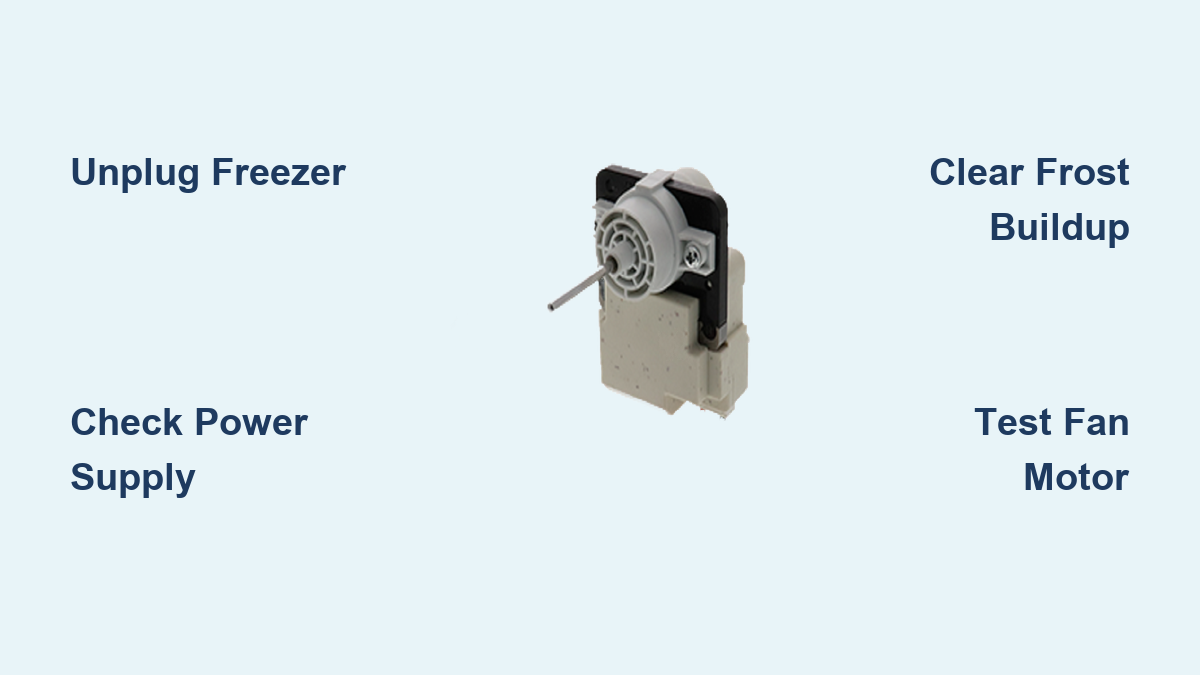
Frigidaire Freezer Fan Not Working: Quick Fix Guide
When your Frigidaire freezer fan stops spinning, you’re facing more than just an annoying silence—your frozen foods are at risk of thawing within hours. That distinctive hum you’ve grown accustomed to has vanished, and now you’re finding frost building up on the walls while your carefully stored items begin to soften. This common problem affects countless Frigidaire freezer owners, from compact chest models to large upright units. Understanding why your Frigidaire freezer fan not working issue occurs and how to fix it can save you hundreds in unnecessary service calls or premature replacement costs.
The evaporator fan is the unsung hero of your freezer’s cooling system, responsible for circulating that vital cold air throughout the compartment. Without proper airflow, temperature inconsistencies develop rapidly, turning your freezer into an expensive food-wasting appliance. The good news? Most causes of a non-working freezer fan have straightforward solutions you can tackle yourself with basic tools and minimal technical knowledge. This guide will help you diagnose and resolve your Frigidaire freezer fan not working problem before your groceries spoil.
Locate and Access Your Freezer’s Evaporator Fan Assembly

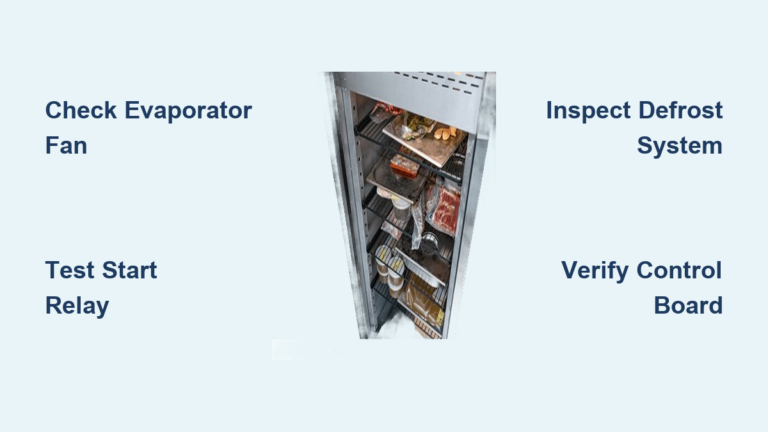
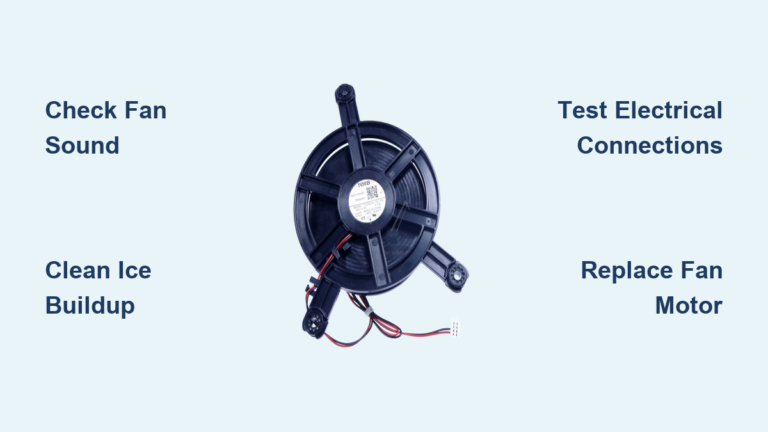
Before troubleshooting, you need to find where your Frigidaire’s evaporator fan lives. In most upright models, the fan sits behind a panel at the back of the freezer compartment, typically concealed by a plastic cover secured with several screws. Chest freezers usually have the fan assembly mounted near the top front section beneath the lid.
To access the fan, unplug your freezer first for safety. Remove all shelves, drawers, and food items that block your view. For upright models, look for a rectangular panel covering the rear wall—this often snaps or screws into place. Use a screwdriver to remove fasteners, taking photos as you go to ensure proper reassembly. In some newer Frigidaire models, you may need to remove temperature sensors or wiring harnesses first, so handle connections carefully. Once exposed, you should see the fan blades encased in a plastic housing with wires leading to a motor.
Diagnose Power Supply Issues Causing Fan Failure
:strip_icc()/measuring-voltage-outlet-77726753-ac9266c6cc0c4b56bf0b663bedd85883.jpg)
A surprising number of “broken” freezer fans are simply victims of power problems. Before assuming component failure, verify your Frigidaire is receiving proper voltage. Start by checking if the freezer’s power cord is fully inserted into a working outlet—sometimes vibration or cleaning activities can partially unplug appliances.
Test the outlet with another device like a lamp or phone charger. If the outlet isn’t delivering power, check your home’s circuit breaker panel for a tripped switch controlling that circuit. Reset any tripped breakers and monitor if they trip again when you reconnect the freezer, which would indicate a more serious electrical issue.
Use a multimeter to check voltage at the outlet—it should read between 110-120 volts. Low voltage (below 105V) can cause the fan motor to stall or run erratically. Also inspect the freezer’s power cord for damage, especially where it bends near the plug or enters the unit. A frayed cord needs immediate replacement by a professional to prevent fire hazards.
Clear Frost and Debris Blocking Fan Operation
Excessive frost buildup is the most common cause of a Frigidaire freezer fan not working properly. When ice accumulates around the fan blades or housing, it physically prevents rotation. This often happens when the defrost system malfunctions or when the door is opened frequently in humid conditions.
Unplug the freezer and remove all food. Locate the evaporator fan assembly as described earlier. If you see significant ice accumulation, perform a manual defrost by placing towels in the freezer to catch meltwater and using bowls of hot water (never sharp objects) to accelerate melting. Allow at least 4-6 hours for complete defrosting.
Once ice has melted, check for debris like food packaging fragments, plastic bags, or ice chunks that may have lodged against the fan blades. Gently spin the blades by hand—they should rotate freely with slight resistance. If they’re stiff or won’t turn, carefully remove obstructions using plastic tools to avoid damaging components. Never force frozen blades, as this can break the motor shaft.
Test the Evaporator Fan Motor with Basic Tools

If no obstructions exist but the fan remains silent, the motor itself may have failed. You’ll need a multimeter to test for electrical continuity. Unplug the freezer and locate the two or three wires connecting to the fan motor terminals.
Set your multimeter to the resistance (ohms) setting. Disconnect the wires from the motor terminals (taking photos first for reconnection reference) and touch the probes to each terminal. A working motor typically shows 15-50 ohms of resistance. If your meter reads “OL” (open loop) or infinite resistance, the motor windings have failed and require replacement.
Also check if the motor shaft spins freely. Remove the fan blade (usually clipped or screwed on) and try rotating the shaft with your fingers. It should turn smoothly without grinding or sticking. If it feels gritty or binds, the bearings have worn out, and replacement is necessary regardless of electrical test results.
Verify Defrost System Components Are Functioning
Your Frigidaire’s defrost system works in tandem with the fan—when it fails, ice accumulates and eventually stops the fan. Three key components could be at fault: the defrost heater, thermostat, and timer/control board.
The defrost heater (a thin metal tube wrapped around the evaporator coils) should show 10-50 ohms of resistance when tested with a multimeter. The defrost thermostat (a small cylindrical component clipped to the coils) should have continuity when cold but open when warmed to about 40°F. For mechanical timers (found near the compressor in older models), manually advance the timer with a screwdriver—if the heater activates but the fan doesn’t run afterward, the timer may be faulty.
Newer Frigidaire models use electronic control boards that manage defrost cycles. Signs of failure include inconsistent defrost timing or multiple system errors. These boards require professional diagnosis, but if other components test good and defrost cycles don’t complete properly, the control board could be suspect.
Check Door Switch and Seal Integrity
A less obvious culprit for Frigidaire freezer fan not working issues is the door switch. In some models, this switch not only controls interior lighting but also signals the fan to stop when the door opens. If stuck in the “open” position, the freezer thinks the door is always ajar and disables the fan.
Locate the door switch (usually near the top hinge) and press it manually while listening for a distinct click. Test with a multimeter for continuity—it should show open circuit when pressed and closed when released (or vice versa depending on model). A faulty switch often feels mushy or doesn’t click properly.
Also examine the door gasket for tears, gaps, or compression damage. A poor seal allows warm, humid air to enter, accelerating frost buildup that eventually chokes the fan. Test the seal by closing the door on a dollar bill—if you can pull it out easily anywhere along the seal, replacement is needed.
Evaluate When Professional Help Is Necessary
While many Frigidaire freezer fan issues are DIY-friendly, certain situations demand professional expertise. Call a certified technician if:
- You’ve completed all troubleshooting steps without success
- The compressor runs but no cold air circulates
- You detect burning smells or visible electrical damage
- Your freezer is under warranty (self-repair may void coverage)
- You’re uncomfortable working with electrical components
Professional technicians have specialized tools to diagnose control board issues, refrigerant problems, and complex electrical faults that aren’t visible during basic inspection. They also have access to genuine Frigidaire parts that ensure proper fit and function—aftermarket components often fail prematurely.
Implement Preventative Maintenance Strategies
Once you’ve resolved your immediate Frigidaire freezer fan not working issue, adopt these habits to prevent recurrence:
- Keep the freezer 70-80% full for optimal air circulation (use water bottles if needed)
- Organize contents to avoid blocking airflow vents
- Clean condenser coils every 6 months using a vacuum or coil brush
- Check door seals quarterly for proper closure
- Avoid excessive door openings, especially in humid conditions
- Maintain proper temperature settings (0°F/-18°C recommended)
Set calendar reminders to inspect your freezer’s performance monthly—listen for normal fan operation, check for unusual frost patterns, and verify temperature consistency with an independent thermometer. Catching minor issues early prevents costly failures and extends your appliance’s lifespan significantly.
By following this systematic approach to diagnosing and resolving your Frigidaire freezer fan not working problem, you’ll restore proper cooling function while gaining valuable knowledge about your appliance’s operation. Most importantly, you’ll save your frozen foods from spoilage and avoid unnecessary service expenses—keeping both your groceries and your wallet safely frozen.