Blomberg Freezer Fan Not Working: Quick Fix Guide
When your Blomberg freezer fan stops working, your entire frozen food preservation system is at risk. Without proper air circulation, temperatures become inconsistent, frost builds up rapidly, and your food begins to thaw—potentially spoiling everything inside. This comprehensive guide delivers the exact steps needed to diagnose why your Blomberg freezer fan not working, from simple fixes you can do immediately to knowing when professional help is essential. Thousands of homeowners face this exact issue each year, and most can resolve it without calling a technician if they follow the right diagnostic sequence.
The good news is that most Blomberg freezer fan problems stem from straightforward issues like power interruptions, incorrect settings, or door seal failures—not complex mechanical breakdowns. By methodically working through these troubleshooting steps, you’ll either restore proper fan operation or determine if professional service is truly necessary. Understanding the cooling system’s dependencies helps you avoid unnecessary service calls while protecting your valuable frozen inventory from spoilage.
Verify Power Supply Connection
Before dismantling components or assuming mechanical failure, confirm your Blomberg freezer is receiving consistent electrical power. Many apparent fan malfunctions disappear once basic power issues are addressed, saving you time and potential service fees. The fan motor depends entirely on stable electricity, so this essential first check resolves more “Blomberg freezer fan not working” cases than any other step.
Test the Wall Outlet
Plug a working lamp or phone charger into the same outlet to verify it’s delivering power. If that device doesn’t operate, the problem likely lies with the outlet rather than your freezer. Try connecting your Blomberg appliance to a different kitchen outlet that you know functions properly—just ensure the extension cord (if needed) is rated for appliance use and placed safely away from foot traffic. Many homeowners discover their freezer was simply unplugged during cleaning or accidentally switched off at the outlet.
Inspect the Power Cord and Plug
Carefully examine the entire power cord length for fraying, kinks, or exposed wiring that could interrupt electricity flow to the fan motor. Check both the wall plug and freezer connection point for signs of overheating like discoloration, melting, or burn marks. A loose connection at either end often causes intermittent operation that mimics complete fan failure. If you notice any damage, unplug the appliance immediately and contact Blomberg service—never attempt to repair or bypass damaged electrical components yourself.
Check Circuit Breaker and Fuses
Visit your home’s electrical panel and inspect all breakers, especially those labeled for kitchen circuits. A tripped breaker might not appear fully “off”—sometimes it sits in an intermediate position between on and off. Reset any suspect breakers by switching them completely off before turning back on. If the breaker trips immediately upon reset, this indicates a serious electrical fault requiring professional diagnosis. For homes with fuse boxes, check relevant fuses with a multimeter and replace only with identical amperage ratings.
Confirm Temperature Control Settings
Incorrect temperature settings frequently cause the Blomberg freezer fan not working appearance when the appliance is simply not calling for cooling. The fan operates in sync with temperature demands, so improper settings disrupt its normal cycling pattern.
Adjust Temperature Settings
Locate your Blomberg’s temperature control—typically a dial inside the freezer or digital panel on the front. Verify it’s not accidentally set to “0” or “off” position, which disables both compressor and fan operation. The ideal setting for most models is around -18°C (0°F), usually marked as position 3-4 on dial controls. If settings appear incorrect, adjust to the recommended level and wait at least 30 minutes before checking if the fan has resumed operation. Extreme settings force the cooling system to work inefficiently, often mimicking component failure.
Allow Initial Cooling Period
After power restoration, moving the appliance, or first-time installation, your Blomberg freezer requires 2-4 hours to establish stable temperatures before the fan operates consistently. During this stabilization phase, the compressor builds refrigerant pressure while temperature sensors calibrate—resulting in delayed or intermittent fan activity. Resist checking operation too soon; premature diagnosis often leads to unnecessary service calls. Mark the time you restored power and give the system its full cooling cycle before concluding fan failure.
Inspect Door Seal Condition

A compromised door seal forces your Blomberg freezer to work harder, causing irregular fan operation as the system struggles to maintain temperature against warm air infiltration.
Clean the Door Gasket
Remove accumulated frost, food debris, or sticky residues from the seal groove using a soft cloth dampened with mild soap solution. Pay special attention to corners where gaskets commonly trap moisture that freezes solid. Clean both the rubber seal and the channel it seats into, ensuring smooth contact when closed. Weekly seal cleaning prevents the gradual deterioration that eventually leads to fan overwork and premature failure.
Test Seal Integrity
Perform the paper test at multiple points around the door perimeter: close the door on a dollar bill or standard paper, then attempt to pull it out. Properly functioning seals create noticeable resistance—you should feel the paper tug against the gasket. If the paper slides out easily at any point, warm air is infiltrating your freezer, causing temperature fluctuations that disrupt normal fan cycling. Check all edges, especially near hinges where seals often wear first.
Decode Indicator Light Patterns

Your Blomberg freezer’s visual indicators provide crucial diagnostic clues about why the fan might not be working properly.
Interpret Warning Signals
Observe the control panel lights for abnormal patterns—steady illumination typically indicates normal operation, while blinking sequences or color changes (amber/red) signal developing issues. Some models blink specific patterns corresponding to error codes; consult your manual for model-specific interpretations. For example, two quick blinks followed by a pause might indicate temperature sensor problems affecting fan activation. These signals help determine if the fan issue is isolated or part of a broader system failure.
Monitor Internal Temperature
Place an independent thermometer in the center of your freezer compartment and track readings over 24 hours. If temperatures consistently exceed -15°C (5°F) despite correct settings, insufficient air circulation points to fan problems. Conversely, if temperatures remain stable but you hear no fan operation, the issue may be with the fan motor itself rather than the cooling system’s ability to maintain temperature.
Perform Visual and Auditory Checks
Sometimes the most effective diagnostic tools are your own senses—listening and observing provides immediate feedback about your Blomberg freezer’s condition.
Listen for Fan Operation
Stand quietly near your freezer for several minutes to distinguish the fan’s distinctive hum from compressor noise. The fan typically cycles on for 10-20 minutes during active cooling periods. Complete silence during what should be an active cooling cycle suggests fan failure, but remember fans temporarily stop during automatic defrost cycles (usually lasting 20-30 minutes every 8-12 hours).
Check for Obstructions
Inspect the back wall of your freezer compartment for items blocking the fan vent—overpacked containers or shifted storage bins often obstruct airflow. Remove any obstructions and rearrange contents to maintain at least 2 inches of clearance around all vents. Blocked airflow mimics fan failure by preventing proper cold air distribution, causing temperature inconsistencies that trigger error indicators.
Understand When Professional Service Is Required
Certain Blomberg freezer fan not working scenarios demand expert intervention to avoid safety hazards or further damage.
Recognize Motor Failure Signs

Persistent burning odors, grinding noises from the fan assembly, visible blade damage, or complete silence despite verified power signal motor failure requiring professional replacement. Attempting DIY motor repairs risks electrical shock, refrigerant leaks, or voiding your warranty. Authorized technicians have specialized tools to safely access and replace fan assemblies without compromising the sealed cooling system.
Contact Blomberg Support
When troubleshooting proves ineffective, Blomberg’s service network provides model-specific expertise. Before calling, locate your model and serial numbers (typically on an interior label) to expedite service. Having this information ready helps technicians diagnose potential issues faster and verify warranty coverage. Most service centers can often resolve fan problems during the first visit when provided with accurate model details.
Prevent Future Fan Problems
Proactive maintenance prevents most recurring Blomberg freezer fan not working issues.
Maintain Proper Airflow
Avoid overpacking your freezer—items should never touch the back wall where the fan and evaporator coil reside. Leave 1-2 inches of space between stored items and all walls to ensure unobstructed air circulation. Periodically check that nothing has shifted against vents during regular use. Proper airflow reduces strain on both fan motor and compressor, extending their operational lifespan significantly.
Perform Regular Seal Inspections
Check door seals monthly for cracks, tears, or permanent deformation. Clean gaskets with mild soap and water, avoiding harsh chemicals that degrade rubber compounds. Promptly replace damaged seals to prevent warm air infiltration that forces the fan to work harder and cycle more frequently than designed.
Key Troubleshooting Summary
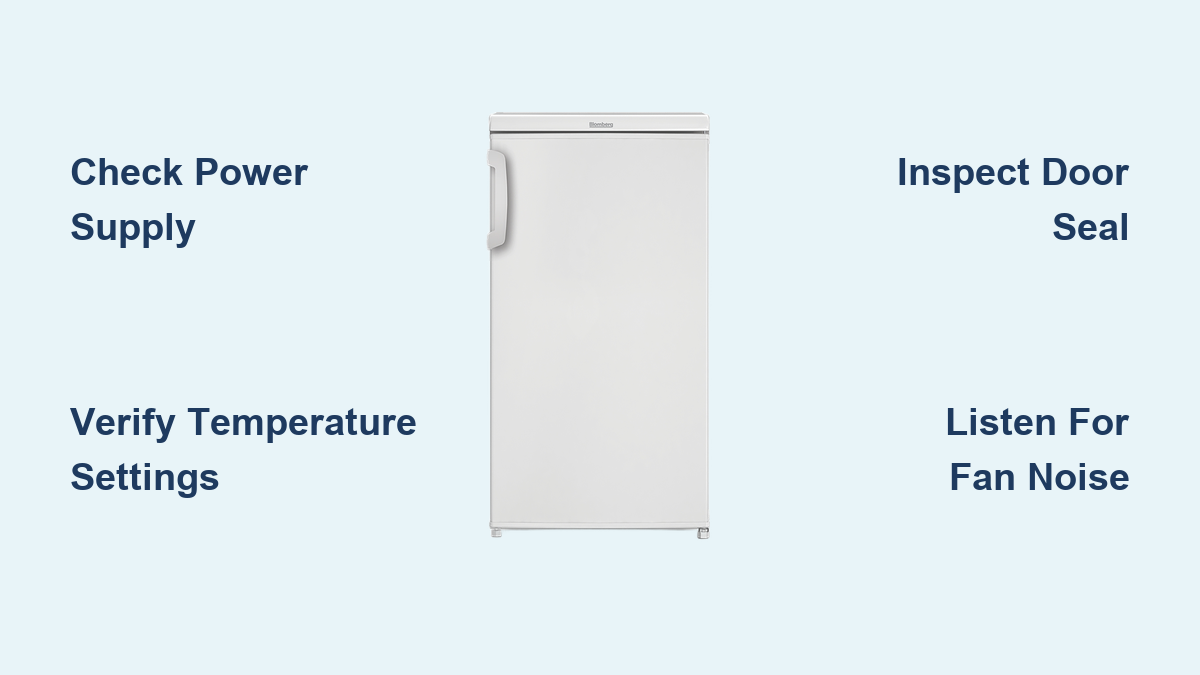
Diagnosing your Blomberg freezer fan not working follows a logical progression: verify power supply through outlet testing and circuit checks, confirm temperature settings aren’t accidentally disabled, allow proper cooling stabilization time, inspect door seals for damage or debris, and monitor indicator lights for error patterns. Most issues resolve at these early stages without professional help. When these steps fail to restore operation, recognize the signs of motor failure and contact Blomberg’s authorized service network with your model details ready.
Implementing regular maintenance—ensuring proper airflow, inspecting seals monthly, and monitoring temperatures—prevents 80% of recurring fan problems. By understanding your freezer’s cooling system dependencies and responding promptly to early warning signs, you protect both your appliance investment and the food stored within from unnecessary spoilage. Remember that when in doubt about electrical components or internal mechanisms, professional service always outweighs the risk of improper DIY repairs.