Amana Bottom Freezer Not Cooling? Fix It Fast
Your Amana bottom freezer refrigerator suddenly stops cooling in the refrigerator compartment while the freezer keeps freezing food normally—a confusing but common problem that leaves perishables at risk. When cold air stops flowing from the freezer to the refrigerator section, you’re facing one of the most frustrating appliance failures homeowners experience. This guide reveals the exact components that commonly fail in Amana bottom freezer models and provides step-by-step troubleshooting to get your refrigerator functioning properly again without unnecessary service calls.
The critical insight to understand is that your Amana refrigerator and freezer share the same cooling system. Cold air generated in the freezer compartment circulates to the refrigerator section through specific pathways. When the refrigerator stops cooling but the freezer works, the problem lies in components responsible for air distribution—not the compressor itself. By following this systematic approach, you’ll identify whether you need a simple $12 part replacement or professional assistance.
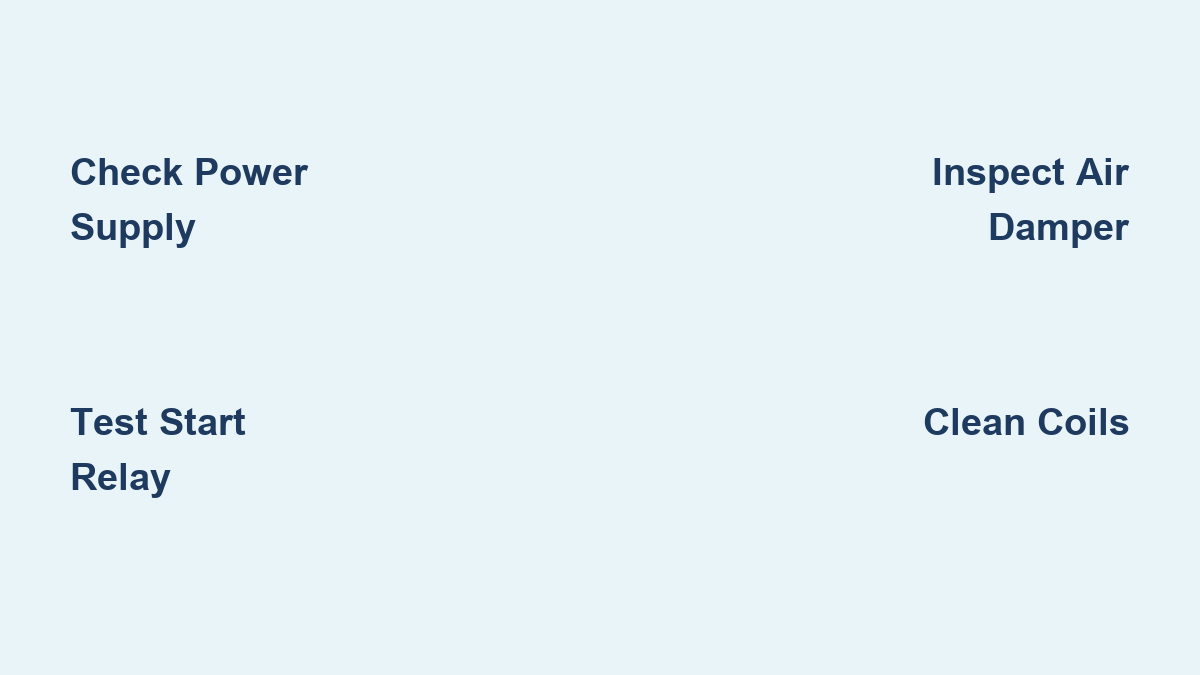
Verify Electrical Power Connections
Before diving into complex repairs, confirm your Amana bottom freezer has proper electrical power. These units require a dedicated 115-Volt, 60-Hz circuit with 15- or 20-amp protection—never plug into extension cords or outlets controlled by switches as this disrupts consistent power delivery.
Test the outlet by plugging in a lamp or small appliance. If no power exists, check your circuit breaker panel for tripped breakers or blown fuses serving the kitchen circuit. Reset or replace as needed, then wait 5 minutes before reconnecting your refrigerator to avoid triggering protective shutdowns.
Don’t overlook GFCI outlets—these safety devices in kitchens frequently trip without notice, cutting power to your refrigerator. Press the reset button on any GFCI outlets in your kitchen, but avoid using them for refrigerators long-term as nuisance tripping will inevitably spoil your food.
Diagnose Start Relay and Capacitor Failures

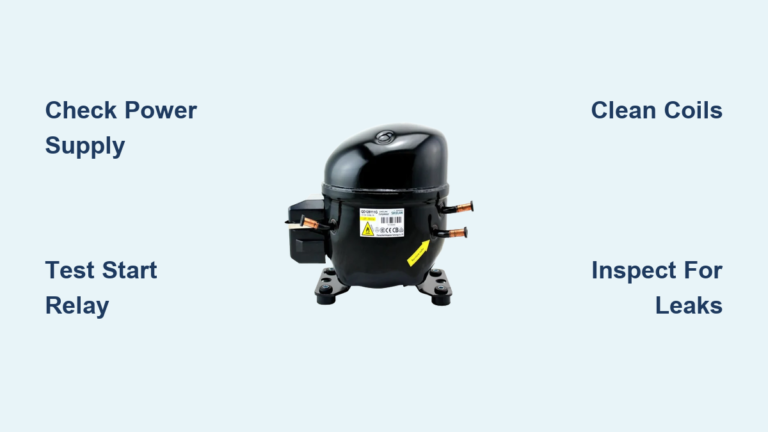
The start relay and capacitor work together to kickstart your compressor during cooling cycles. When either fails, the compressor may run intermittently or not at all, causing your Amana bottom freezer not cooling properly in both compartments.
To test the start relay:
– Unplug the refrigerator and locate the relay on the compressor side
– Remove it and use a multimeter to check continuity between start and run terminals
– No continuity or a burnt smell means immediate replacement is needed
The start capacitor provides the extra power boost during compressor startup. While less common than relay failures, capacitors can degrade over time. Test with a capacitance meter—significant deviation from the printed specification or visible bulging indicates failure. Both components are model-specific, so have your Amana refrigerator’s model number ready when ordering replacements.
Identify Air Damper Assembly Problems
The air damper controls cold air flow from the freezer to your refrigerator compartment. When stuck closed—either mechanically or by ice buildup—your Amana bottom freezer not cooling issue develops while the freezer continues functioning.
Locate the damper inside your refrigerator compartment, typically near the top or middle of the back wall. Remove its cover and check if the gate moves freely when manually operated. If stuck, broken, or unresponsive, replacement is necessary—the common part number for Amana models is AP6010353.
Ice accumulation around the damper indicates an underlying defrost system problem rather than damper failure itself. Before replacing parts, ensure food items aren’t blocking the damper’s operation from inside either compartment.
Check Evaporator Fan Operation
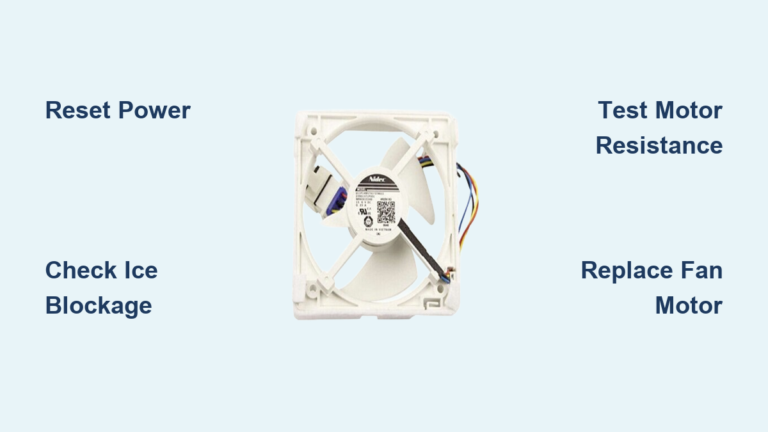
The evaporator fan circulates cold air from the freezer coils throughout both compartments. Located behind the freezer’s rear panel, this fan is critical for refrigerator cooling in bottom freezer models.
Test the fan by:
– Opening the freezer door and manually pressing the door switch
– Listening for fan operation (most models prevent fan running with door open)
– Checking for 120VAC at motor terminals while holding the switch
If voltage is present but the fan doesn’t run, the motor has failed—common replacement part is AP6015419. Even with a working fan, ice buildup on evaporator coils can restrict airflow. Remove the rear freezer panel to inspect for frost accumulation that prevents proper air circulation.
Troubleshoot Defrost System Failures

Frost buildup on evaporator coils is the most common cause of Amana bottom freezer not cooling properly while the freezer works. The automatic defrost system—comprising timer, heater, and thermostat—prevents this ice accumulation.
Three critical components to check:
– Defrost timer: If stuck in defrost mode, the compressor won’t run; if failing to trigger cycles, frost accumulates
– Defrost heater: Test for continuity—no continuity means it’s burned out
– Defrost thermostat: Monitors coil temperature; failure prevents proper heater operation
Unplug the refrigerator and remove the freezer’s rear panel. If coils are covered in ice, defrost system failure is confirmed. One user resolved their issue with a $12 timer replacement after it got stuck in defrost mode. Manual defrosting provides temporary relief but won’t fix the underlying problem.
Test Temperature Sensors
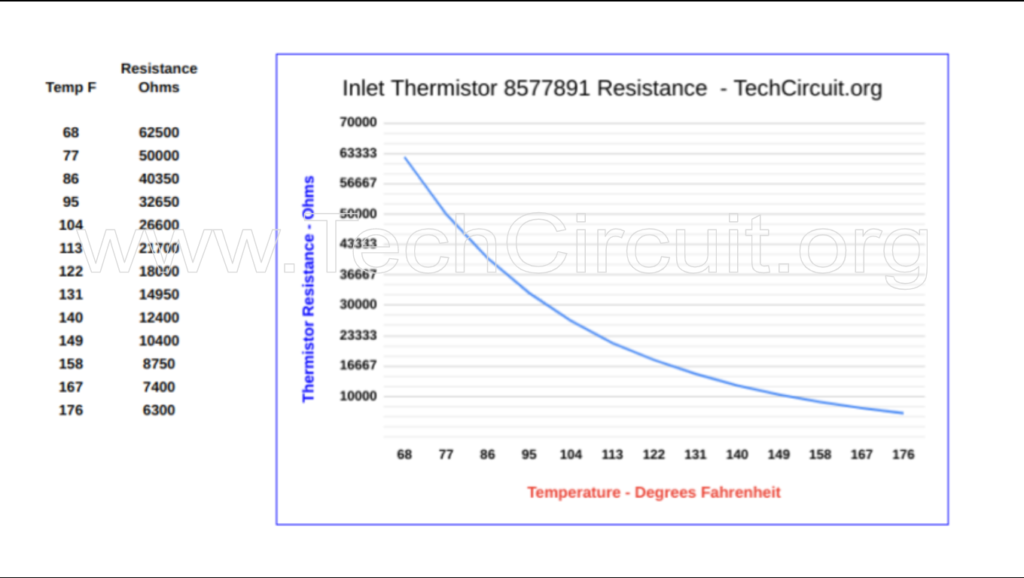
The thermistor monitors freezer temperature and signals the control board when cooling is needed. A faulty thermistor can cause your Amana bottom freezer not cooling properly by sending incorrect temperature readings.
Unplug the refrigerator and disconnect the thermistor from its wiring harness. Use a multimeter to check resistance changes as temperature fluctuates—no change indicates failure. Before replacing, ensure the sensor isn’t disconnected or covered in frost, which creates false readings.
Control board failures can mimic sensor problems. Only consider board replacement after verifying all other components—start relay, capacitor, fans, and defrost system—are functioning correctly.
Clean Condenser Coils Regularly
Dirty condenser coils reduce heat dissipation efficiency, forcing your refrigerator to work harder and potentially fail to maintain temperatures. Locate your coils—typically behind a rear panel, beneath the unit, or occasionally within freezer walls.
For accessible coils:
– Use a soft bristle brush to remove dust and debris
– Vacuum with a nozzle attachment for hard-to-reach areas
– Clean every 6-12 months (more frequently with pets)
While coil cleaning won’t fix failed components, this maintenance can resolve marginal cooling performance. Allow several hours after cleaning before assessing temperature recovery.
Inspect Door Seal Integrity
Damaged door seals allow cold air to escape and warm, humid air to enter, causing frost buildup and cooling inefficiency. Test your seal by closing a dollar bill in the door—if it pulls out easily, the seal isn’t tight enough.
Inspect the entire gasket for:
– Cracks or tears
– Deformation from improper closing
– Areas where the seal has pulled away
– Debris preventing proper contact
Clean seals with mild soap and water. Replace damaged gaskets with model-specific parts to ensure proper fit and sealing.
Know When to Call a Professional
Some cooling problems require professional expertise. Contact a technician if:
– You’ve tested all components without finding the issue
– The compressor runs but neither compartment cools properly
– You notice oil stains indicating refrigerant leaks
– Control board replacement is suspected
Never attempt refrigerant system repairs yourself—these require EPA certification and specialized equipment due to environmental regulations and safety concerns.
Prevent Future Cooling Failures
Extend your Amana refrigerator’s lifespan with simple maintenance:
– Clean door seals every 3-6 months
– Vacuum condenser coils every 6-12 months
– Keep air vents unobstructed in both compartments
– Monitor temperatures regularly (35-38°F refrigerator, 0°F freezer)
Watch for early warning signs: frost buildup behind freezer panels, constant compressor running, unusual noises, or ice crystals on refrigerated foods. Addressing these early often prevents complete cooling failure and costly repairs.
By understanding how your Amana bottom freezer’s cooling system operates and following this targeted troubleshooting approach, you can resolve most “amana bottom freezer not cooling” issues efficiently. Whether you need a simple relay replacement or professional service, this guide ensures you make informed decisions that save time, money, and spoiled food.