How to Freeze Parsley for Long-Lasting Freshness
Parsley wilts in your refrigerator faster than you can blink, leaving you with limp, yellowing leaves and wasted money. Learning how to preserve parsley in the freezer solves this frustrating problem once and for all, giving you a year-round supply of vibrant herb without the constant trips to the grocery store. Unlike dried parsley that loses its bright flavor within months, properly frozen parsley maintains its characteristic “summation of all things green” taste for up to six months. Whether you’ve harvested a bumper crop from your garden or bought an oversized bunch at the store, freezing transforms perishable parsley into a kitchen staple you can access whenever inspiration strikes. This guide reveals six practical methods to freeze parsley based on your cooking needs, along with critical preparation steps that make the difference between freezer-burned disappointment and restaurant-quality results.
Why Frozen Parsley Outperforms Dried or Refrigerated Options
Drying parsley destroys the delicate essential oils that give it its signature flavor, leaving behind a flat, one-dimensional substitute that barely resembles fresh. Refrigerated parsley typically lasts only 5-7 days before turning slimy, while properly frozen parsley maintains vibrant flavor for up to six months. The magic happens because freezing pauses the degradation of volatile compounds rather than destroying them through heat exposure. When you need parsley for cooking, simply scoop out what you need directly from the freezer—no measurement adjustments required since frozen equals fresh in flavor impact.
Critical limitation to remember: Frozen parsley loses its crisp texture when thawed, making it unsuitable for fresh applications like tabbouleh or garnishes where appearance matters. However, it excels in any cooked dish where texture isn’t critical—think soups, stews, sauces, and egg dishes where that bright herb flavor shines through without visual compromise.
Perfectly Dry Parsley Before Freezing
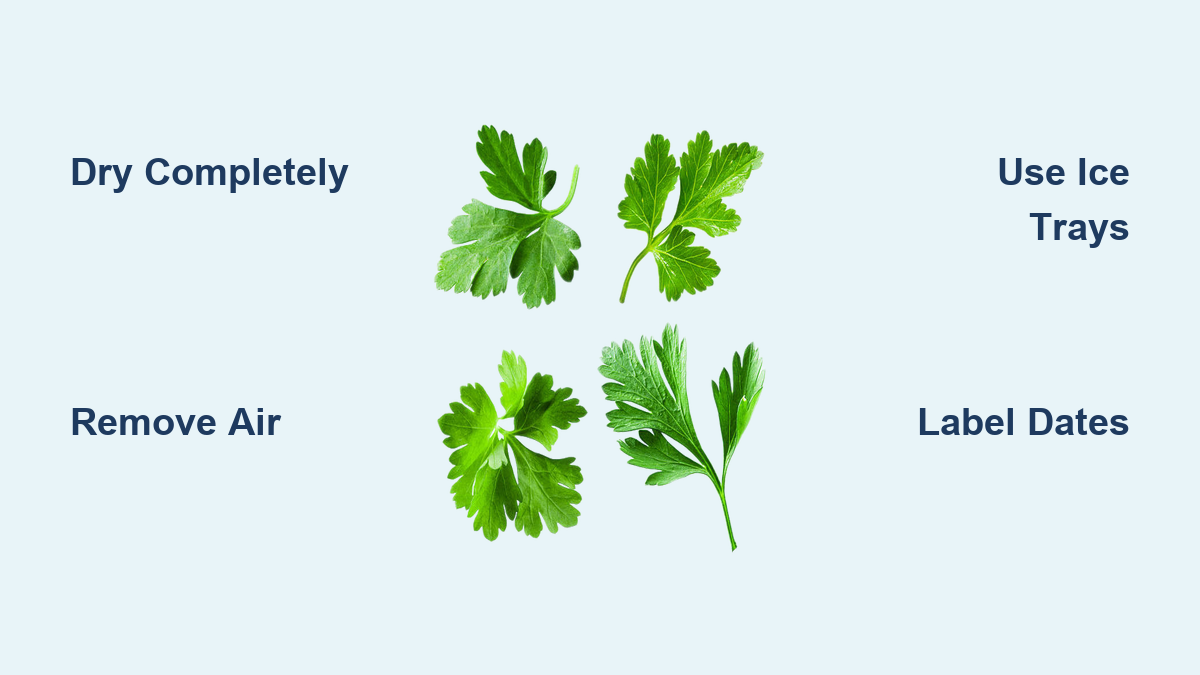
Moisture is the enemy of successful frozen herbs—excess water creates ice crystals that cause freezer burn and turns your parsley into an unmanageable frozen clump. Start by swishing your parsley vigorously in a bowl of cool water to release dirt and insects, then rinse thoroughly under running water. Shake off excess water and spread the bunch on clean kitchen towels or paper towels. For best results, allow air drying for 2-3 hours—rushing this step guarantees subpar results.
Pro tip: A salad spinner dramatically accelerates drying time while protecting delicate leaves from bruising. After spinning, inspect each leaf and remove any yellowed or damaged portions. Keep tender inner stems (they contain concentrated flavor) but discard tough outer stems that won’t break down during cooking.
Roll Parsley into Freezer-Friendly Herb Logs
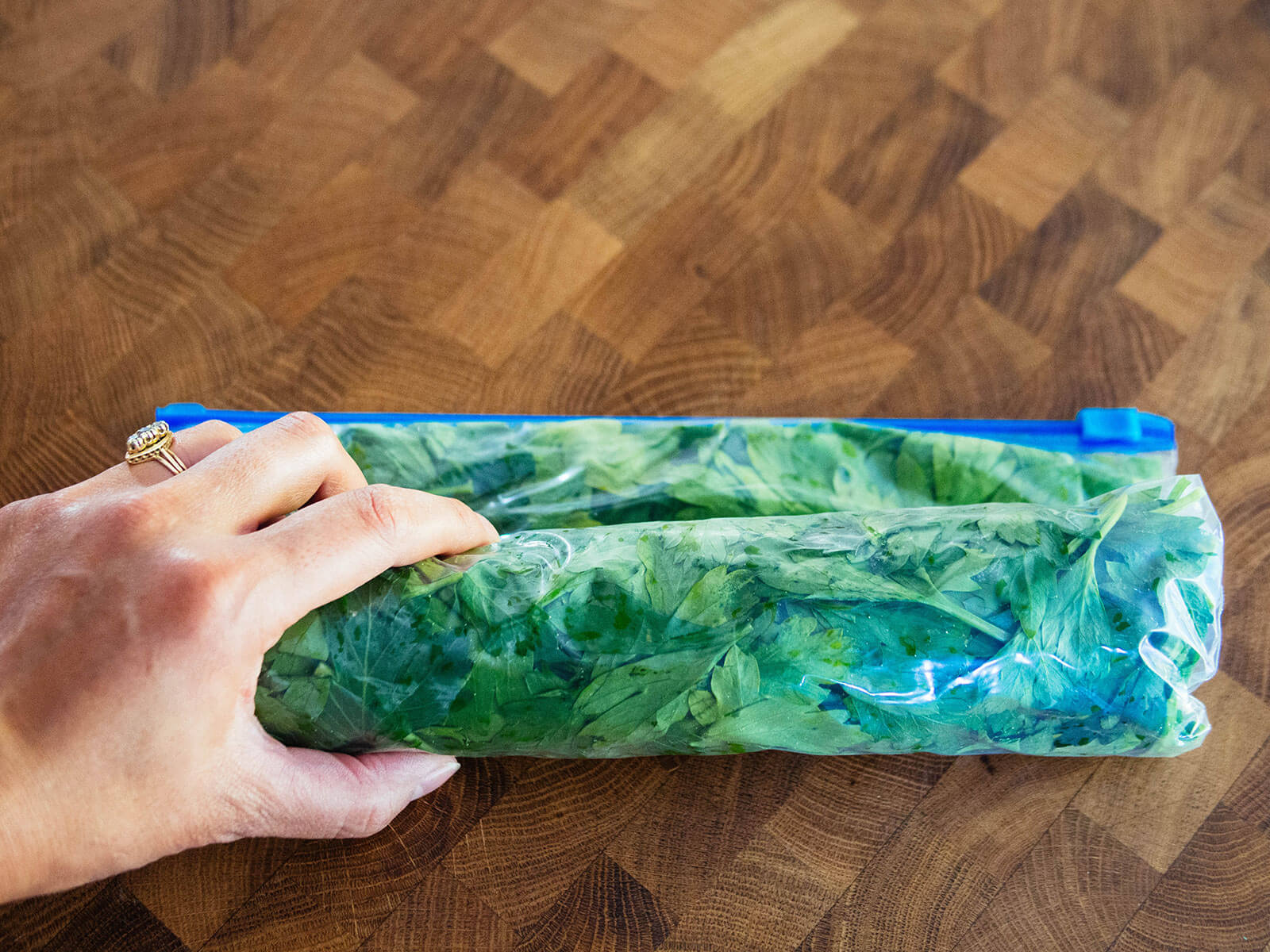
This no-equipment-required method creates portion-controlled parsley you can slice as needed directly from the freezer. After drying, strip leaves from tough stems and place them in a quart-sized freezer bag. Push the parsley to the bottom and press firmly to form a dense cylinder. Roll the bag tightly from bottom to top while squeezing out all air—imagine creating an “herb cigar.” Seal completely and wrap with a rubber band to maintain shape.
When cooking, simply:
1. Remove the log from freezer
2. Cut off required amount with sharp knife
3. Reseal bag immediately
4. Return to freezer
This technique keeps parsley free-flowing rather than clumping, and you never thaw more than needed. For best results, freeze logs for at least 24 hours before cutting to prevent crumbling.
Freeze Parsley Cubes in Ice Trays
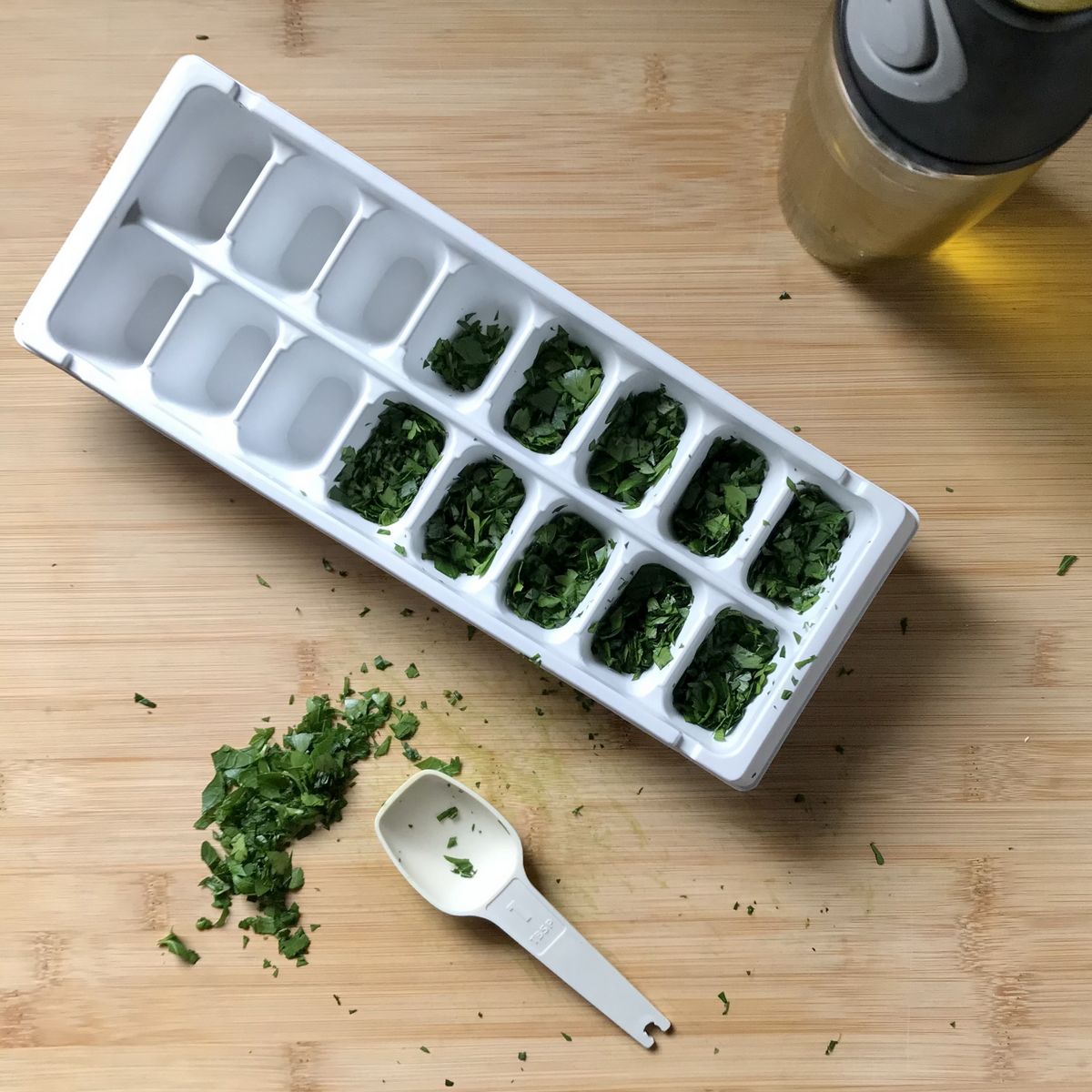
Portion-controlled parsley cubes work perfectly for soups, stews, and sauces where precise amounts matter. Chop clean, dry parsley as you would for fresh use. Fill each ice cube section halfway with water, add one tablespoon of chopped parsley, then top with more water to submerge leaves completely. Freeze solid before transferring cubes to labeled freezer bags.
Two variations worth trying:
– Puree method: Blend parsley with minimal water to create a concentrated paste before freezing
– Oil method: Substitute water with olive oil for better color retention and cooking versatility
These cubes melt quickly when added directly to hot dishes—no thawing required. For best flavor integration, add parsley cubes during the last 5-10 minutes of cooking.
Preserve Parsley’s Color in Frozen Oil Cubes
Oil creates a protective barrier that maintains parsley’s vibrant green color better than water-based methods. Pulse dry parsley in a food processor until roughly chopped (avoid over-processing), then pack tightly into ice cube sections. Slowly pour olive oil or neutral oil over the herbs until fully submerged. Freeze solid before transferring to freezer bags.
These oil-infused cubes transform your cooking:
– Drop directly into hot pans for instant flavor
– Melt into salad dressings for herbaceous brightness
– Add to roasted vegetables during the last 5 minutes
– Incorporate into compound butters or sauces
Warning: Don’t use extra virgin olive oil if storing longer than 3 months—it can become rancid. Opt for refined olive oil or avocado oil for extended freezer life.
Transform Parsley into Freezer-Stable Pesto
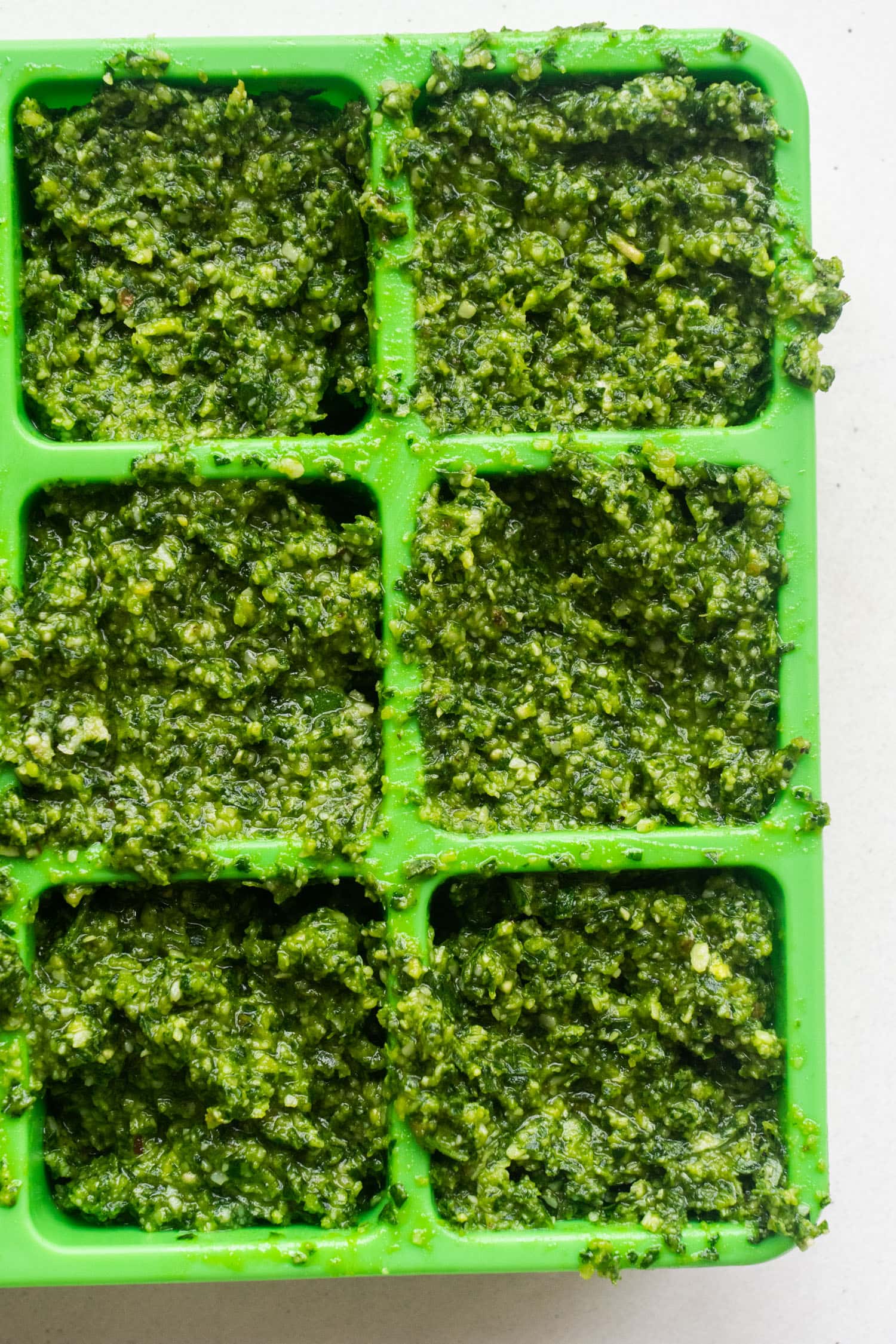
Pesto captures parsley’s essence in an oil-based medium that stays delicious for months. Puree clean parsley with olive oil as your base—keep it simple or add garlic, nuts, and cheese for complexity. Transfer to ice cube trays and freeze solid before moving to labeled freezer bags.
Pro tip: Freeze pesto in two formats:
– Small cubes (1-2 tbsp) for single servings
– Larger portions (¼ cup) for pasta sauces
These pesto cubes serve multiple purposes—you can drop them directly into soups for instant flavor, melt them into warm pasta, or use as a spread for sandwiches. Unlike water-based methods, pesto maintains exceptional texture when thawed.
Create Ready-to-Use Parsley Butter Coins
Compound butter transforms frozen parsley into an elegant kitchen staple. Finely chop dry parsley and mix with softened butter until evenly distributed. Shape into a log using plastic wrap, freeze for 15 minutes, then slice into coins. Store coins in airtight containers for up to 6 months.
Top applications:
– Melt over grilled steak or fish
– Stir into mashed potatoes or roasted vegetables
– Drop into pan sauces for instant richness
– Spread on warm bread for quick appetizers
This method delivers maximum flavor impact with minimal effort—simply drop a coin into hot dishes where it melts instantly, distributing parsley flavor throughout.
Maximize Frozen Parsley Shelf Life
Properly stored frozen parsley maintains quality for 6 months, though it remains safe indefinitely at 0°F. Prevent freezer burn by:
– Removing all air from storage bags
– Using double-bagged protection
– Storing away from strongly scented foods
– Labeling with dates using the first-in-first-out system
Critical mistake to avoid: Opening and closing the freezer repeatedly causes temperature fluctuations that degrade quality. Keep parsley toward the back of the freezer where temperatures remain most stable.
Essential Freezing Mistakes That Ruin Parsley
Most failed parsley preservation attempts stem from these common errors:
Moisture mishaps: Skipping thorough drying creates ice crystals that destroy texture. Always dry completely before freezing.
Air exposure: Failing to remove air from bags accelerates freezer burn. Squeeze out every bit of air before sealing.
Premature freezing: Freezing parsley that’s already past its prime intensifies off-flavors. Only freeze fresh, vibrant bunches.
Over-processing: Blending parsley too long bruises leaves and causes darkening. Pulse gently for best results.
Storage confusion: Frozen herbs look identical—always label with date and contents. Unlabeled parsley often gets forgotten until it’s too late.
Smart Tips for Perfect Frozen Parsley Every Time
Maximize your parsley preservation success with these pro techniques:
- Pre-chop before freezing if you’ll use it chopped in recipes—saves precious cooking time later
- Freeze in multiple small batches rather than one large container to prevent repeated thawing
- Keep tender stems—they contain concentrated flavor perfect for stocks and long-simmered dishes
- Add frozen directly to hot dishes—no need to thaw, which actually improves flavor distribution
- Make different preparations for different uses: plain parsley for general cooking, oil cubes for sautés, pesto for sauces
The best frozen parsley comes from plants harvested mid-morning after dew dries but before heat evaporates essential oils. For gardeners, harvest outer stems first, cutting about an inch from the ground to encourage new growth from the center.
Final note: Properly frozen parsley beats dried alternatives in flavor impact and versatility. By following these specific methods and avoiding common pitfalls, you’ll transform perishable parsley into a kitchen workhorse that elevates dishes year-round—no more wasted bunches or flavorless substitutes. The time invested in proper preparation pays dividends every time you reach for that vibrant green herb straight from your freezer.