How to Freeze Soup in Freezer Bags
Nothing beats the convenience of having homemade soup ready to go when time is tight—whether you’ve just finished a long workday or need a quick lunch option. Properly freezing soup in freezer bags transforms your kitchen productivity, allowing you to batch-cook large batches without worrying about waste or repetitive meals. This simple technique preserves your culinary efforts for months while maximizing precious freezer space that rigid containers would otherwise dominate. When you master the flat-freeze method specifically designed for freezer bags, you’ll discover how effortlessly you can organize multiple soup varieties in even the smallest freezer.
The satisfaction of pulling out perfectly frozen soup for dinner preparation is unmatched—no more scrambling for ingredients or settling for processed alternatives. This guide reveals precisely how to freeze soup in freezer bags without leaks, freezer burn, or texture issues that plague many home cooks. You’ll learn the exact bag types that won’t fail you, the critical cooling step most people skip, and the professional technique for creating flat, space-efficient frozen soup parcels that thaw in half the time of traditional methods. Whether you’re preserving chicken noodle soup after Sunday meal prep or saving vegetable stew leftovers, these actionable steps ensure your frozen soup maintains its flavor, texture, and nutritional value until you’re ready to enjoy it.
Why Freezer Bags Outperform Rigid Containers for Soup Storage
Freezing soup in freezer bags creates significant advantages over traditional containers that most home cooks overlook. The flexible nature of quality freezer bags accommodates liquid expansion during freezing without cracking or leaking—a common problem with glass or plastic containers that forces you to leave excessive headspace. This flexibility means you can utilize nearly the full capacity of each bag rather than reserving 25-30% for expansion as required with rigid containers.
Beyond preventing container failure, freezer bags enable the flat-freeze method that revolutionizes freezer organization. When you lay filled bags flat to freeze, they transform into space-efficient rectangles that stack neatly like books rather than occupying awkward, irregular shapes that rigid containers create. Apartment dwellers and anyone with limited freezer capacity particularly benefit from this adaptability—those flat soup parcels fit into odd corners and tight spaces that containers simply cannot navigate. Most importantly, flat-frozen soup thaws significantly faster than soup frozen in bulky containers, often cutting your wait time in half when dinner needs to happen quickly.
Select Quality Freezer Bags Designed for Liquid Storage
:max_bytes(150000):strip_icc()/Simply-Recipes-Zip-Top-Freezer-Storage-LEAD-5-a08e7eafec00490bbbbed52f5c547a0d.jpg)
Not all plastic bags can handle the demands of freezing liquid soup, and selecting appropriate bags forms the foundation of successful storage. Verify that packaging explicitly states “freezer bags”—this designation indicates thicker, more durable plastic engineered specifically to withstand freezing temperatures without becoming brittle or developing micro-tears that cause freezer burn. Standard sandwich bags and regular storage bags lack this specialized construction, making them prone to leaks that create messy freezer disasters.
Quart-sized freezer bags accommodate approximately two to three cups of soup, ideal for individual portions or small households. Gallon-sized bags hold roughly twelve cups, perfect for family-sized batches. Pay special attention to the zipper seal quality, as compromised closures introduce air that degrades flavor and texture over time. Reputable brands like Ziploc Freezer Quart Bags or Glad Freezer Gallon Bags consistently outperform generic alternatives—this is one instance where investing in quality pays dividends in reliability. Never attempt to reuse freezer bags for soup storage, as compromised seals dramatically increase the risk of leaks and freezer burn.
Cool Soup Completely Before Bagging
Placing hot soup directly into freezer bags represents the most common mistake that leads to failed freezing attempts. Hot liquid can deform the plastic material, creating weak spots that develop leaks during freezing, while simultaneously raising your freezer’s temperature and potentially affecting surrounding items. Allow soup to cool to room temperature before packaging, which typically takes 1-2 hours on the counter for standard batches.
For best results, refrigerate soup overnight before transferring to freezer bags—a step many experienced cooks consider non-negotiable for maintaining optimal quality. This gradual cooling process preserves texture and prevents condensation inside the bags that contributes to ice crystal formation. When working with large batches, divide soup into smaller containers during cooling to accelerate the process—never place a large pot of hot soup directly in the refrigerator, as this raises the internal temperature and creates food safety risks for other items.
Execute the Flat-Freeze Method for Maximum Efficiency
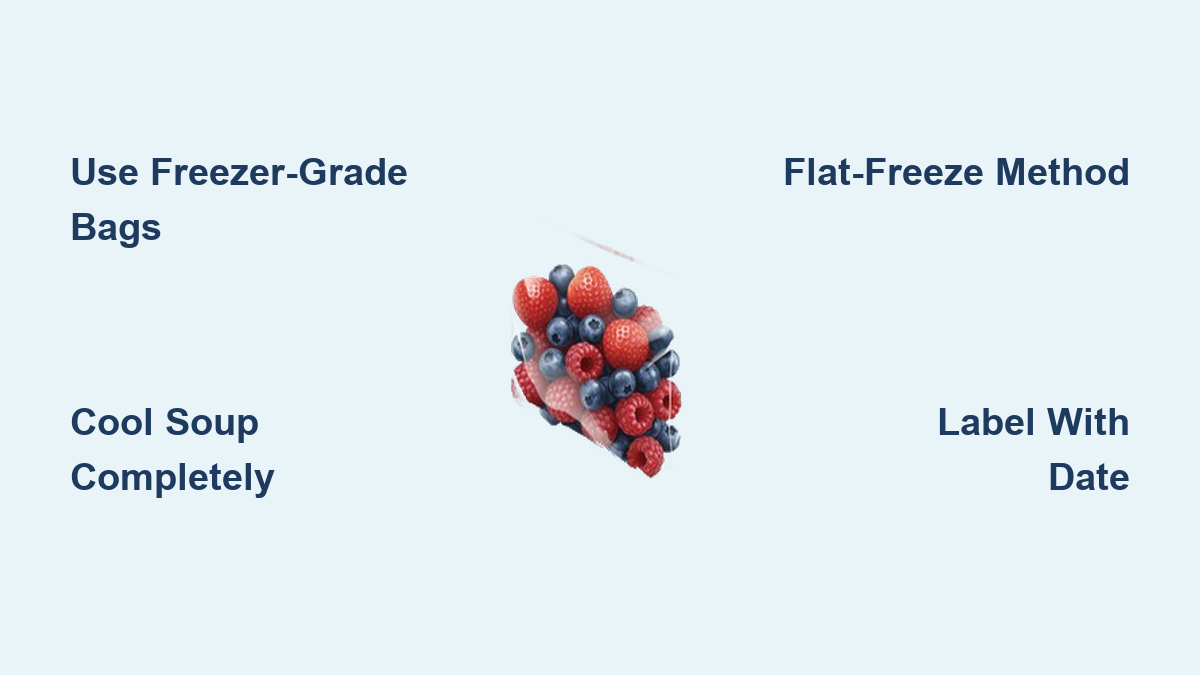
The flat-freeze technique transforms how you store liquid foods in your freezer, delivering dramatic space savings and faster thawing times. Begin by filling freezer bags with cooled soup, pressing out excess air before sealing completely. Lay the sealed bags flat on a baking sheet—not directly on freezer shelves—to ensure they freeze in a uniform, space-efficient shape. After 12-24 hours, when the soup has solidified into rigid rectangles, remove the baking sheet and store the flat bags upright like books on a shelf.
This configuration provides two critical advantages: First, flat-frozen soup thaws approximately 40% faster than soup frozen in traditional containers due to increased surface area exposure. Second, you’ll fit 30-50% more soup in the same freezer space compared to bulky containers. For those with limited freezer capacity, this difference means the ability to maintain a diverse soup rotation without constant reorganization. The flat shape also makes it easy to grab individual portions without disturbing surrounding items—a frustration-free experience compared to digging through stacked containers.
Fill Freezer Bags Using a Measuring Cup Support System
Place your freezer bag inside a four-cup measuring cup before filling to create instant stability that prevents collapses and spills. Fold the top of the bag down like a cuff to create a sturdier opening that resists folding during the filling process. Ladle cooled soup into the bag, stopping well before the fill line to allow room for expansion—quart bags should contain no more than three cups, and gallon bags approximately three quarts.
Press out as much air as possible before sealing, using either the water displacement method (submerging the nearly-sealed bag in water to force air out) or the straw technique (sealing almost completely, inserting a straw, sucking out air, then quickly removing the straw and finishing the seal). Label each bag immediately with contents and date using painter’s tape and a permanent marker—freezer-safe labels prevent the frustration of mystery soups hidden in your freezer’s depths.
Prevent Leaks with Proper Filling and Storage Techniques

Leaks typically result from three preventable issues: overfilled bags, compromised seals, or using bags not designed for freezer use. Always leave adequate headspace for expansion—liquids expand approximately 9% when frozen—by filling quart bags only ¾ full and gallon bags no more than ⅔ full. Verify seals are fully closed by pressing along the zipper multiple times with firm pressure, then testing by gently squeezing the bag.
Store flat-frozen bags no more than three high to prevent the weight of upper bags from forcing seals open. If freezing multiple bags simultaneously, place parchment paper between layers for extra protection against seal failure. For long-term storage approaching the three-month mark, double-bagging provides an additional barrier against air exposure—place the primary sealed bag inside a second freezer bag before freezing, though this slightly reduces the space-saving benefits of the flat-freeze method.
Thaw and Reheat for Restaurant-Quality Results
When ready to enjoy your frozen soup, refrigerator thawing delivers the best results—place the bag in the refrigerator for 12-24 hours before heating. The flat configuration means individual portions often thaw completely overnight, much faster than soup frozen in containers. For quicker results, submerge the sealed bag in warm (not hot) water, changing the water periodically until thawed—this method typically takes 20-30 minutes for quart-sized portions.
Most soups absorb liquid during frozen storage and emerge thicker than when originally prepared. Restore ideal consistency by adding ½ cup of broth or water during reheating, then brighten flavors with a squeeze of lemon, pinch of salt, or fresh herbs. Heat over medium-low temperature while stirring regularly to prevent scorching—never use high heat, which can cause separation in cream-based soups and create hot spots that compromise texture.
Know Exactly How Long Soup Stays Fresh in Freezer
Different soups maintain optimal quality for varying durations, and understanding these timelines prevents disappointment from freezer-burned meals. Most vegetable and broth-based soups maintain good quality for up to three months in the freezer, while cream-based soups should be consumed within two months for best results. Broth and stock enjoy slightly longer freezer life—up to six months—making them excellent candidates for bulk preparation.
Always label bags with freezing dates and implement a “first in, first out” system by placing newer items behind older ones. This simple organization prevents forgotten soups from exceeding their quality prime. While properly frozen soups remain safe to eat indefinitely, flavor and texture gradually decline after the recommended storage periods, making timely consumption essential for enjoying your culinary efforts at their best.
Avoid Common Freezing Mistakes That Ruin Soup Quality
Several preventable errors compromise frozen soup quality, but knowing how to address them ensures consistent success. Never freeze soups containing pasta, rice, or other starchy elements directly—these absorb liquid during storage and become gummy. Instead, freeze the broth and solids separately, then cook fresh starch components when serving.
If you discover freezer burn (dry, discolored patches on the soup’s surface), simply skim off affected portions before reheating—the soup remains safe to eat but may require extra flavor enhancement. For stubborn frozen soup that won’t release from containers, fill the container with warm water and let it sit for 5-10 minutes—the internal warmth loosens contents more effectively than running water over the exterior.
Organize Your Freezer for Maximum Soup Accessibility
Group similar soup types together in dedicated freezer sections—perhaps all broths in one area, hearty stews in another—to create an intuitive organization system. Use stackable freezer bins to keep bags upright and prevent them from scattering when you open the freezer door. Maintain an accurate inventory list on the freezer door to track what you have and when it was frozen, preventing forgotten soups from exceeding their quality window.
When adding new frozen soup to an already-full freezer, minimize door-open time by having all items ready before opening. Place newly frozen soup toward the back of the freezer where temperatures remain most consistent, and older items toward the front for first use. This simple rotation system ensures you always enjoy your frozen soup at peak quality while reducing food waste significantly.
Mastering how to freeze soup in freezer bags transforms batch cooking from an occasional project into an efficient system that supports healthy eating even during life’s busiest periods. By selecting appropriate bags, executing the flat-freeze method correctly, and following proper thawing techniques, you’ll preserve homemade soup with confidence that the results will satisfy when you’re ready to enjoy them. Start implementing these methods with your next pot of soup—you’ll quickly discover how convenient and space-efficient frozen homemade soup can be while reducing food waste and meal planning stress.