How Long Can Cooked Pork Stay in the Freezer
Picture this: you’ve just finished a delicious Sunday roast pork dinner, with generous leftovers that you know you won’t finish this week. Or maybe you’ve smoked an entire pork shoulder for pulled pork sandwiches, and you’re wondering exactly how long cooked pork in freezer storage will maintain its mouthwatering quality. Understanding the precise freezer lifespan of cooked pork isn’t just about food safety—it’s your secret weapon against food waste while ensuring every meal tastes freshly prepared. The truth is, properly frozen cooked pork can stay remarkably fresh far longer than most home cooks realize, giving you meal flexibility that transforms your weekly planning from stressful to seamless.
When you master the art of freezing cooked pork, you create a culinary safety net that pays dividends in convenience and flavor preservation. The duration cooked pork remains at peak quality depends primarily on your packaging technique and cooling process before freezing. Vacuum-sealed pork stored in a standard home freezer can deliver excellent results for twelve months or longer, with some users reporting perfectly tasty pulled pork even after eighteen months. In commercial freezing environments with optimal temperature control, the quality preservation window extends to two to three years. This comprehensive guide reveals exactly how long cooked pork in freezer conditions will maintain its delicious texture and flavor, along with professional techniques to maximize your frozen pork’s shelf life from the moment it comes off the heat.
Exact Timeframes for Cooked Pork in Freezer Storage
How long cooked pork stays fresh in your freezer depends on both packaging method and your freezer’s temperature stability. When vacuum-sealed and stored in a standard home freezer operating at 0°F or below, cooked pork maintains exceptional quality for approximately twelve months. This isn’t just theoretical—real-world experience from barbecue enthusiasts and home cooks consistently validates these extended storage times. Multiple documented cases show vacuum-sealed pulled pork remaining delicious after eight months in the freezer with no noticeable quality decline.
What Happens Beyond the Twelve-Month Mark?
While food safety experts confirm that properly frozen meat remains safe to eat indefinitely (since bacteria don’t grow at 0°F), quality degradation becomes increasingly apparent after the one-year mark. Under ideal conditions with professional-grade vacuum sealing and consistent freezer temperatures, cooked pork can maintain acceptable quality for up to two years. Some commercial operations report maintaining quality for three years, but this requires industrial freezing equipment that most home freezers can’t match.
Why Most Home Cooks Never Reach Maximum Storage Time
The reality is that vacuum-sealed cooked pork rarely sits in home freezers long enough to approach these maximum storage durations. Most households consume their frozen pork supplies within three to six months, making the theoretical maximum more of a quality safety net than a typical usage pattern. One barbecue forum user shared finding pulled pork frozen since the previous August (about ten months) and using it for dinner with completely satisfactory results—the meat tasted as though it had been cooked just days before.
Critical Cooling Process Before Freezing Cooked Pork

The cooling phase before freezing makes or breaks your cooked pork’s final quality. Improper cooling leads to texture deterioration and moisture loss that no amount of careful packaging can fix later. Never leave cooked pork sitting on the counter to cool—this dangerous practice keeps meat in the temperature danger zone (40°F to 140°F) where bacteria multiply rapidly.
Proper Cooling Methods That Preserve Texture
Your refrigerator provides the safest cooling environment for cooked pork before freezing. Place portions in shallow containers to maximize surface area exposure, allowing heat to dissipate more quickly. For larger quantities or when refrigerator space is limited, an ice bath offers faster cooling: fill a large container with ice and cold water, then submerge your pork containers (sealed in leak-proof bags) until the internal temperature drops below 40°F.
Why Cooling Rate Matters More Than You Think
The speed at which your cooked pork reaches freezing temperature directly impacts ice crystal formation inside the meat fibers. Slow freezing creates larger ice crystals that rupture cell walls, resulting in dry, crumbly texture when reheated. To prevent this damage, portion your pork into smaller packages (no more than two inches thick) before cooling. Never stack packages when first placing them in the freezer—this blocks airflow and slows the freezing process dramatically. Aim for your pork to reach 0°F within two hours of placing it in the freezer.
Vacuum Sealing Techniques for Maximum Freezer Life
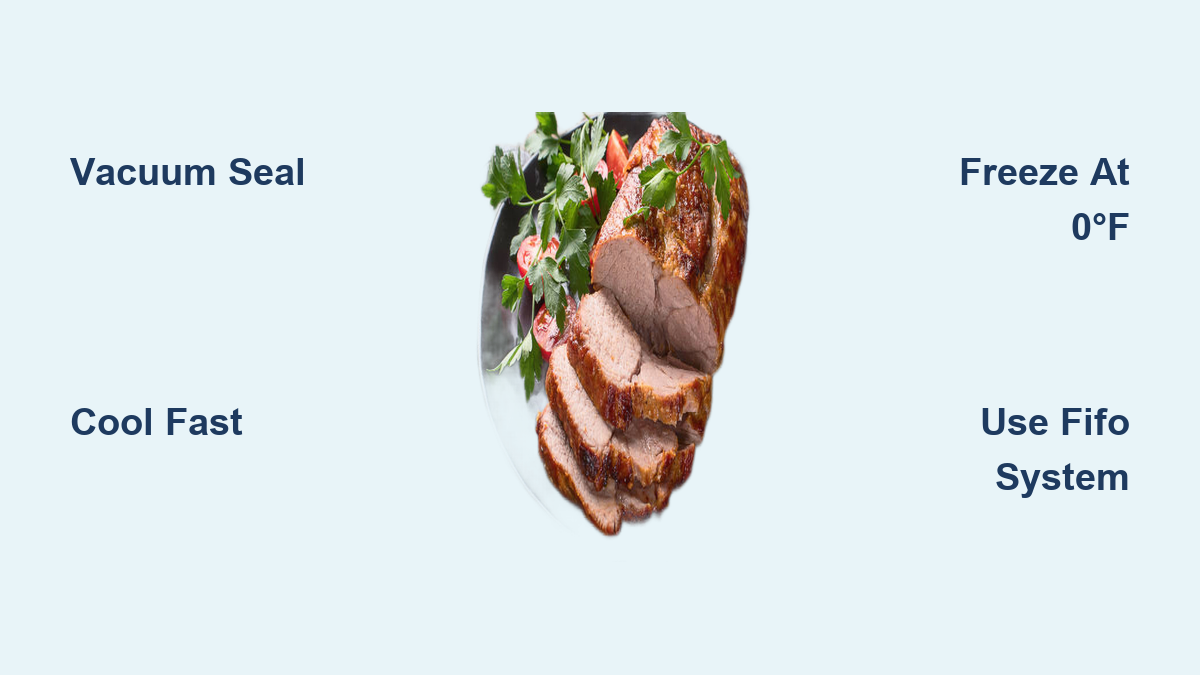
Vacuum sealing isn’t just helpful for cooked pork storage—it’s essential for achieving the twelve-month quality window most home cooks seek. The complete removal of air prevents oxidation and dramatically reduces freezer burn, the primary enemy of frozen meat quality. Standard freezer bags simply can’t match vacuum sealing’s protection against moisture loss and flavor degradation.
Portioning Strategies That Pay Off Later
Freeze cooked pork in single-meal portions to avoid repeatedly thawing and refreeezing larger quantities. Eight-ounce portions work perfectly for most sandwiches or individual servings, while one-pound portions suit family meals. This approach gives you flexibility—need just enough for lunch? Grab a single portion without disturbing the rest of your frozen supply.
The Double-Seal Safety Net
Experienced users swear by double-sealing vacuum packages: seal both ends of the bag for added protection against seal failures. Despite this precaution, occasional leaks still happen, usually due to moisture interfering with the seal. Check your newly sealed packages after two hours—if any show signs of air leakage, reseal them immediately before placing in the freezer. Periodically inspect your frozen inventory every three months to catch any compromised packages before quality suffers.
Sauces and Seasonings: To Add Before or After Freezing?
Whether to add barbecue sauce or other liquids before freezing cooked pork involves practical considerations beyond just taste preference. Sauce actually improves the vacuum sealing process by filling air pockets that might otherwise remain in the bag. The liquid creates better contact between the meat and packaging, resulting in more effective air removal and enhanced protection against freezer burn.
When to Freeze Pork Plain
If you enjoy experimenting with different sauce varieties or prefer controlling sauce quantities at reheating time, freeze your pork without added liquids. Plain frozen pork gives you maximum flexibility—you can add Carolina vinegar sauce for one meal and Kansas City sweet and spicy for another. This approach also prevents potential separation issues that sometimes occur when freezing sauced meat.
When Sauce-Added Freezing Wins
For your go-to favorite preparation that never changes, freezing pork already combined with sauce eliminates a step during reheating and ensures even flavor distribution. Many competition barbecue teams freeze their signature pulled pork with sauce already incorporated, knowing it will deliver consistent results when thawed. If you choose this method, use thicker sauces that won’t separate during freezing, and avoid adding extra liquid that could compromise the vacuum seal.
Troubleshooting Common Cooked Pork Freezer Problems
:max_bytes(150000):strip_icc()/can-you-eat-freezer-burned-food-4x3-0077cf2a25ca454686c8c91a5b625be5.jpg)
Even with careful preparation, issues sometimes arise during extended freezer storage. Recognizing and addressing these problems quickly prevents wasted food and ensures every meal delivers restaurant-quality results.
Ice Crystals Inside Vacuum Bags: What It Means
Finding ice crystals inside your vacuum-sealed pork package almost always indicates a compromised seal. While the meat may still be safe to eat if freezer temperature remained consistently below 0°F, quality has likely suffered. Before using, carefully inspect the meat for dry spots or off-flavors—trim away any freezer-burned sections. To prevent this issue, ensure your vacuum sealer’s heating element is clean and warm before sealing, and avoid overfilling bags with liquid that might interfere with the seal.
The Reheating Revolution: Sous Vide Method
Skip the microwave and transform your thawed cooked pork with sous vide reheating. Place the vacuum-sealed package in water heated to 145°F for 30-45 minutes—this gentle warming preserves moisture while bringing the pork to perfect serving temperature without overcooking. No special equipment needed: a pot on your stove with a reliable thermometer works perfectly. This method consistently delivers juicier results than traditional oven or stovetop reheating.
Smart Freezer Organization for Cooked Pork
How you organize your frozen cooked pork determines whether you’ll actually use it before quality declines. Label every package with both contents and freeze date using a freezer-safe marker—don’t rely on memory when multiple batches accumulate. Many vacuum sealers come with date-stamping features that make this step effortless.
The FIFO System That Prevents Forgotten Pork
Implement the “first in, first out” system by placing newer packages behind older ones in your freezer. When adding fresh batches, move existing packages forward so you’ll naturally grab the oldest ones first. Consider dedicating a specific shelf or bin exclusively to cooked pork products—this makes inventory checks quick and prevents accidental long-term storage. Every time you pull pork for a meal, take thirty seconds to reorganize your freezer inventory to maintain proper rotation.
Final Storage Guidelines for Perfect Frozen Pork
How long cooked pork in freezer storage maintains peak quality ultimately depends on your attention to detail during the critical preparation phase. Vacuum-sealed pork frozen promptly after proper cooling delivers exceptional results for twelve months in most home freezers, with quality preservation possible for up to two years under ideal conditions. The difference between mediocre and amazing results comes down to three key factors: rapid cooling before freezing, complete air removal during packaging, and consistent freezer temperature maintenance.
When planning your next large pork cook, implement these professional techniques: cool portions quickly in an ice bath, vacuum-seal in single-serving sizes with double seals, and organize your freezer with a strict first-in-first-out system. These simple steps transform your frozen cooked pork from a last-resort meal option into a convenient source of consistently delicious meals. By mastering exactly how long cooked pork in freezer storage maintains its quality, you’ll reduce food waste while always having restaurant-quality pork ready for impromptu meals, busy weeknights, or unexpected guests. The next time you face a surplus of perfectly cooked pork, freeze it with confidence knowing your future self will thank you for the delicious meal waiting in the freezer.