How to Thaw Turkey: Best Times & Tips
Nothing derails holiday dinner plans faster than discovering your turkey is still frozen solid when you need to start cooking. Pulling a frozen turkey from the freezer the night before Thanksgiving and expecting it to be ready by afternoon is a recipe for disaster—both in terms of food safety and perfectly cooked meat. Understanding exactly how long to take turkey out of freezer before cooking separates holiday heroes from last-minute panickers. This critical timing ensures your bird thaws completely and safely, preventing dangerous bacterial growth while maintaining optimal texture and flavor for your special meal.
The question of turkey thawing timelines matters because improper thawing leads to two equally disastrous outcomes: partially frozen turkeys that cook unevenly (resulting in dry breast meat and undercooked dark meat) or unsafe thawing methods that put your guests at risk of foodborne illness. The perfect thaw strikes a balance between complete defrosting and maintaining food safety throughout the process. This guide delivers precise timelines for every turkey size and thawing method so you can plan your holiday meal with absolute confidence.
Refrigerator Thawing: The Gold Standard for Safety
:max_bytes(150000):strip_icc()/ThawingTurkey-copy-957c05ecd59a41ac8e77829149f44a4d.png)
When you have ample time before cooking day, refrigerator thawing delivers the safest, most foolproof results with minimal hands-on effort. This method keeps your turkey consistently below 40°F throughout the thawing process, eliminating the risk of dangerous bacterial growth that occurs in the “danger zone” between 40°F and 140°F. The trade-off for this safety is advance planning—refrigerator thawing requires the most lead time of all approved methods.
The Critical 24-Hour-Per-5-Pound Rule
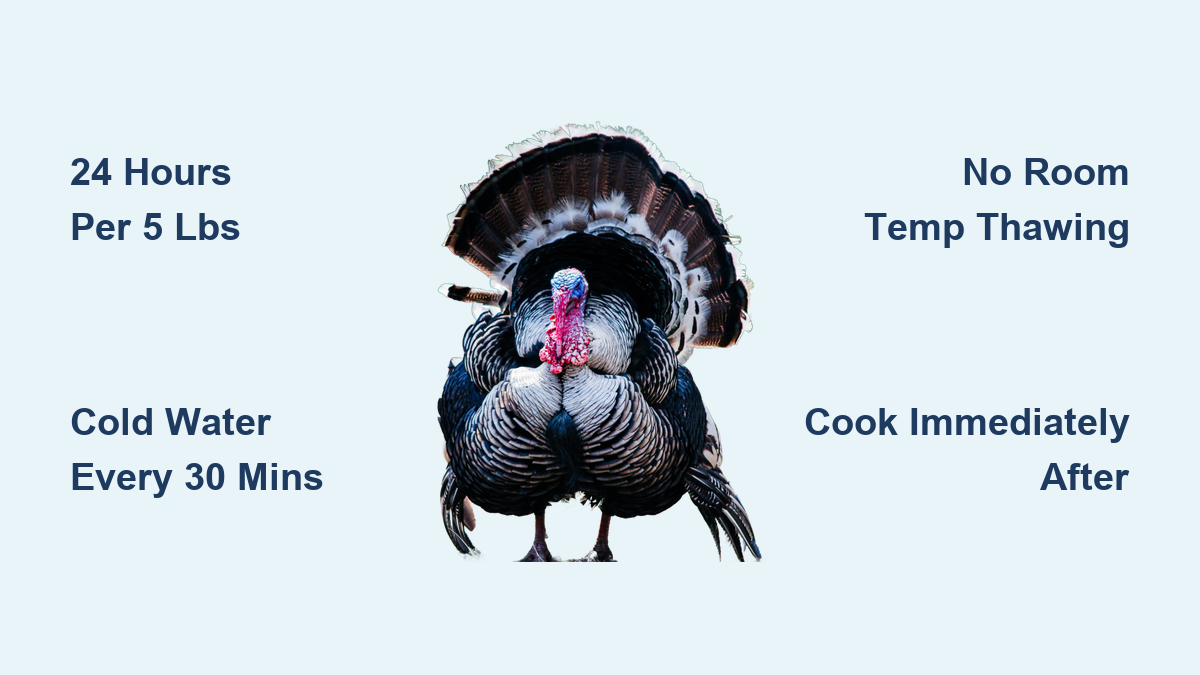
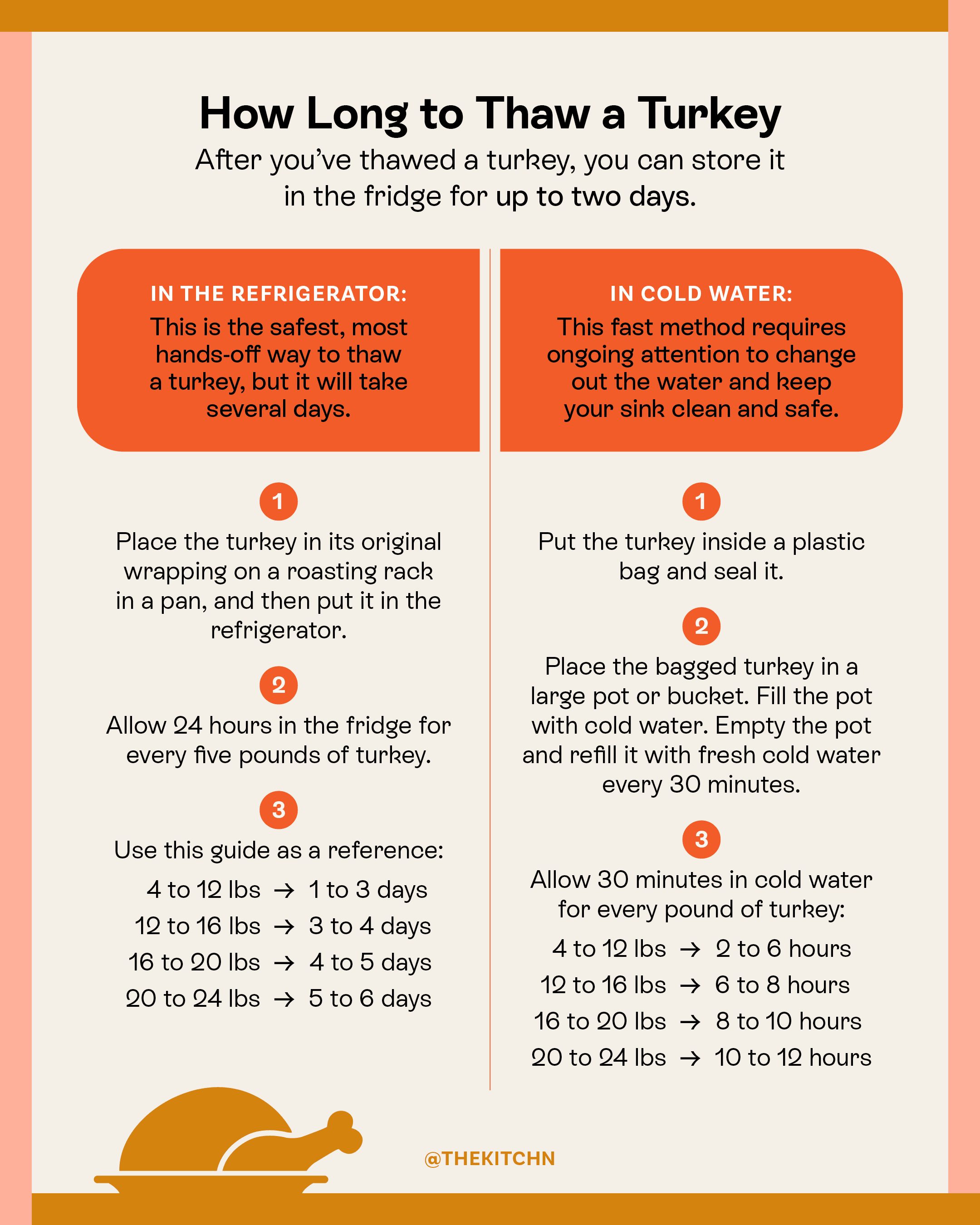
Follow this simple calculation: allow 24 hours of refrigerator time for every 4 to 5 pounds of turkey weight. For example, your standard 12-pound bird requires exactly 3 full days in the fridge, while that impressive 20-pound showstopper needs a full 5 days to thaw completely. This rule provides a reliable baseline, but keep in mind that actual thawing time can vary slightly based on your refrigerator’s temperature consistency and how densely packed your appliance is.
Pro Tip: Place your refrigerator thermometer next to the turkey during thawing to verify temperatures stay at or below 40°F—many refrigerators run warmer in the door compartments where people often place thawing birds.
Planning for Different Turkey Sizes
Your bird’s weight directly determines how long to take turkey out of freezer before cooking using refrigerator thawing. Small turkeys (4-12 pounds) need just 1-3 days, making them ideal for last-minute gatherings. Medium birds (12-16 pounds) require 3-4 days—perfect for standard family celebrations. Large turkeys (16-20 pounds) demand 4-5 days of advance planning, while those extra-large birds (20-24 pounds) need a full 5-6 days to thaw safely.
When scheduling your thaw, always work backward from your cooking day and add a buffer day. For a 16-pound turkey you plan to serve on Thursday, move it from freezer to refrigerator by Sunday morning at the latest. This gives you wiggle room if your plans change while ensuring complete thawing before cooking.
Post-Thawing Storage Flexibility
One major advantage of refrigerator thawing is the flexibility it provides—your turkey can safely remain in the refrigerator for 1-2 days after complete thawing if needed. Keep the bird in its original packaging to prevent cross-contamination, and always place it on a rimmed baking sheet or tray to catch any leaking juices. This simple step protects your other refrigerator contents from potential contamination while making cleanup effortless.
Cold Water Thawing: When Time Is Limited
When you’ve underestimated your thawing timeline or had a change of plans, cold water thawing provides a faster alternative that still maintains food safety. This method works by submerging your wrapped turkey in cold tap water, which transfers heat away from the bird approximately 30 times faster than air. However, this speed comes with significant responsibilities that must be followed precisely.
The 30-Minutes-Per-Pound Requirement
For cold water thawing, plan on 30 minutes of thawing time per pound of turkey weight. A 12-pound bird requires 6 hours of active thawing, while a 20-pound turkey needs a full 10 hours. Crucially, this means you must begin thawing early in the day if you plan to cook in the evening—no last-minute thawing with this method.
Critical Warning: You must change the water every 30 minutes without exception. As the water absorbs heat from the turkey, its temperature rises rapidly—within 30 minutes, it can reach temperatures where bacteria multiply quickly. Set multiple phone alarms to ensure you don’t forget this vital step.
Immediate Cooking Requirement
Unlike refrigerator thawing, a turkey thawed using the cold water method must go directly into the oven after thawing completes—no exceptions. Do not attempt to refreeze or refrigerate the bird after cold water thawing, as the temperature fluctuations may have allowed bacterial growth in the outer layers. This means precise planning: know exactly when you’ll begin cooking before you start thawing.
Microwave Thawing: The Emergency Option Only
Microwave thawing should be reserved for true emergencies when you’ve completely forgotten to plan ahead. While it offers the fastest thawing time, this method carries significant risks of partial cooking and uneven thawing that can compromise food safety and cooking results.
Following Your Microwave’s Specific Guidelines
Check your microwave owner’s manual for precise instructions—thawing times vary dramatically between models. Remove all non-microwave-safe packaging before beginning, as melted plastic or melted styrofoam trays can ruin both your turkey and microwave. Place the turkey on a microwave-safe dish to catch leaking juices and prevent messy splatters inside your appliance.
Expert Note: Microwave thawing works best for birds under 12 pounds. Larger turkeys rarely thaw evenly in standard home microwaves, leaving frozen centers while outer portions begin to cook.
Essential Food Safety Practices for Every Method
:max_bytes(150000):strip_icc()/RS_TurkeyInfographic_final2-e89cb711e37c41b687de38ebb0ad6f76.jpg)
Regardless of your chosen thawing method, these non-negotiable safety practices protect your guests from foodborne illness:
- Temperature Verification: Use a food thermometer to confirm your cooked turkey reaches 165°F in the thickest part of the thigh and center of any stuffing
- Cross-Contamination Prevention: Wash hands thoroughly before and after handling raw turkey, and sanitize all surfaces and utensils that contact the bird
- Giblet Removal: Always remove neck and giblets from cavities after thawing—they require separate cooking and can affect overall thawing time if left inside
The Most Common Thawing Mistakes to Avoid
Understanding what not to do is as important as knowing the correct procedures:
- Room Temperature Thawing: Never leave your turkey to thaw on the counter—the outer layers enter the danger zone while the center remains frozen
- Hot Water Thawing: Using warm water speeds bacterial growth dramatically—only cold tap water is safe for water-based thawing
- Skipping Water Changes: Forgetting to change water every 30 minutes during cold water thawing creates perfect conditions for bacteria
Final Thawing Recommendations for Holiday Success
When planning how long to take turkey out of freezer before cooking, always give yourself more time than you think you need. The refrigerator method remains the gold standard for safety and convenience despite requiring the longest duration. If you’re unsure whether your turkey is completely thawed, allow additional time—your patience will be rewarded with a safely thawed bird that cooks evenly.
For foolproof holiday planning, mark your calendar with “turkey thaw start date” well before your cooking day. For a standard 16-pound turkey, move it from freezer to refrigerator one full week before Thanksgiving. If you discover on Monday you need to cook Thursday, switch immediately to cold water thawing and set hourly reminders to change the water. Reserve microwave thawing for true emergencies only, and always cook immediately afterward.
By following these precise timelines and safety guidelines, you’ll eliminate one of the most stressful aspects of holiday meal preparation. Knowing exactly how long to take turkey out of freezer before cooking transforms what could be a food safety nightmare into a smooth, confident cooking experience—leaving you free to enjoy the holiday with your loved ones rather than worrying about last-minute kitchen crises.