Chest Freezer Organization Tips
A disorganized chest freezer costs you money, time, and food. When you can’t see what you have, you buy duplicates, waste energy searching through frozen chaos, and often end up with frostbitten items buried at the bottom. Learning proper chest freezer organisation transforms this bulky appliance into an efficient storage system that saves both money and frustration.
This guide walks you through everything from initial planning and zoning strategies to practical bin systems and maintenance routines. Whether you’re staring at an empty new freezer or trying to rescue a decade of frozen disorder, these proven techniques will help you build a system that lasts. Discover how strategic chest freezer organisation can cut your food waste by up to 30% while making meal preparation faster and more efficient.
Why Chest Freezer Organisation Saves You Hundreds Annually
The average household wastes hundreds of dollars annually in lost or spoiled frozen food. Without a clear organization system, items get pushed to the back, forgotten, and eventually discarded. Beyond the financial cost, disorganization forces your freezer to work harder, increasing energy consumption and shortening the appliance’s lifespan.
Proper chest freezer organisation solves multiple problems simultaneously. You gain the ability to inventory your stock at a glance, rotate items using first-in-first-out principles, and locate specific ingredients within seconds. This efficiency reduces door-open time, preserving temperature consistency and cutting energy costs. Families particularly benefit from organized systems that make meal planning simpler and reduce food waste—critical when grocery budgets are tightening.
How Disorganization Increases Your Electricity Bill
Every time you leave the freezer lid open searching for items, warm air floods in, forcing the compressor to work overtime. An unorganized chest freezer typically stays open 3-5 times longer than an organized one during each use. Over a year, this seemingly minor difference adds up to significant energy waste and higher utility costs that most homeowners never connect to their freezer habits.
Design Your Chest Freezer Zones for Maximum Efficiency
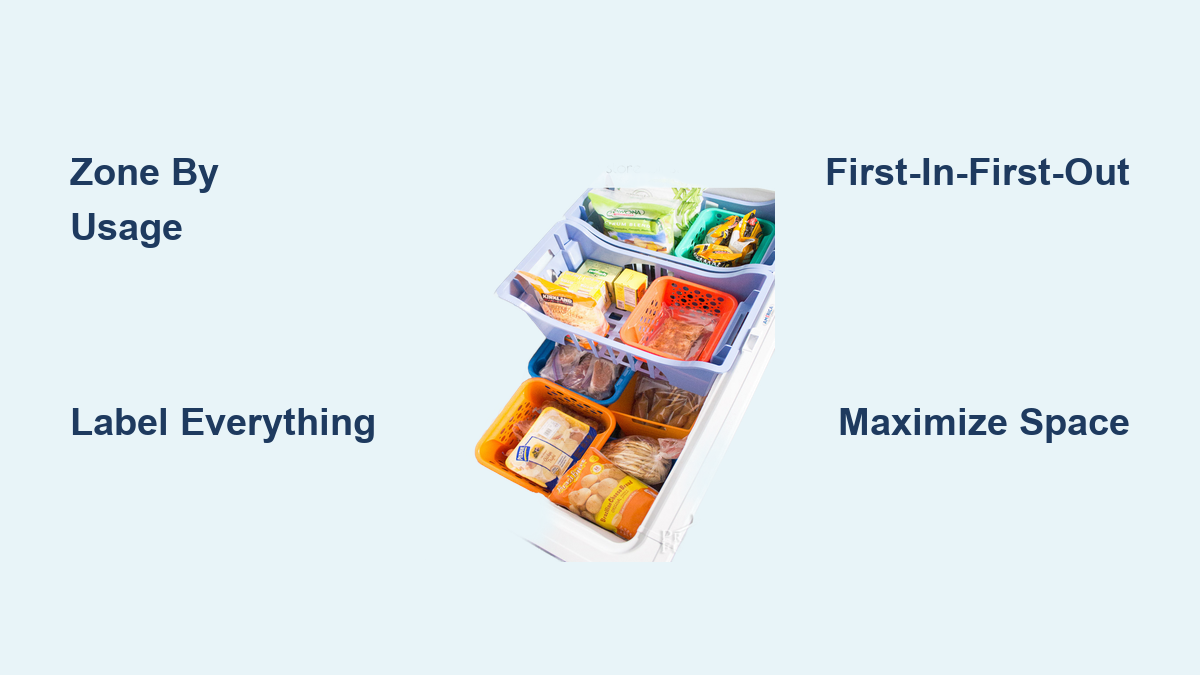
Effective chest freezer organisation starts with strategic zoning. Rather than randomly stacking items, divide your freezer into dedicated sections based on usage frequency and category. This spatial planning creates a logical flow that becomes second nature after just a few uses.
Assign the easiest-access areas to items you use weekly—commonly frozen vegetables, bread, and frequently-cooked proteins. Middle zones work well for monthly staples like bulk meat purchases and prepared meal components. Reserve the deepest, hardest-to-reach back corners for long-term storage items you won’t need for several months, such as seasonal harvests or emergency supplies.
Zone Layout Strategies for Different Household Types
Consider your household’s specific habits when designing zones. A family with teenage athletes might prioritize a dedicated protein section, while meal-prep enthusiasts might create entire zones for freezer meals organized by preparation date. Write down your typical weekly meals and reverse-engineer your zone layout from that pattern. For households with multiple cooks, use color-coded zones that everyone can recognize instantly.
Select the Perfect Storage Containers for Your Chest Freezer
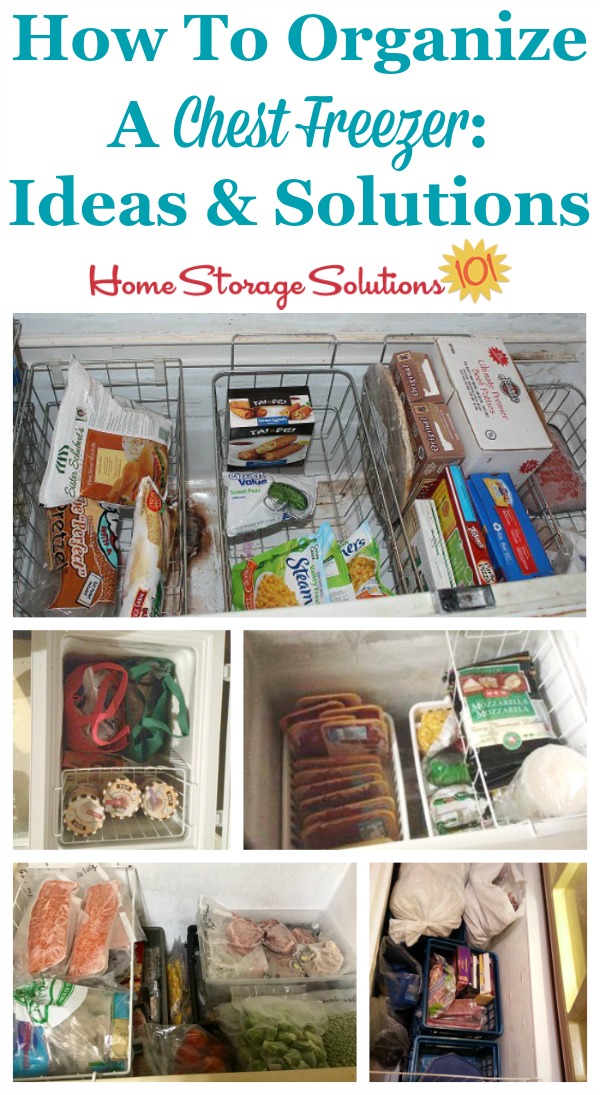
The right containers make or break any chest freezer organisation system. Invest in bins and baskets that fit your freezer’s specific dimensions while allowing for air circulation. Rigid plastic containers with lids protect fragile items and stack neatly, while fabric or wire baskets offer visibility and flexibility.
Select containers in varying sizes to match different food categories. Large bins handle bulky items like whole chickens or bags of frozen vegetables, while smaller containers corral miscellaneous items like leftover bread or emergency ice packs. Uniform container sizes simplify stacking and create visual consistency, though mixing a few different depths adds useful variety.
Material Matters: Choosing Freezer-Safe Containers
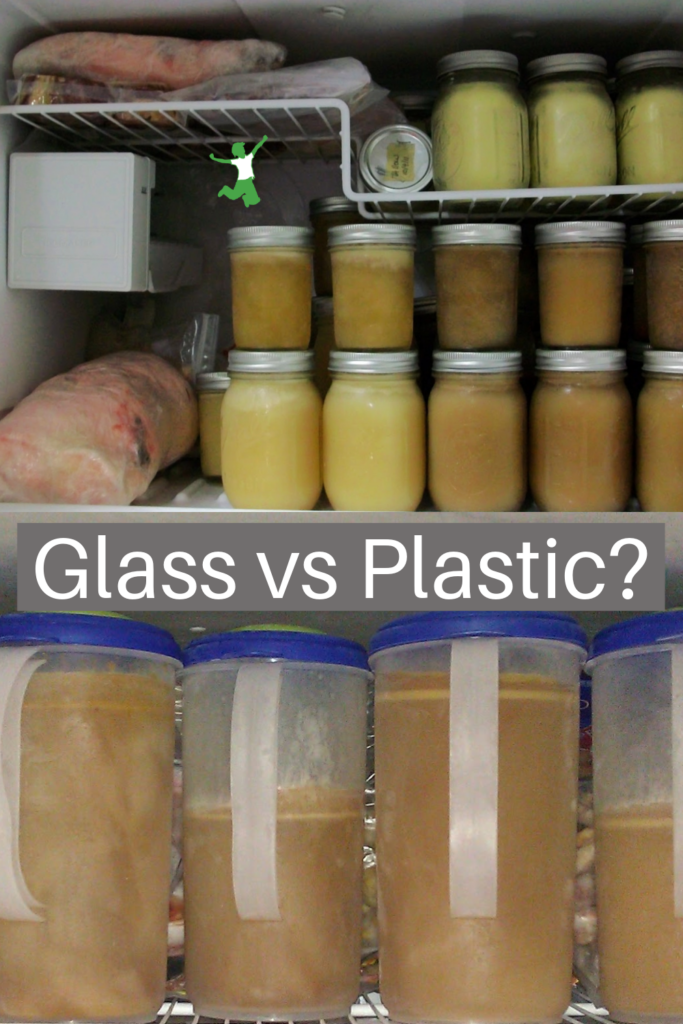
Material selection matters significantly in freezing conditions. BPA-free plastic containers withstand low temperatures without becoming brittle. Look for containers specifically rated for freezer use, as regular food storage containers may crack or warp over time. Some organisers prefer glass containers for their durability and zero porosity, though they add considerable weight and require careful handling. Avoid containers with thin plastic that becomes brittle in freezing temperatures—they’ll crack when you least expect it.
Create a Foolproof Labeling System for Your Frozen Goods
Labels transform a good organisation system into a sustainable one. Without clear identification, even perfectly arranged bins become mysterious containers that you dread opening. Develop a labeling habit that covers contents, date frozen, and any relevant usage notes.
Permanent marker labels work well for quick identification on containers and bags. Write the contents and freeze date prominently, positioning labels where they remain visible regardless of stacking arrangement. For a more polished system, use label makers or printable labels that wrap around containers consistently.
The Master Inventory List That Prevents Food Waste
Consider a master inventory list taped to the freezer lid or interior wall. This running log tracks what’s in each section, dates when you added items, and helps you monitor rotation without digging through every container. Update this list each time you add or remove significant items, and you’ll never lose track of that emergency soup stock buried beneath last summer’s berries. During monthly inventory checks, cross off used items and note when you need to restock.
Implement First-In-First-Out Rotation Without Fail
First-in-first-out rotation prevents food waste by ensuring older items get used before newer purchases. This principle becomes crucial when you buy in bulk or freeze seasonal produce. Implementing FIFO in your chest freezer organisation requires consistent habits rather than complex systems.
When adding new items, place them behind existing stock in the same category zone. This simple positioning makes grabbing the oldest item automatic—you simply reach for the front. For bagged items, flatten them to create uniform shapes that stack easily and freeze quickly. Group similar items together and date them with squeeze markers or masking tape.
Monthly Inventory Checks That Save Money
Regular inventory checks, perhaps monthly, catch items approaching their quality limits before they become waste. During these checks, move older items to the front of their zones and consolidate partial bags to maximize space. Mark items clearly with their contents and date, and consider adding brief notes about recommended usage windows or recipe ideas. This habit alone can save more food than almost any other organization technique.
Maximize Every Inch of Chest Freezer Space Strategically
Maximizing your freezer’s storage capacity requires strategic packing techniques that balance density with accessibility. The goal isn’t simply fitting more inside—it’s organizing that extra capacity so nothing gets lost or forgotten.
Stack items in uniform layers, placing heavier, denser items at the bottom and lighter, more fragile items on top. Flatten bags of frozen vegetables or bread before stacking to create stable platforms. Use the vertical space above tall items by placing smaller containers in the resulting gaps, treating these as bonus storage zones.
Air Circulation vs. Storage Density Balance
Leave small air gaps between containers and walls to promote air circulation, which helps your freezer maintain consistent temperature more efficiently. However, avoid leaving large empty spaces, as these force the compressor to work harder. If you have extra capacity, freeze water-filled containers to fill gaps while providing emergency ice supplies. Your freezer operates most efficiently when it’s about 75% full—enough to retain cold but with room for air movement.
Organize by Category Type for Instant Access
Grouping similar items together forms the foundation of functional chest freezer organisation. This categorization makes inventory quick, simplifies meal planning, and helps family members locate items independently. Most households benefit from five to seven primary categories, though your specific needs may vary.
Proteins typically constitute the largest category, so allocate generous space for beef, poultry, fish, and pork. Separate raw meats from cooked items and consider further subdivision based on planned use—ground beef for tacos versus steak for grilling, for instance. Store proteins in the coldest zones since these items require the most consistent temperatures.
Category-Specific Organization Tips
Prepared foods and leftovers deserve their own zone, ideally near the front for quick access. Store these in portion-sized containers that thaw quickly and reheat evenly. Frozen vegetables, fruits, and baked goods each work well in dedicated bins that keep small items from scattering throughout the freezer. If you freeze meals for specific dietary needs (like gluten-free or baby food), give these their own clearly marked sections.
Avoid These 3 Costly Chest Freezer Organisation Mistakes
Several habits undermine even well-planned chest freezer organisation systems. Understanding these pitfalls helps you build sustainable habits that maintain order long-term.
Overfilling the freezer blocks air circulation, leading to inconsistent temperatures and increased energy consumption. Your freezer should be full enough to retain cold efficiently but open enough that air can circulate around items. If you can’t close the lid easily, you’ve gone too far.
Neglecting to date items creates mystery containers that no one wants to open. Make freeze-dating a non-negotiable habit, even for items that seem obviously labeled. That “obvious” container becomes mysterious after six months when you’ve forgotten its contents.
Skipping inventory checks allows forgotten items to accumulate at the back, eventually becoming waste. Schedule monthly checks where you examine every container, move older items forward, and update your master list. This habit alone can save more food than almost any other organization technique.
Build Sustainable Chest Freezer Habits That Last
Long-term chest freezer organisation success depends on habits rather than initial effort. The most beautiful system fails if it doesn’t accommodate real-life constraints and human tendencies. Design your system around how you actually cook, not how you imagine you should cook.
Make returning items to their designated zones as automatic as possible. Family members should immediately know where things belong without consulting lists or thinking carefully. Use consistent container types that fit specific spots, creating visual cues that guide proper storage.
Review and adjust your system seasonally. Summer produce differs from winter stocks, and your usage patterns shift throughout the year. Maybe you need a larger vegetable zone during harvest season or more protein storage during grilling months. Flexibility within your overall framework keeps the system working through changing needs.
A well-organized chest freezer saves money, reduces waste, and makes meal planning simpler. The investment in proper bins, thoughtful zoning, and consistent labeling pays dividends in reduced food waste and stress-free cooking. Start with one zone this week, building out your system gradually rather than attempting perfection in a single session. Remember that the best system is the one you’ll actually maintain—build it thoughtfully, maintain it consistently, and enjoy the benefits of a freezer that works for you instead of against you.