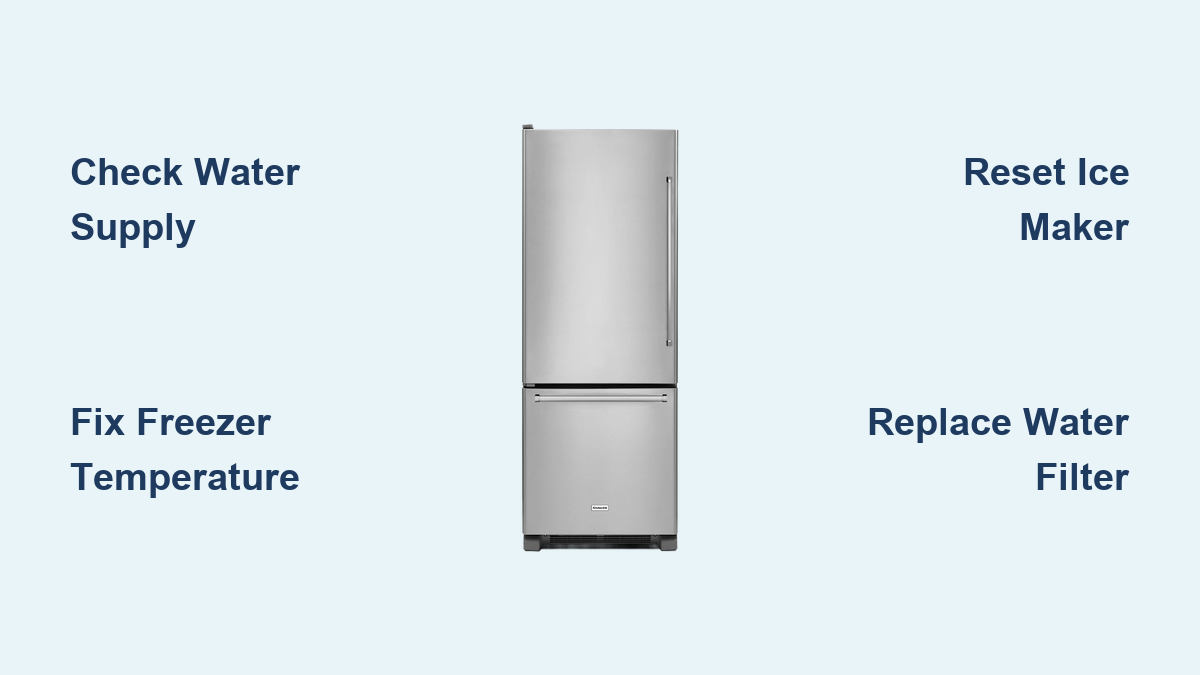
Fix KitchenAid Bottom Freezer Ice Maker Not Working
When your KitchenAid bottom freezer refrigerator stops producing ice, the disruption affects everything from morning beverages to evening meals. Fortunately, most ice maker failures stem from a handful of common issues that you can diagnose and resolve without calling a service technician. This guide walks you through every potential cause, from simple fixes like checking the water supply line to more involved procedures like resetting the ice maker module. By working through these troubleshooting steps systematically, you’ll restore ice production and prevent future problems from developing.
The ice maker in your KitchenAid bottom freezer relies on several interconnected systems working in harmony. The water supply must deliver adequate pressure, the freezer must maintain the proper temperature, and the ice maker itself must be activated and functioning correctly. When any single component fails or operates outside its parameters, the entire ice-making process can grind to a halt. Understanding how these systems interact helps you pinpoint the exact cause of your ice maker problem and apply the right solution.
Verify Water Supply Connections Before Calling for Service
A disconnected or restricted water supply represents the most common cause of ice maker problems. The water line must maintain secure connections at both the refrigerator inlet valve and the household water supply valve. Even a partially loose connection can reduce water pressure below the level required for proper ice maker operation, resulting in small or misshapened cubes—or no ice production at all.
Begin your inspection at the point where the water line connects to your refrigerator. This connection typically located at the rear of the unit where the water inlet valve mounts. Check that the fitting is secure and that no water stains or mineral deposits indicate a slow leak. Move backward along the line to the household supply valve, ensuring the valve is fully opened. Some homeowners accidentally partially close these valves during cleaning or when moving appliances for renovation work.
Examine the entire length of the water supply line for any kinks, sharp bends, or obstructions. The plastic tubing used in most refrigerator installations can develop permanent kinks if bent too sharply, and these constrictions significantly reduce water flow even when they don’t completely block the line. If you discover kinks, carefully straighten the affected sections. One often-overlooked cause of water line problems is the refrigerator being pushed too far back against the wall. When this happens, the water line can get compressed between the appliance and the wall or cabinet, restricting flow without any visible damage to the tubing itself.
How to Test Water Pressure at the Inlet Valve
Pro Tip: If you suspect low water pressure, perform this simple test: disconnect the water line from the refrigerator’s inlet valve and direct it into a measuring cup. Turn on the household supply valve and time how long it takes to fill one cup. Proper flow should fill a cup in 10-15 seconds. If it takes longer, you have a pressure issue that requires addressing before the ice maker can function properly.
Fix Incorrect Freezer Temperature Settings Immediately

The freezer temperature directly determines whether your ice maker can produce ice at all. For reliable ice production, the freezer must maintain a temperature between zero and five degrees Fahrenheit, which is roughly negative seventeen to negative fifteen degrees Celsius. When temperatures rise above this range, the water in the ice maker mold cannot freeze properly, and production either slows dramatically or stops entirely.
Temperature problems often develop gradually as door seals wear out or when someone accidentally adjusts the temperature settings during interior cleaning. A common scenario involves a household member adjusting controls to accommodate a large grocery shopping trip, then forgetting to reset the settings afterward. Alternatively, a door that doesn’t seal properly—due to debris on the gasket or a misaligned hinge—allows warm air to infiltrate the freezer compartment, gradually raising the temperature.
Check your freezer temperature using an accurate appliance thermometer placed in a container of ice water. Leave it for eight hours to get an accurate reading, as the thermometer needs time to stabilize. If the reading shows temperatures above five degrees, adjust your freezer settings downward in one-degree increments and wait twenty-four hours for the compartment to stabilize at the new setting before evaluating ice production. Remember that after any temperature adjustment, you should allow approximately one full day for the freezer to reach and maintain the new temperature before concluding whether the adjustment resolved your ice maker issue.
Reset Your KitchenAid Ice Maker in 30 Seconds Flat
A surprisingly common reason for ice maker failure is that the unit has been accidentally deactivated. This can happen during routine interior cleaning, when adjusting shelves and bins, or through inadvertent contact with the on/off control. Before proceeding with more complex diagnostics, verify that your ice maker is turned on according to your model’s specifications.
If your ice maker includes a reset button, this simple procedure can resolve minor operational glitches and clear temporary errors from the unit’s programming. Locate the reset button on your specific ice model—consult your owner’s manual for exact positioning if you’re uncertain. Press and hold the reset button for approximately ten seconds to initiate a complete restart cycle. You’ll typically hear the mechanism cycle as it resets, and the ice maker should begin a new production sequence within a few minutes.
For KitchenAid models without a dedicated reset button, perform a power cycle instead. Unplug the refrigerator from its power source for one full minute, which allows the electronic control system to fully reset. This procedure clears software-related issues and reinitializes all connected systems. After reconnecting power, wait for the refrigerator to complete its restart sequence, which usually takes about five minutes for the compressor and fans to begin operating normally. The ice maker itself requires approximately twenty-four hours to resume normal production after a power cycle, so be patient during this transition period.
Warning: Ice Maker Buzzing Sound Indicates Serious Problem
One important warning applies to ice makers that are turned on but not connected to a water supply. In this situation, you may hear a persistent buzzing noise as the water inlet valve repeatedly attempts to fill a non-existent water line. This continuous operation can cause the refrigerator to run excessively cold, potentially freezing food items in the crisper drawers and making the freezer compartment too cold. If you hear this buzzing sound, turn the ice maker off until you can verify and establish a proper water connection.
Replace Clogged Water Filter to Restore Ice Production

Water filter issues frequently cause ice maker failures, particularly in refrigerators that haven’t had filter replacements according to the recommended schedule. An improperly installed, clogged, or incompatible filter can reduce water flow to the point where the ice maker cannot fill properly, resulting in diminished production or complete cessation of ice making.
If you’ve recently replaced the water filter, improper installation is the most likely culprit. An incorrectly seated filter creates a poor seal with the housing, which either restricts flow or allows water to bypass the filter entirely. To test installation, remove the filter from the housing and attempt to dispense water through the refrigerator’s water dispenser. If water flows normally with the filter removed but flow is restricted when the filter is installed, the filter was not properly seated. Remove and reinstall the filter, making sure it rotates fully into the locked position and creates a complete seal with the housing.
KitchenAid recommends replacing the water filter every six months, when the filter change indicator light illuminates, or as needed based on your water quality and usage patterns. In households with hard water or high water consumption, more frequent replacement may be necessary. Signs that your filter needs replacement include reduced ice production, slower water dispensing from the dispenser, and any unusual taste or odor in the ice.
Critical Filter Selection Guidelines
Always use everydrop water filters specifically designed for your KitchenAid refrigerator model. Generic or aftermarket filters may fit loosely, creating flow restrictions or bypass conditions, and they typically don’t provide the same level of contaminant reduction as OEM filters. Using approved filters also ensures your water quality certification remains valid and maintains your refrigerator’s warranty coverage.
Flush Water System After Filter Replacement Properly
Whenever you install a new water filter or reconnect the water supply to your refrigerator, you must flush the system’s water lines before resuming normal ice production. This flushing process removes excess air from the lines, prepares the new filter for optimal performance, and eliminates loose carbon particles from the filter medium. Proper flushing ensures clean, clear ice and prevents aesthetic issues that can make ice unappealing.
For refrigerators with water dispensers, the flushing procedure involves dispensing a specific volume of water through the dispenser. Different filter types require different flushing volumes—some need one gallon while others require two or four gallons for complete preparation. Consult the filter’s installation instructions for exact flushing requirements. During flushing, you’ll notice the water flow may be irregular or sputtering as air is purged from the lines. This is normal and indicates the flushing process is working correctly.
If your refrigerator lacks an internal water dispenser, you accomplish the same objective by making and discarding ice. After connecting to a water source or replacing the water filter, allow the ice maker to produce its first batch of ice, then discard these cubes. Repeat this process two more times, discarding a total of three full ice container batches. This procedure flushes the system by running water through the lines and filter multiple times, preparing everything for regular ice production.
Recognizing Incomplete Flushing Symptoms
Insufficient flushing produces characteristic symptoms that help you identify when additional flushing is needed. Watch for dripping at the dispenser, which indicates air still trapped in the lines. Unusually small or hollow ice cubes suggest the ice maker is filling with air instead of water, a classic sign of incomplete system preparation. Cloudy water appearance when dispensing also points to inadequate flushing. If you notice any of these conditions after filter replacement or water line service, continue flushing until the water runs clear and the ice cubes appear normal.
Prevent Future Ice Maker Failures with Simple Maintenance
Regular maintenance extends your ice maker’s operational lifespan and ensures consistent ice production for years to come. Beyond addressing problems as they arise, implementing a preventive maintenance routine helps you avoid many common failure modes entirely.
Periodically inspect the ice maker assembly for visible frost buildup, which can indicate temperature fluctuations or door sealing problems. Frost inside the ice maker compartment suggests warm air is entering the freezer, either through a failing door seal or because the door isn’t closing completely. Clean the ice storage bin regularly using mild soap and water, avoiding harsh chemicals that could contaminate your ice supply. Make sure the bin is properly positioned and that the feeler arm on manual-defrost models moves freely without obstruction from ice clumps or debris.
Monitor your ice production rates over time and note any changes in output or cube quality. A gradual decrease in daily ice production often precedes complete failure and can provide early warning of developing problems. Similarly, changes in ice cube clarity, hardness, or shape may indicate water quality issues or developing mechanical problems. Keeping a log of filter replacement dates and any service performed helps you track maintenance needs and identify recurring patterns.
Before calling for service, gather information about your refrigerator’s model and serial number, when the problem began, and any changes or events that preceded the failure. This information helps service technicians diagnose problems more efficiently and can often distinguish between issues covered under warranty and those requiring out-of-pocket service.
When professional service is necessary, a qualified technician can diagnose internal component failures using specialized test equipment. Water inlet valve replacement, ice maker module replacement, and electronic control board replacement are all within the capability of authorized service providers. These repairs typically require specific tools and genuine replacement parts to ensure proper function and maintain warranty coverage.
Regular maintenance, including timely water filter replacement and periodic inspection of your water supply line, prevents most ice maker problems and ensures years of reliable service from your KitchenAid bottom freezer refrigerator. By staying proactive about maintenance and addressing issues promptly when they arise, you maximize your investment in quality appliances while enjoying consistent ice production for your household needs.