Freezer Kill Lice? How Cold Affects Lice and What Works Better
If you’ve ever searched for chemical-free lice treatment options, you’ve likely wondered: does freezer kill lice? The answer isn’t simple—while freezing temperatures can eliminate lice under specific conditions, it’s not a reliable solution for active head infestations. Many parents and caregivers waste precious time trying to freeze lice off their child’s head, only to discover the pests remain stubbornly alive. Understanding exactly when freezing works (and when it fails completely) can save you from ineffective treatments and help you choose methods that actually eliminate lice for good.
This article cuts through the confusion with science-based facts about freezing as a lice treatment. You’ll learn why putting your head in the freezer won’t work (and could be dangerous), discover the precise temperature and time requirements needed to kill lice on personal items, and get proven alternatives that deliver real results. Whether you’re dealing with your first lice outbreak or frustrated by recurring infestations, this guide provides the clarity you need to eliminate lice efficiently and permanently.
Freezing Temperatures That Actually Kill Lice
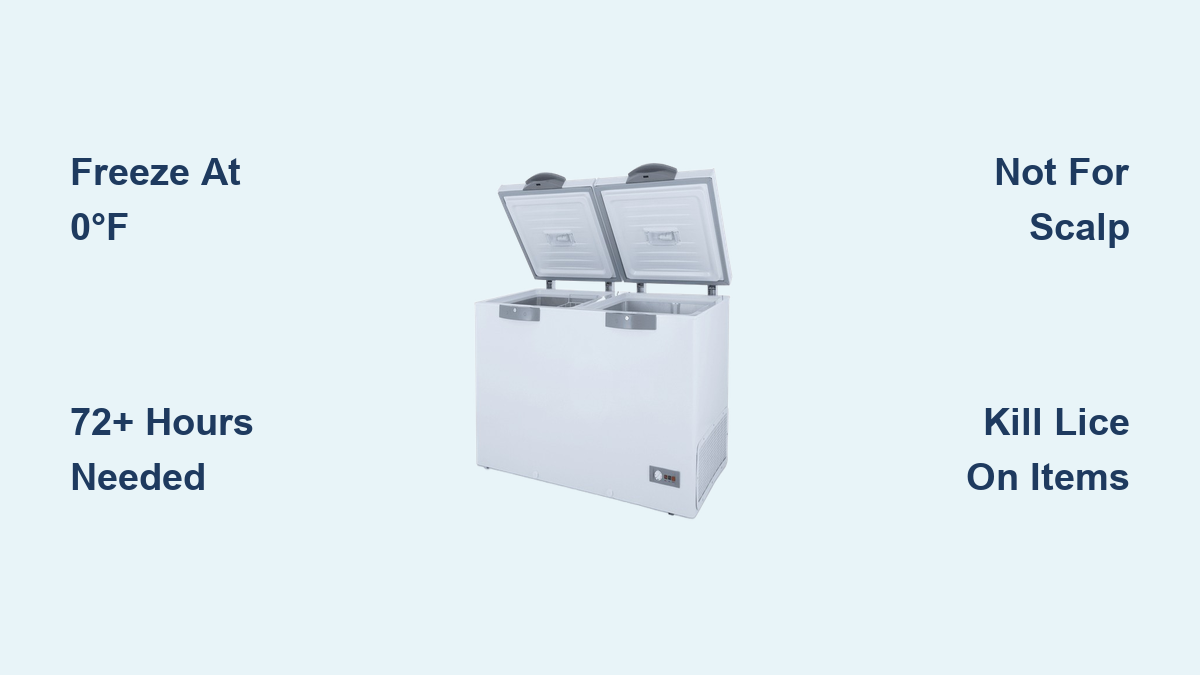
To effectively use freezing against lice, you must understand the exact temperature thresholds required. Research shows that sustained exposure to 0°F (-18°C) or lower will kill adult lice within several hours—conditions commonly found in household freezers. However, this only works when lice are completely isolated from a human host. The moment lice attach to a scalp, the game changes dramatically because your body maintains a constant 98.6°F temperature regardless of external conditions.
Nits (lice eggs) require even more extreme treatment due to their protective shell and glue-like attachment to hair shafts. These resilient eggs can withstand temperatures as low as 14°F (-10°C) for multiple days, making them significantly harder to eliminate through freezing than adult lice. This explains why many people report failed attempts at freezing lice—they simply didn’t maintain sufficiently low temperatures for long enough periods.
How Long Items Must Stay Frozen for Maximum Effectiveness
For freezing to work on personal items, follow these precise guidelines:
- Hairbrushes and combs: Seal in an airtight bag and freeze for at least 48 hours at 0°F or below
- Small stuffed animals: Freeze for 72+ hours, checking that cold penetrates the entire item
- Hats and scarves: Not recommended for freezing due to inconsistent temperature penetration
Critical mistake to avoid: Simply placing items in the freezer for a few hours won’t kill all lice or nits. Thick materials create insulated pockets where temperature doesn’t drop sufficiently, allowing pests to survive. Always verify your freezer maintains a consistent 0°F or lower using a separate thermometer—many household freezers fluctuate above this critical threshold.
Why Freezing Your Head Is Dangerous and Ineffective

Any search for “does freezer kill lice” inevitably leads to dangerous suggestions about freezing the scalp directly. This approach fails completely due to your body’s remarkable temperature regulation. When cold is applied to your head, lice instinctively move closer to the scalp and grip hair strands tighter to escape the chill—while your body maintains the critical 98.6°F environment they need to survive.
The Science Behind Your Body’s Lice Protection
Your scalp functions as a built-in lice sanctuary through three key biological mechanisms:
- Blood flow regulation: Your body increases blood flow to the scalp when cold is detected, maintaining warmth
- Hair insulation: Hair strands create a protective microclimate that buffers external temperature changes
- Lice behavioral adaptation: Lice detect temperature changes and move toward the warmest part of the hair shaft
Attempting to freeze lice directly on your head requires temperatures so extreme (0°F or lower) that they would cause severe frostbite and tissue damage long before affecting the lice. Dermatologists warn that prolonged exposure to freezing temperatures on the scalp can cause permanent hair follicle damage and skin necrosis—risks that far outweigh any theoretical lice-killing benefits.
Freezing Personal Items: When It Actually Works
Freezing finds its legitimate role in lice treatment only as a supplementary step for non-washable items after completing primary head treatment. The process works because isolated lice eventually die from starvation when separated from their human host, and freezing accelerates this natural death process.
Step-by-Step Guide to Freezing Lice-Contaminated Items
Follow this protocol for maximum effectiveness:
- Seal items properly: Place each item in its own airtight plastic bag to prevent cross-contamination
- Verify freezer temperature: Use a separate thermometer to confirm 0°F or lower throughout the freezer
- Freeze for sufficient time: Leave items in the freezer for at least 72 hours (longer for bulky items)
- Thaw safely: Allow items to return to room temperature before use to prevent condensation damage
Important limitation: Freezing won’t reliably kill nits on fabric items due to their protective shells. For bedding, clothing, and washable items, hot water treatment (130°F+) with high-heat drying remains vastly more effective than freezing.
Cold Water vs Hot Water: The Critical Temperature Difference
Many people confuse cold water treatments with freezing effectiveness, but the two approaches yield dramatically different results. Cold water showers or rinses won’t kill lice because water temperature remains above freezing—typically between 50-70°F. When exposed to cold water, lice simply move closer to the scalp and wait out the temporary discomfort.
Why Heat Works When Cold Fails
The temperature threshold for killing lice reveals why heat treatments succeed where cold fails:
- Cold water (below 70°F): Lice become temporarily less active but suffer no harm
- Room temperature (70-90°F): Ideal conditions where lice thrive and reproduce
- Hot water (130°F+): Kills lice within 5 minutes through dehydration and protein denaturation
This explains why washing bedding in hot water followed by high-heat drying eliminates lice effectively, while cold water treatments merely provide temporary discomfort to the pests. For items that can’t withstand hot water, sealing them in plastic bags for 14 days (to starve any lice) works better than freezing.
How Long Lice Survive Without a Host in Cold Conditions
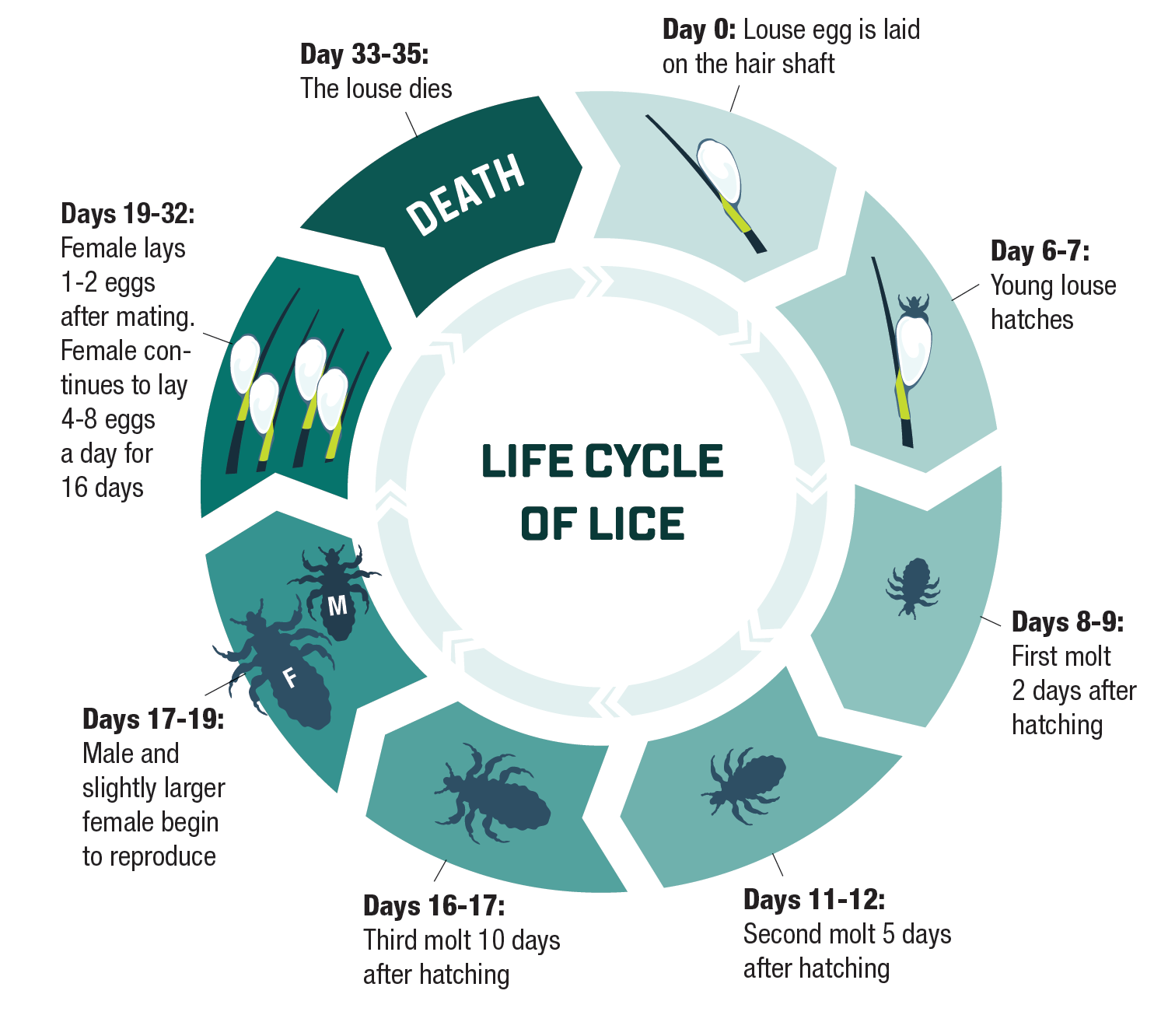
Understanding lice survival timelines off the human head provides crucial context for evaluating freezing effectiveness. Head lice separated from their food source typically die within 24-48 hours due to starvation—not directly from cold exposure. This natural death timeline means that isolation alone can eliminate lice from objects, with freezing merely accelerating the process.
Survival Rates at Different Temperatures
| Temperature | Adult Lice Survival | Nit (Egg) Survival |
|---|---|---|
| Room temperature (72°F) | 24-48 hours | 7-10 days until hatching |
| Cold conditions (32°F) | Up to 2 days | Up to 2 weeks |
| Freezer temperature (0°F) | 4-6 hours | 24-72 hours |
| Extreme cold (-10°F) | 1-2 hours | 12-24 hours |
This data explains why brief freezer exposure (like taking a hat outside for a few hours) fails completely—it doesn’t maintain lethal temperatures long enough to kill resilient nits.
Proven Alternatives That Actually Eliminate Lice
Given freezing’s limitations, focus your efforts on treatments with clinical evidence of effectiveness. The most reliable approaches target both live lice and their eggs through multiple mechanisms.
Professional Treatment Options
- Heated air devices (AirAllé): FDA-cleared technology that kills 99.2% of lice and eggs in a single 30-minute session through controlled dehydration
- Manual removal services: Technicians using specialized lighting and nit combs achieve 95%+ success rates when performed correctly
At-Home Treatment Protocol
For effective DIY lice elimination:
- Apply an FDA-approved lice treatment according to instructions
- Wait the recommended time (usually 10 minutes)
- Rinse with warm (not hot) water
- Use a quality metal nit comb on wet hair with conditioner
- Section hair and comb from roots to ends
- Clean comb after each pass
- Repeat entire process in 7-10 days to catch newly hatched lice
Critical step: Nit removal isn’t optional—it’s essential. No treatment kills 100% of eggs, so combing out nits prevents reinfestation.
When Freezing Fits Into a Comprehensive Lice Plan
Freezing has one legitimate application: as a supplementary step for non-washable items after completing primary head treatment. Use it only for:
- Hairbrushes and combs (after soaking in hot water)
- Small stuffed animals that can’t be washed
- Specialty hair accessories
Never rely on freezing as your primary treatment method. Attempting to freeze lice directly on the head wastes valuable time during an active infestation and creates unnecessary risks. Instead, prioritize proven methods that address the entire lice life cycle while using freezing only as a supplementary measure for specific items.
Complete Lice Eradication Checklist
Follow this science-backed protocol for complete lice elimination:
- Confirm infestation through careful visual examination
- Treat hair and scalp with an effective primary method (heated air or chemical treatment)
- Remove all nits through meticulous wet-combing
- Wash bedding and clothing in hot water (130°F+) and high-heat drying
- Vacuum furniture and car seats thoroughly, then dispose of bag immediately
- Seal non-washable items for 14 days or freeze appropriately
- Check all household members daily for 14 days post-treatment
This comprehensive approach addresses lice at every stage of their life cycle, preventing the reinfestation cycles that plague those who rely on ineffective methods like freezing the scalp.
Key Takeaways: What Freezing Can and Cannot Do
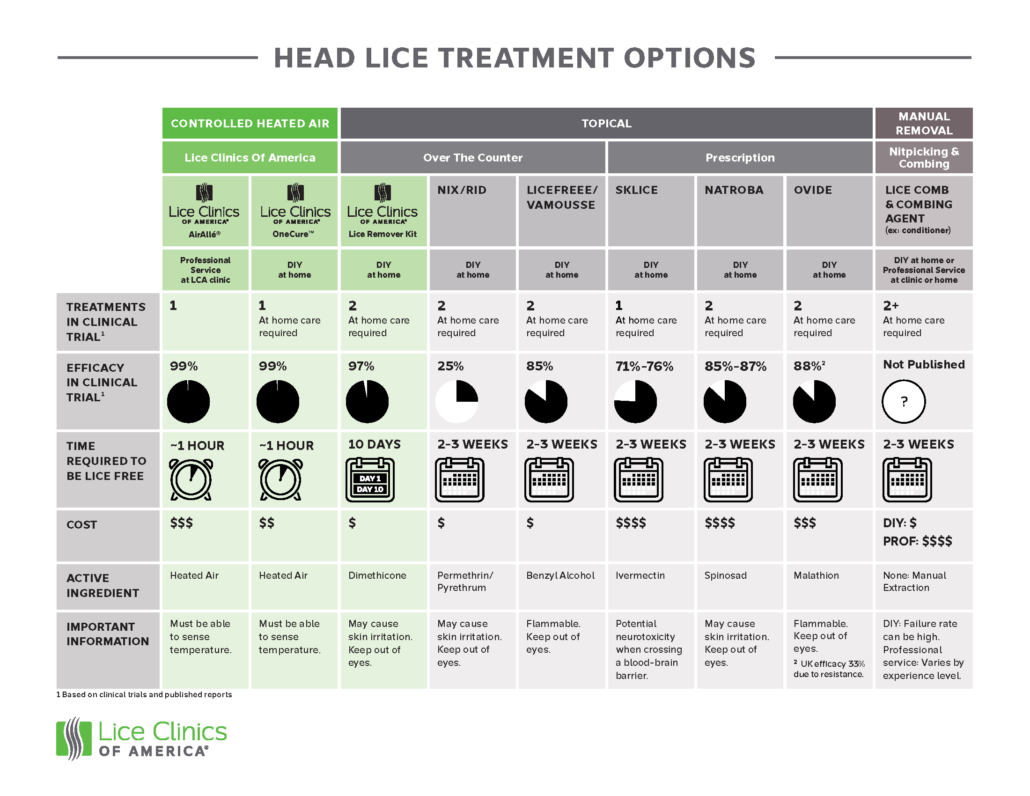
The answer to “does freezer kill lice” reveals important truths about lice biology and effective treatment:
- ✅ Freezing at 0°F for 72+ hours kills lice on isolated items
- ❌ Freezing cannot kill lice on human scalps (your body prevents lethal temperatures)
- ✅ Hot water (130°F+) kills lice more effectively than freezing
- ❌ Cold water treatments drive lice closer to the scalp but don’t kill them
- ✅ Nits require longer freezing exposure than adult lice due to protective shells
Focus your efforts on proven treatments that address both live lice and their eggs, using freezing only as a supplementary step for specific non-washable items. By understanding lice biology and working with—rather than against—it, you’ll eliminate infestations faster and prevent frustrating reinfestations. Remember: the most effective lice treatment combines immediate lice-killing action with thorough nit removal—no single method, including freezing, works alone.