Bosch Freezer Fan Not Working: How to Fix
Your Bosch freezer running silently might seem peaceful—until you discover frost-covered food and partially thawed items. When your Bosch freezer fan stops working, the appliance can’t circulate cold air properly, creating dangerous temperature fluctuations that spoil food within hours. This common issue affects thousands of Bosch freezer owners annually, but the good news is you can diagnose and often fix a Bosch freezer fan not working problem yourself with basic tools and under an hour of your time. In this guide, you’ll learn exactly how to identify the cause, complete necessary repairs, and prevent future failures.
Before reaching for your toolbox, understand that a malfunctioning fan creates serious consequences. Without proper air circulation, your freezer’s temperature can rise above safe levels (0°F/-18°C) in as little as four hours, putting your food investment at risk. The following steps will help you systematically address the problem and restore proper functionality to your appliance.
Confirm Your Bosch Freezer Fan Has Actually Failed
Many homeowners mistakenly assume fan failure when other issues cause similar symptoms. Proper diagnosis prevents wasted effort and unnecessary part replacements.
Check temperature distribution throughout the compartment. Place thermometers in multiple locations—near the fan, at the bottom, and near the door. After 24 hours, compare readings. A working Bosch freezer maintains consistent temperatures within 2-3 degrees throughout. If you find significant variations (more than 10°F difference), poor air circulation confirms fan involvement. Pay special attention to items near the back wall—they should feel as cold as those near the door.
Listen for operational sounds during different cycles. Modern Bosch freezers cycle their fans on and off based on temperature needs. Stand quietly near the appliance for several minutes to hear the fan’s distinctive hum. When the compressor kicks on, the fan should activate within 30 seconds. If you hear the compressor running but no fan sound, that’s a clear indicator. Some models have delayed fan startup—wait up to two minutes after compressor activation before concluding fan failure.
Examine frost accumulation patterns. A healthy Bosch freezer develops light, even frost. When the fan fails, you’ll notice heavy frost concentrated on the back wall where evaporator coils reside, while the door area remains relatively clear. This uneven pattern occurs because without airflow, moisture condenses directly on the coldest surface. Use a flashlight to inspect behind shelves—you might see ice buildup around the fan housing itself, which often causes the initial failure.
Verify Electrical Connections and Power Supply
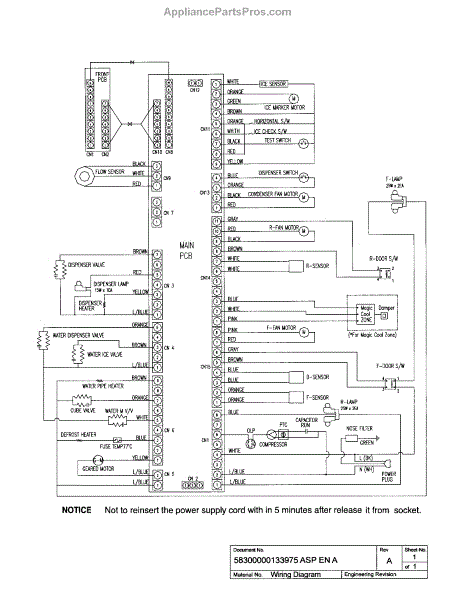
Electrical issues cause nearly 40% of apparent fan failures in Bosch freezers. Before replacing expensive components, confirm power is properly reaching the fan assembly.
Test the outlet with a known-working device. Unplug your freezer and insert a lamp or phone charger to verify the circuit functions. Many homeowners overlook that freezers often connect to GFCI outlets that can trip without obvious indication. Press the “reset” button on any GFCI outlets in your kitchen or garage. If the outlet works but your freezer remains silent, check your home’s circuit breaker panel—Bosch freezers typically require a dedicated 15-20 amp circuit.
Inspect internal wiring connections. Remove the freezer’s interior panels to access the fan housing (typically behind a removable back panel). Look for loose or disconnected wires—Bosch uses color-coded connectors that sometimes vibrate loose over time. Gently tug on each connection to ensure secure attachment. Pay special attention to the ground wire, which commonly comes loose on Bosch models. If you notice any burnt smell or discoloration on wires, replace the affected section before proceeding.
Bypass the door switch to eliminate this common failure point. The door switch prevents fan operation when the door opens—a faulty switch can trick the system into thinking the door is always open. Locate the switch (usually near the door hinge), then use a small piece of tape to hold it in the “closed” position. Plug in the freezer—if the fan runs with the switch bypassed, replace the $15 door switch rather than the more expensive fan assembly.
Remove and Clean the Evaporator Fan Assembly
Ice accumulation represents the most common cause of Bosch freezer fan failure. Before replacing any parts, thoroughly clean the fan assembly—a task that resolves nearly 60% of “bosch freezer fan not working” cases.
Prepare your workspace safely. Unplug the freezer and remove all food. Place towels underneath to catch melting ice. Have a hairdryer, plastic scraper, and soft brush ready—never use metal tools that could puncture refrigerant lines. Most Bosch models require removing 2-4 screws to access the fan behind the rear interior panel. Take photos of each step for easier reassembly.
Thaw ice buildup carefully. If ice completely encases the fan, allow natural thawing for 6-12 hours with the freezer unplugged and door open. For faster results, place bowls of hot water inside the compartment, replacing them every 15 minutes. Never use sharp objects to break ice—this frequently damages fan blades or surrounding components. Once most ice has melted, use a turkey baster to remove standing water from the drain pan.
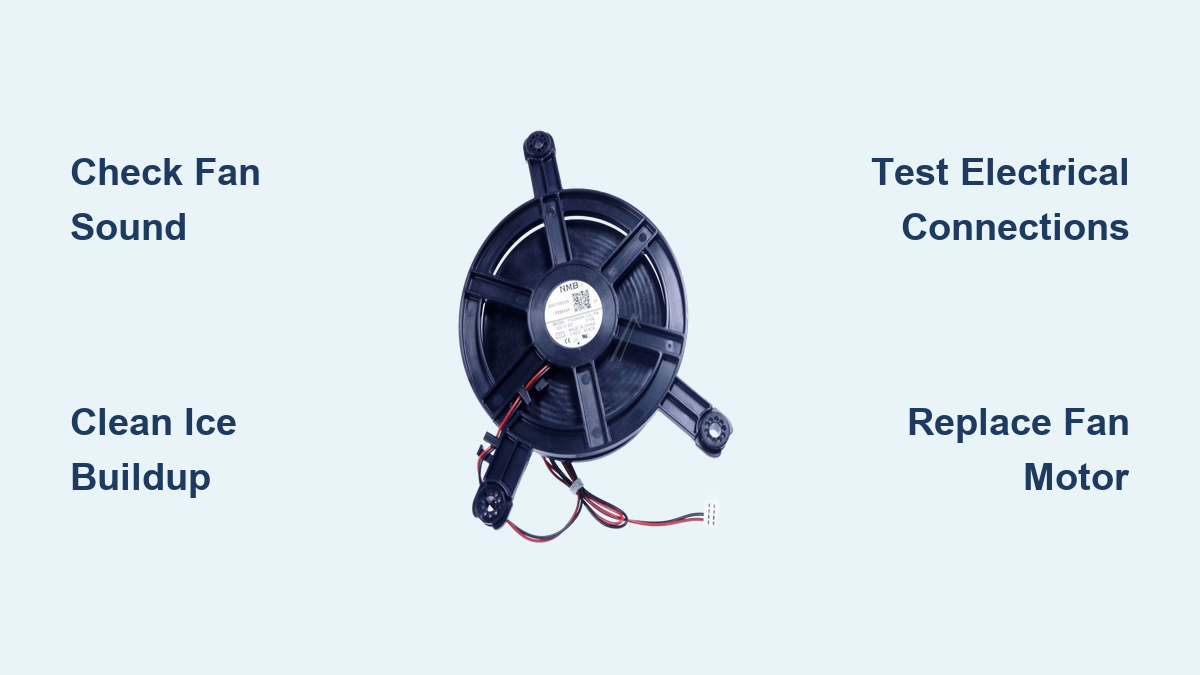
Clean fan components thoroughly. Remove the fan assembly (usually 2-3 mounting screws), then clean blades with warm soapy water and a soft brush. Pay special attention to the motor shaft—residual ice here prevents free rotation. Dry all components completely with a lint-free cloth before reinstallation. While the fan is out, clean the evaporator coils with a coil brush to improve overall cooling efficiency.
Test and Replace the Fan Motor If Necessary

If cleaning doesn’t restore function, test the fan motor before replacement. Many DIYers waste money replacing good motors because they skip this critical step.
Perform a manual rotation test. With the fan disconnected from power, gently spin the blades with your finger. They should rotate freely for 3-5 full revolutions. If resistance occurs or the fan stops immediately, check for remaining ice or debris. A seized motor often produces a burning smell—if detected, replacement is necessary.
Conduct electrical testing with a multimeter. Set your meter to resistance (ohms) mode. Touch probes to the fan’s terminals—most Bosch freezer fans read 20-50 ohms when functional. An “OL” (open loop) reading indicates a failed motor. Test for continuity between each terminal and the motor housing—any reading here means an internal short requiring replacement. Important: Record your model number before ordering parts—Bosch uses different fan assemblies across similar-looking models.
Install the replacement motor correctly. Compare the old and new units before installation—some Bosch replacements require minor wiring adjustments. Align the fan blades to blow air toward the evaporator coils (not against them). Tighten mounting screws evenly to prevent vibration. After reassembly, plug in the freezer and verify fan operation before reloading food—listen for unusual noises that indicate improper installation.
Address Root Causes Preventing Recurrence

Replacing the fan without fixing underlying issues leads to premature failure. Address these common culprits to extend your new fan’s lifespan.
Clear the defrost drain completely. A clogged drain causes water overflow that refreezes around the fan. Locate the drain hole (typically beneath the evaporator coils), then flush with hot water using a turkey baster. Insert a ¼-inch flexible tube through the drain line to the external pan to ensure complete clearance. Monthly maintenance: Pour ¼ cup of vinegar down the drain to prevent clogs.
Check the defrost heater and thermostat. These components work with the fan to prevent ice buildup. Test the defrost heater for continuity (should read 10-30 ohms)—if open, replace it. The defrost thermostat should click when warmed—you can test this by placing it in warm water. Faulty defrost components cause recurring ice accumulation that damages new fans.
Verify proper door seal function. A compromised seal introduces warm, moist air that accelerates frost buildup. Close a dollar bill in the door seal and pull—it should offer resistance throughout the perimeter. Clean seals with baking soda paste to remove residue that prevents proper sealing. Pro tip: Apply a thin layer of petroleum jelly to seals quarterly to maintain flexibility.
When Professional Service Becomes Necessary
While most Bosch freezer fan issues are DIY-friendly, certain situations require expert intervention.
Refrigerant system problems manifest as constant compressor operation with inadequate cooling. These issues require EPA-certified technicians due to legal restrictions on refrigerant handling. Never attempt refrigerant repairs yourself—this violates environmental regulations and poses serious health risks.
Main control board failures often mimic fan problems but require specialized diagnostic equipment. If your freezer displays error codes or has multiple system failures (lights, displays, and fans malfunctioning simultaneously), professional diagnosis becomes cost-effective compared to guessing at expensive parts.
Persistent icing issues after fan replacement indicate deeper problems with the defrost system or refrigerant charge. A technician can measure superheat and subcooling values to verify proper refrigerant levels—measurements impossible without specialized gauges.
By following these steps, you’ll resolve most Bosch freezer fan not working issues while avoiding unnecessary service calls. Remember that regular maintenance—particularly keeping the defrost drain clear and checking door seals—prevents the majority of fan failures. When replacement becomes necessary, you’ve now saved $150-300 in service fees while gaining valuable appliance knowledge for future troubleshooting.