How to Fix Deep Freezer Not Working
Your deep freezer has gone silent, and you’re staring at a freezer full of thawing food. This frustrating scenario happens more often than you might think, and the causes range from simple power issues to serious compressor failure. Before you panic about replacing hundreds of dollars in frozen goods or purchasing a new appliance, work through this systematic troubleshooting guide. Most deep freezer problems can be diagnosed and often resolved without professional help, saving you time, money, and the inconvenience of appliance replacement.
When a deep freezer stops working, the underlying issue typically falls into one of several categories: electrical problems preventing power from reaching the unit, door seal failures that let warm air inside, component failures within the cooling system, or temperature regulation issues. Understanding which category your problem falls into helps you diagnose efficiently and determine whether you need a simple DIY fix or professional assistance. This guide walks you through each possibility, providing clear diagnostic steps and actionable solutions so you can restore your freezer’s functionality or make an informed decision about repair versus replacement.
Verify Your Electrical Connection First
Don’t jump to conclusions about major mechanical failure—over 30% of “broken” freezers simply have electrical connection issues. Start by confirming your outlet works: plug in a lamp or phone charger to test power. If nothing works, check your circuit breaker panel for a tripped switch. Flip it completely off before resetting to on, as partial resets often fail.
Examine the freezer’s power cord thoroughly for fraying, cuts, or exposed wires. A damaged cord prevents proper power delivery and needs immediate replacement. Ensure the plug sits securely in the outlet—vibrations from compressor operation can gradually loosen connections. Try plugging your deep freezer into a different circuit to isolate the problem. For kitchen or basement units, check if the outlet is a GFCI type (with reset/test buttons) that may have tripped due to moisture exposure.
Diagnose Door Seal Failures Immediately
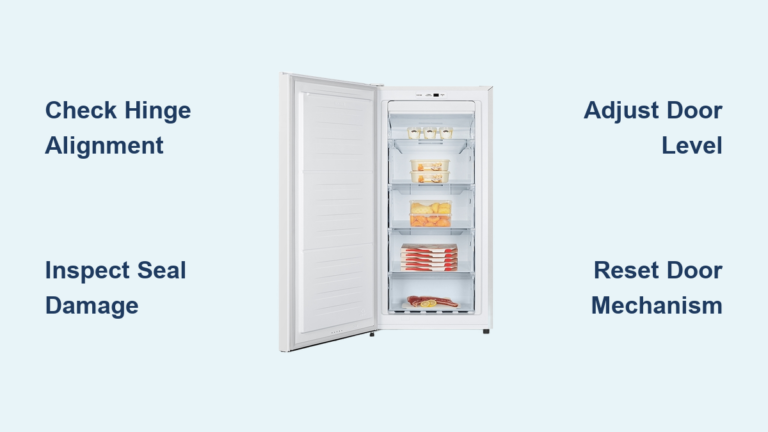
A compromised door gasket wastes 25-30% more energy and can cause your deep freezer to stop working effectively. Run the dollar bill test: close a bill in the door seal and try to pull it out. If it slides freely without resistance, your seal isn’t airtight. Inspect the entire gasket for cracks, tears, or sections that have pulled away from the door frame.
Clean the seal with warm, soapy water to remove food residue and sticky substances that prevent proper closure. Dry thoroughly afterward to maintain flexibility. For chest freezers, pay special attention to the lid gasket, as these take significant wear from frequent opening. Check that nothing inside—like overpacked bins or misaligned containers—is preventing full closure. A properly sealed door should require noticeable effort to open.
Listen for Compressor Warning Signs
Your compressor’s sounds reveal critical clues when your deep freezer stopped working. Stand near the unit and listen carefully: a healthy compressor produces a steady hum when running. Clicking noises indicate a failing start relay trying repeatedly to engage the compressor. Buzzing sounds suggest the compressor is attempting to start but can’t turn over. Complete silence when the freezer should be running points to electrical or control issues.
If the compressor hums but fails to cool, you likely have a locked rotor—a condition where the motor can’t turn freely. One technician described this symptom: “The compressor was humming away and I could hear liquid moving through the cooling lines, but the temperature of the walls dropped only about 5-8 degrees.” This often indicates compressor weakness or refrigerant issues requiring professional diagnosis. Compressor replacement typically costs $300-$500, often exceeding the value of older units.
Replace Faulty Start Relay and Capacitor
The start relay and capacitor cost under $30 but cause most “deep freezer stopped working” emergencies. Locate the relay (usually plugged onto compressor terminals) and unplug it carefully. Gently shake it—a rattling sound confirms internal failure. Even without rattle, test continuity with a multimeter to verify proper function.
The capacitor works with the relay to provide the initial power surge for compressor startup. Warning: capacitors store dangerous electrical charges even when unplugged—discharge safely before handling. Look for visible signs of failure: bulging tops, leaking fluid, or deformed shapes. Most technicians recommend replacing relay, overload switch, and capacitor together as a set since they share similar lifespans. As one expert noted: “You can get a generic 3-in-1 starter pack very easily and cheaply. Maybe a 15-minute job.”
Clear Critical Airflow Blockages Now

Blocked airflow causes 40% of cooling failures in deep freezers that have stopped working. Locate the evaporator fan (typically on the back wall) and ensure several inches of clearance around it. Overpacked freezers with items stacked directly under fan covers prevent proper air circulation. Remove any obstructions blocking rear vents or air channels.
Clean condenser coils every 2-3 months using a specialized coil brush or vacuum attachment. These coils—usually at the back or bottom of the unit—become insulated by dust, pet hair, and debris, forcing your freezer to overwork. As one technician emphasized: “Dusty coils force the freezer to overwork and lose cooling power.” For bottom-mounted coils, carefully tip the unit (after unplugging and waiting 24 hours if recently moved) to access and clean them thoroughly.
Reset Temperature Controls Correctly
Incorrect temperature settings cause frequent “deep freezer stopped working” panic. Most freezers should operate at 0°F (-18°C) for optimal food preservation. Verify your control dial or digital display matches this setting—accidental bumps happen more often than you’d think, especially in busy households.
If using an external temperature controller (common for fermentation setups), ensure the freezer’s built-in thermostat is set to its coldest setting while the external controller manages temperature. For freezers that run but don’t freeze properly, the thermostat itself may have drifted out of calibration. Try resetting by unplugging for 5-10 minutes, which often clears temporary control board glitches in modern units. If problems persist, professional thermostat testing may be needed.
Defrost Excessive Ice Buildup Properly

Thick frost acts as insulation, reducing your deep freezer’s cooling efficiency until it stops working entirely. For automatic defrost models, recurring heavy frost indicates defrost system failure. For manual defrost units, schedule regular defrosting before ice exceeds ¼ inch thickness.
To defrost safely: move food to a cooler with ice packs, unplug the unit, and lay towels around the base. Allow frost to melt naturally—you can speed the process with bowls of warm water inside, but never use sharp objects that could puncture refrigerant lines. Once clear, clean the interior with baking soda solution and dry thoroughly before restarting. Check the defrost drain for clogs, as blocked drains cause water pooling and excessive frost.
Recognize When to Call a Professional
Don’t risk electrical hazards or further damage when your deep freezer stopped working. Call a certified technician if you notice sparks, burning smells, or frequent circuit breaker trips. These indicate serious electrical problems requiring professional handling.
Situations demanding expert help include confirmed compressor failure, refrigerant leaks (requiring EPA-certified handling), electronic control board malfunctions, and recurring issues after basic repairs. Before authorizing service, get a written estimate comparing repair costs against replacement value. Rule of thumb: if repair exceeds half the cost of a new unit, replace it—especially for freezers over 10 years old. Check warranty coverage too, as some manufacturers offer extended protection on major components.
Implement Preventative Maintenance Now
Regular care prevents 70% of deep freezer failures. Clean interior surfaces monthly with baking soda solution (2 tablespoons per quart of water) to remove odors and residue. Wipe door seals weekly with soapy water and inspect for damage. Clean condenser coils every 2-3 months using proper tools to maintain efficiency.
Avoid overloading your freezer—leave space between items for air circulation. Never store hot food directly inside, as this raises internal temperature and increases frost buildup. Ensure proper ventilation around the unit with several inches of clearance at the back and sides. For garage units, verify ambient temperatures stay within the manufacturer’s operating range (typically 50-90°F).
Protect Food During Freezer Failures
Food safety becomes critical when your deep freezer stopped working. Keep the door closed—food stays frozen about 48 hours in a full freezer, 24 hours when half-full. Add ice packs to extend preservation time during outages.
Check food temperatures with a thermometer: items below 40°F may be safely refrozen, though quality might decline. Discard any food reaching room temperature, as bacteria multiply rapidly between 40-140°F. Partially thawed items with remaining ice crystals can usually be safely refrozen. When uncertain about safety, remember the golden rule: “When in doubt, throw it out”—the cost of replacement is less than potential foodborne illness.
Follow This Emergency Diagnostic Sequence
When your deep freezer stopped working, follow these steps in order:
- Confirm power supply by testing the outlet with another device and checking circuit breakers
- Inspect door seals using the dollar bill test and cleaning any residue
- Listen for compressor sounds—humming, clicking, or silence reveal critical clues
- Check temperature settings against manufacturer recommendations
- Clear airflow obstructions around fans and vents
- Examine for frost buildup indicating defrost system issues
- Try a reset by unplugging for 5-10 minutes
Warning signs requiring immediate attention include constant running without cooling, unusual noises (clicking, buzzing, grinding), water leaks, excessive frost, food spoilage despite proper settings, and frequent compressor cycling. Addressing these early often prevents complete failure and costly repairs.